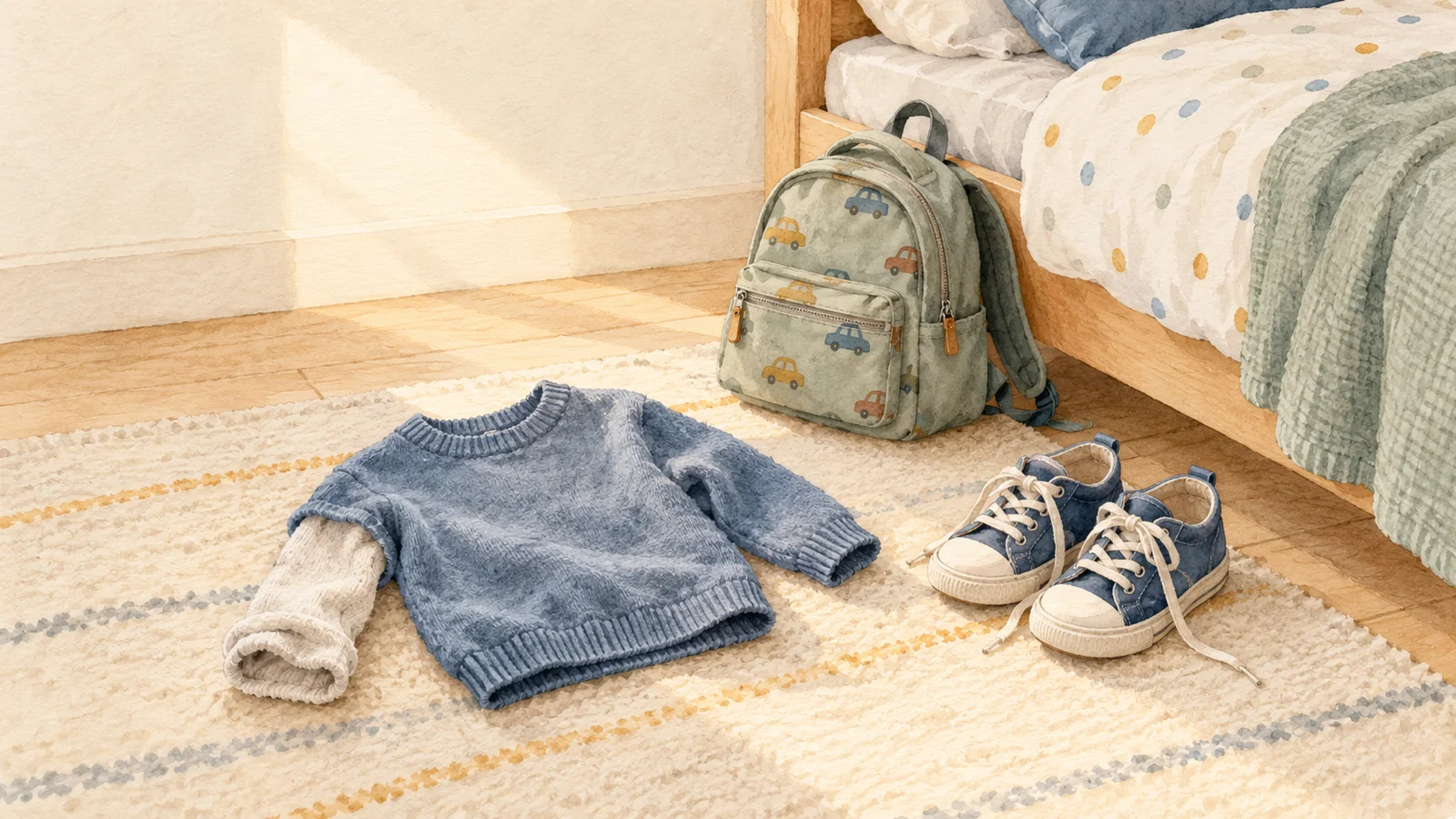
Camille had already put the school bag by the door when Malo, her almost three-year-old son, sat on the floor instead of putting on his trousers. “Can you do it for me, Mum?”
Before the holidays, he could almost get dressed by himself: he pulled up his trousers and put on his shoes, needing just a little help with his coat. Since starting school, he held out his arms for help with his jumper and asked Camille to carry him home. The change surprised her.
Camille was proud of his growing independence. So she answered without thinking: “But you know how to do it. You did it yesterday.” It was true. Still, Malo waited with his arms raised while the clock kept moving. The more she reminded him of his progress, the more each request for help became a test.
A wobble after starting school doesn’t erase what a child has learned
The word “regression” can make it sound as if a child has gone back to the beginning. But asking for help doesn’t prove that a skill has disappeared. After starting school, new timings, separations, rules and transitions can make already-full days demanding. Tiredness can also make a familiar task harder. Camille didn’t know exactly what was behind Malo’s requests, and she didn’t need to work it out before responding.
At home, she could notice one thing: he wanted help just then. Reminding him he knew how to get dressed didn’t make him more independent in that moment; it only made the departure more tense and turned getting dressed into a small argument.
Helping without making every task a test
Camille stopped treating each request as a verdict on Malo’s progress. She could help with one step and leave the next to him. On rushed mornings, she could fasten his coat without deciding she would do everything for him every day. He didn’t need to prove his independence every time.
When they had a few minutes, she could simply say:
This phrase couldn’t guarantee a peaceful start. It simply made room for what Malo was asking for, without erasing what he could already do. If he continued needing more help or it came with other changes that worried Camille, she could talk it through with a health professional.
The next day, Malo held out his arms for his coat again. Camille fastened it without comment. Malo put on his shoes and carried his school bag to the door.