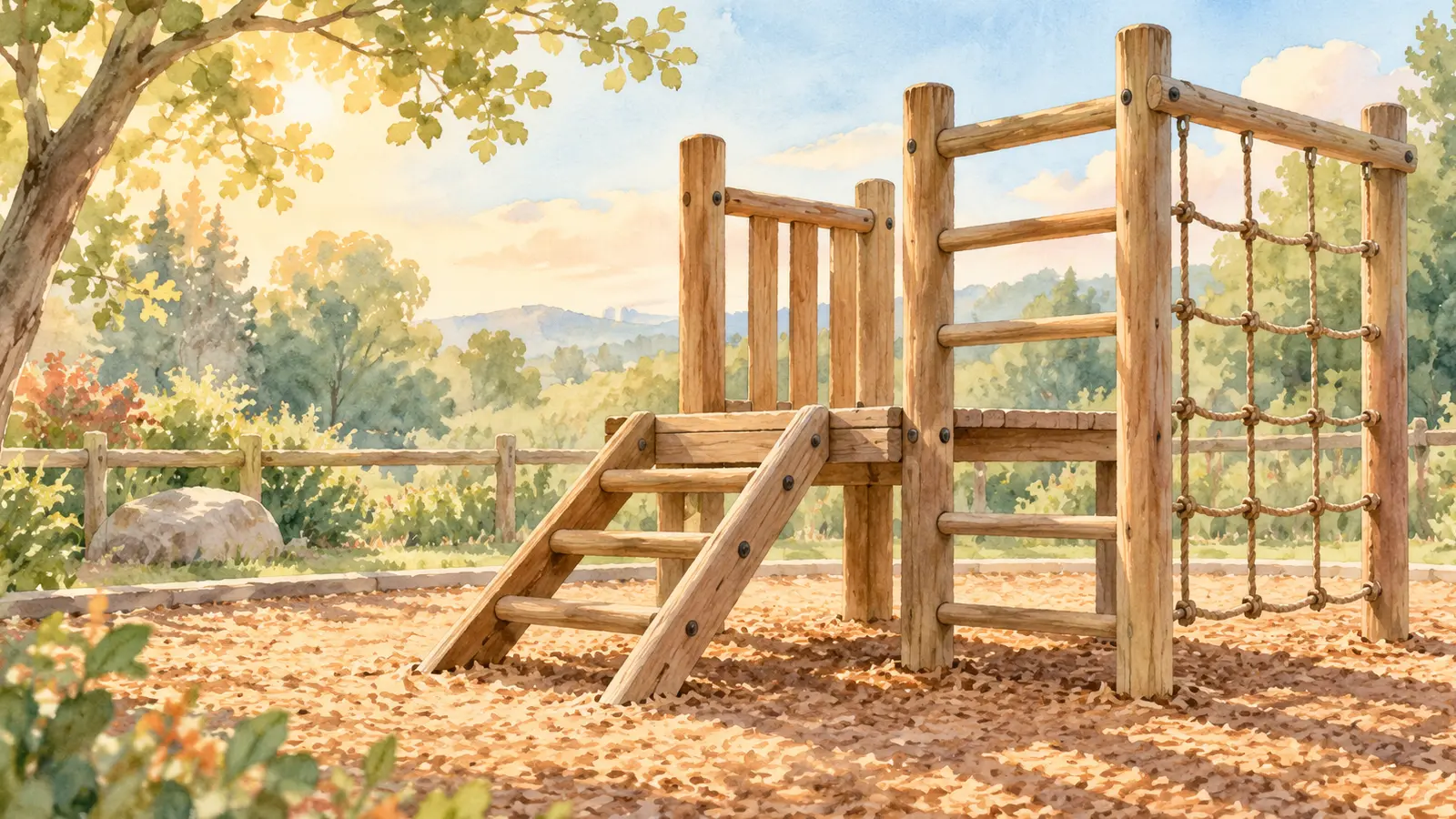
Louise was nearly at the top of the climbing frame when Élodie, her mum, felt the words coming out on their own.
She had already opened her mouth. Then she stopped.
Louise was not rushing ahead without thinking. She had one foot on a bar, both hands gripping firmly, and she was looking at the next foothold. She tried to lift her leg, hesitated, then put it back down. She looked for another way up.
Élodie was still below, ready to step in.
When a child climbs everywhere, runs fast or tries something that seems a little too high, our reflex is often immediate: slow down, careful, get down. Sometimes, of course, that is necessary. But that day, Élodie wondered whether Louise was really in danger, or whether it was mostly her who was frightened.
Not every risk is a danger
There is a difference between letting a child put themselves in danger and giving them a little room to try.
A car park, a road, a railing that is too high or a situation they cannot yet understand calls for a clear intervention. But in a playground suited to their age, with an adult close by, climbing a little higher than usual can also be a way to test what their body can do.
Louise moved a few centimetres at a time, checked where to put her foot and sometimes went back down.
When Élodie really watched her, she realised Louise was not being reckless. She was observing, trying, deciding against some movements and choosing others.
If Élodie had told her to climb down at the first move, she would never have seen that part.
Before saying “careful”, watch for one more second
Élodie did not suddenly decide to feel relaxed about everything. She simply tried replacing her automatic intervention with a tiny pause.
Before saying “careful”, she takes a closer look at what is happening. Is Louise still in control of her movements? Is the place reasonably safe? Can Élodie stay close enough to step in if needed?
And sometimes, instead of immediately telling her to climb down, she simply helps her look.
“Look where you’re putting your foot.”
“I’m right here if you need me.”
These are not magic words. Sometimes Louise needs to be stopped. Sometimes she asks for a hand. Sometimes she gives up on her own.
That day, she eventually decided the last section was too high. She climbed down a level, changed route and reached the platform from the other side.
Élodie did not need to explain where her limit was.
Louise had found it herself.