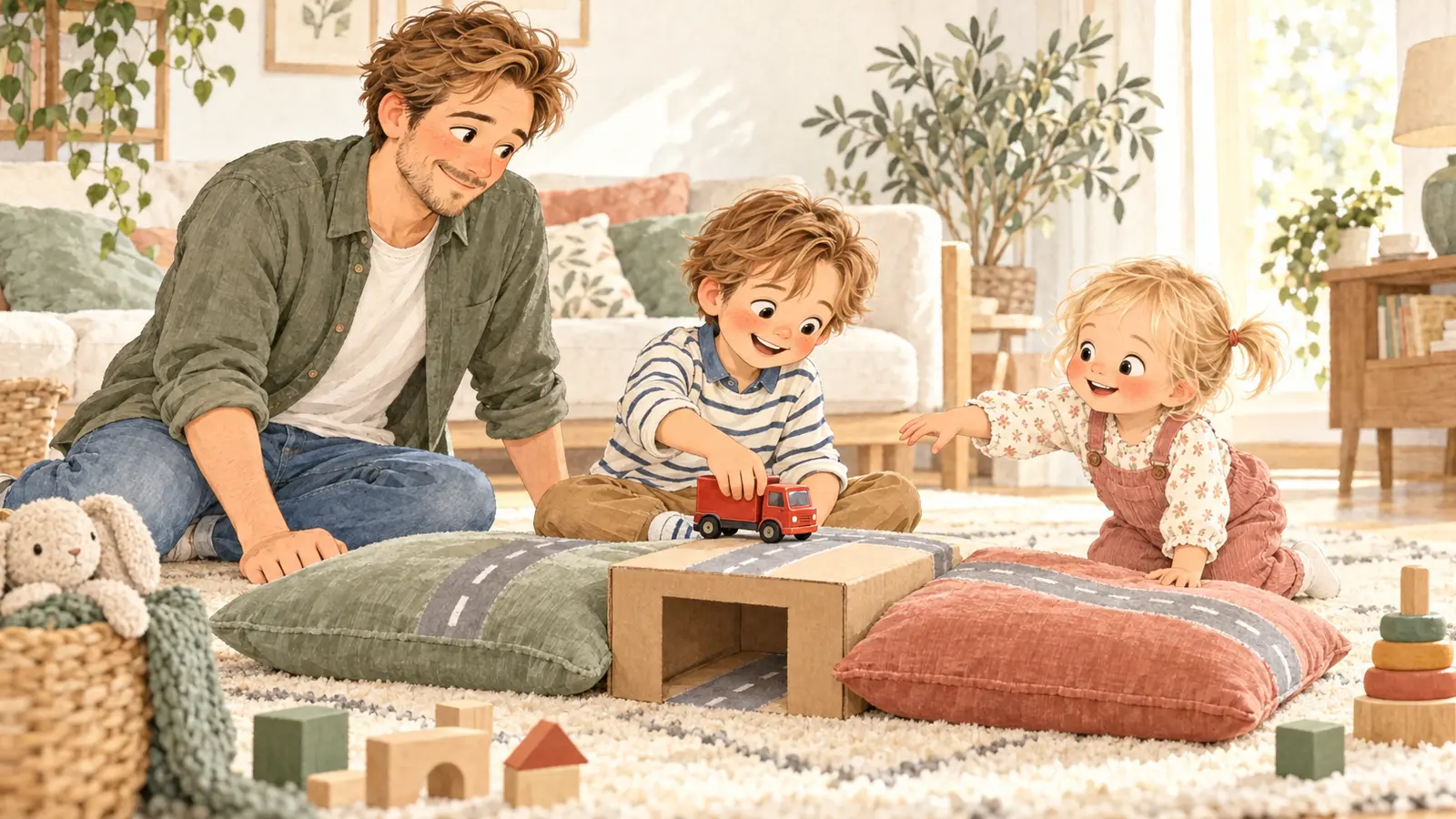
Oscar had been rolling a little red truck across the rug for several minutes. He had built a road with two cushions and turned a shoebox into a garage.
Alice came over and tried to take the truck.
Oscar pulled it back towards himself.
“No. It’s mine.”
Julien, their dad, replied almost automatically: “Oscar, share a bit with your sister.”
Oscar looked at him, very upset. “But I’m playing with it!”
And Julien hesitated. When a child refuses to share their toys, it can quickly seem as though we need to step in. We want to teach them to be generous, to think of others and not to keep everything for themselves.
Except that, in this scene, Oscar was not necessarily refusing to share. He was mostly saying he was not finished.
Sharing does not always mean handing it over straight away
To an adult, “share” might mean: let your sister play with it too.
To a child, it can easily sound like: give her the toy you are using right now.
Those are not quite the same skill.
Sharing, waiting for a turn, passing a toy to someone else and negotiating are all things children learn gradually. Saying “share” does not give them the instructions.
After all, between adults, we rarely ask someone to immediately let go of what they are using. If someone is reading a book, we do not take it out of their hands because another person has just asked for it.
Learning to wait is part of learning to share
So Julien tried something else. Instead of asking Oscar to give up the truck, he described what was happening.
“Oscar is playing with the truck right now. Alice, you can have it when he’s finished.”
“Oscar, when you’re done, you can give it to Alice.”
It was not magic. Alice was not suddenly delighted to wait and Oscar did not hand over the truck with a big generous smile. But the rule was clearer: nobody took the toy out of someone else’s hands, and everyone would get a turn.
When several children are playing together, we can also make things easier: offer a few different toys, start an activity that genuinely works as a group or put away a couple of especially precious objects before a friend comes over.
The aim is not to avoid every conflict. These moments are also when children learn to wait, protest, negotiate and get back to playing.
That day, Alice waited a little. Oscar finished his road, then handed her the truck.
He had not shared on command. But the truck had changed hands without anyone snatching it away.
Perhaps learning to share had begun with learning to wait.