I had asked Gabriel, my almost four-year-old son, to get dressed, pick up his bag and come to the hall. A perfectly reasonable sentence from my kitchen. Three little missions from his bedroom.
When I returned, he was holding a sock and looking for his trousers. I began my usual “we’re going to be late”. He asked where the jumper was supposed to go.
I thought I had given the starting signal. He seemed mostly to have lost the route.
A morning routine can be clear to only one of us
Remembering an intention and carrying it out at the right moment is still developing in a young child. Knowing the routine doesn’t necessarily mean keeping every step in mind while looking for a sock.
That doesn’t make every delay an innocent lapse. Gabriel might also not want to leave, feel tired or find his trousers uncomfortable. But repeating that he knew perfectly well how to do it wasn’t helping me distinguish those possibilities.
My instruction asked him to retain what came next while starting at the beginning. The bag wasn’t visible from the bed and the trousers had slipped behind a chair. I had supplied instructions, but not many cues.
I could therefore test a concrete change before concluding that he was refusing. Not a new system to laminate overnight: simply make the next action easier to notice.
Show what comes next without reciting the whole list
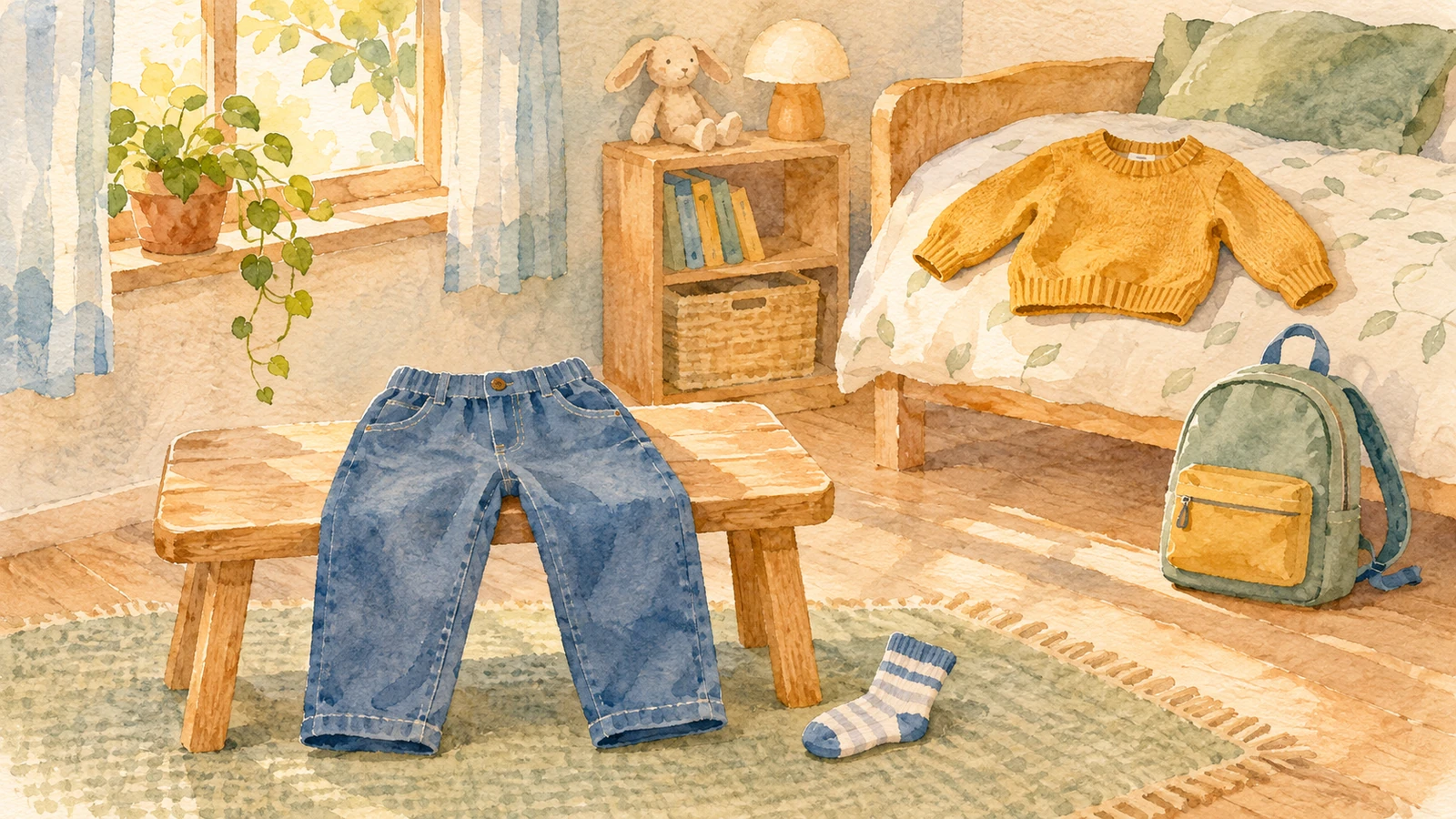
I found the trousers and put them in front of him. The jumper waited beside them, the bag near the door. I kept to one request, then gave Gabriel time to begin.
“For now, let's put your trousers on. They're here.”
“Your trousers are on. Now you can take the jumper beside them.”
A short sequence of photos can help some children too, if it stays simple and accessible. It doesn’t need to become a chart where every forgotten box earns a remark. The adult still supports the routine.
If we are already very late, I can help more and revisit the organisation another day. Mornings aren’t a test where he must prove his independence to earn a calm departure.
Gabriel put on his trousers, then asked whether the bag came after the jumper. We didn’t miraculously gain fifteen minutes. We simply finished getting dressed without me repeating the entire list from the kitchen.
Keep this handy
The situation
Your child seems to dawdle after an instruction containing several steps.
Try this
Make objects visible, give one action at a time and support the next step rather than repeating the whole list.
- “Let's look together at what is left to do.”
Keep in mind: Delays can also involve tiredness or discomfort. Helping more on a rushed morning doesn't destroy independence.