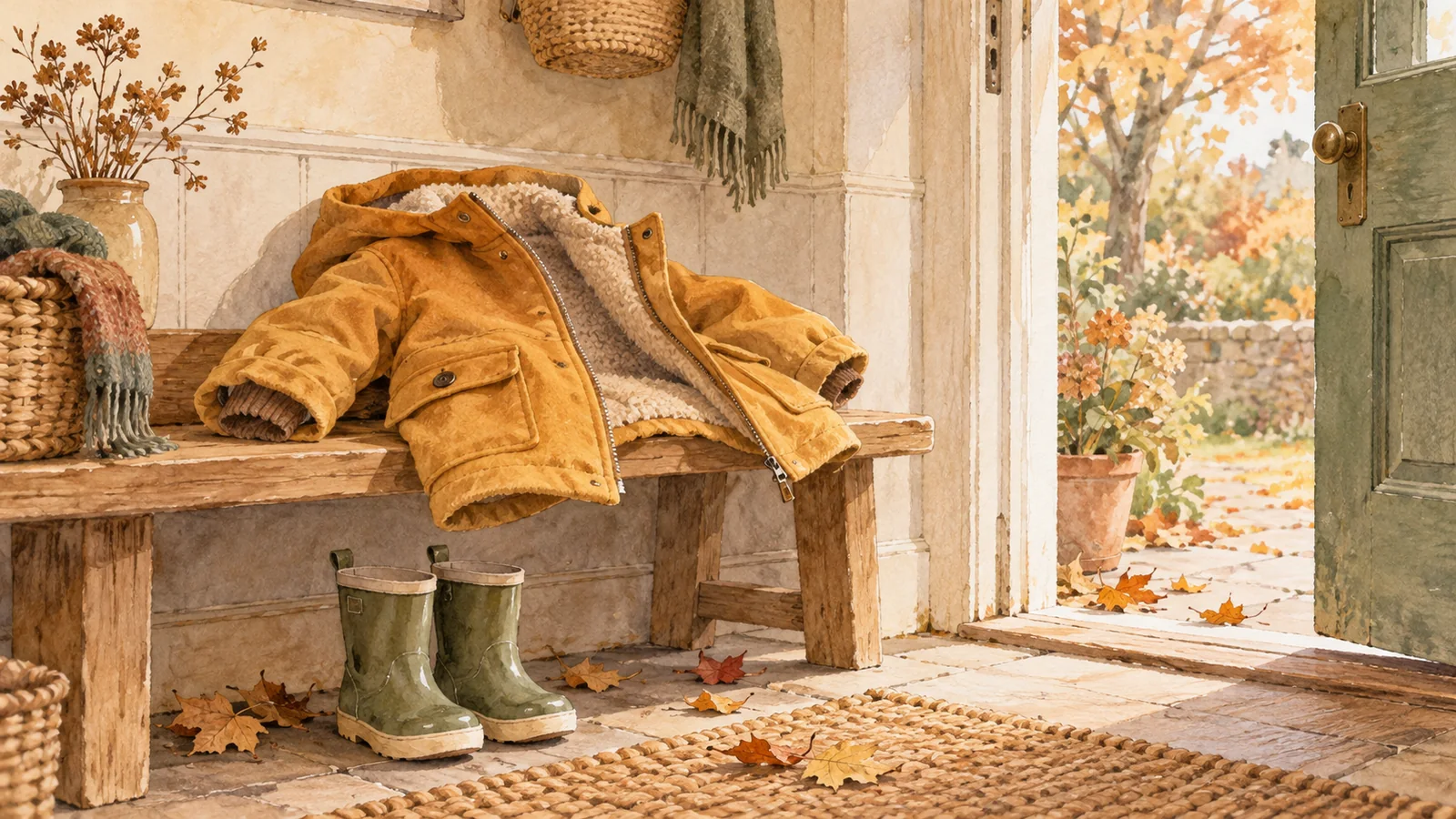
Nora’s phone showed ten degrees. Iris, her three-and-a-half-year-old daughter, had chosen her boots but still refused her coat. She said she was hot.
Nora touched her own sleeve, then picked up the jacket from the bench again. She felt cold just looking at the garden. Her daughter had just been running down the hall.
A child who refuses a coat can seem to be challenging the obvious. Yet they weren’t quite talking about the same thing: Nora was thinking about going out, Iris about how she felt now.
Listening to feelings doesn’t remove adult responsibility
Nora didn’t need to reply that Iris couldn’t be hot. She said she was. That didn’t mean she could predict how she would feel after spending time outdoors.
Ten degrees wasn’t a sufficient rule by itself. Wind, rain, time outside and what they would be doing mattered too. The coat was neither a symbol of obedience nor optional in every situation.
Nora could hear her daughter without handing over the whole decision. And she could keep the jacket close without announcing that if Iris got cold, she would have to stick with her choice to the bitter end.
Her body didn’t need to become a tool for proving Mum was right.
Keep the coat available, choose what can be discussed
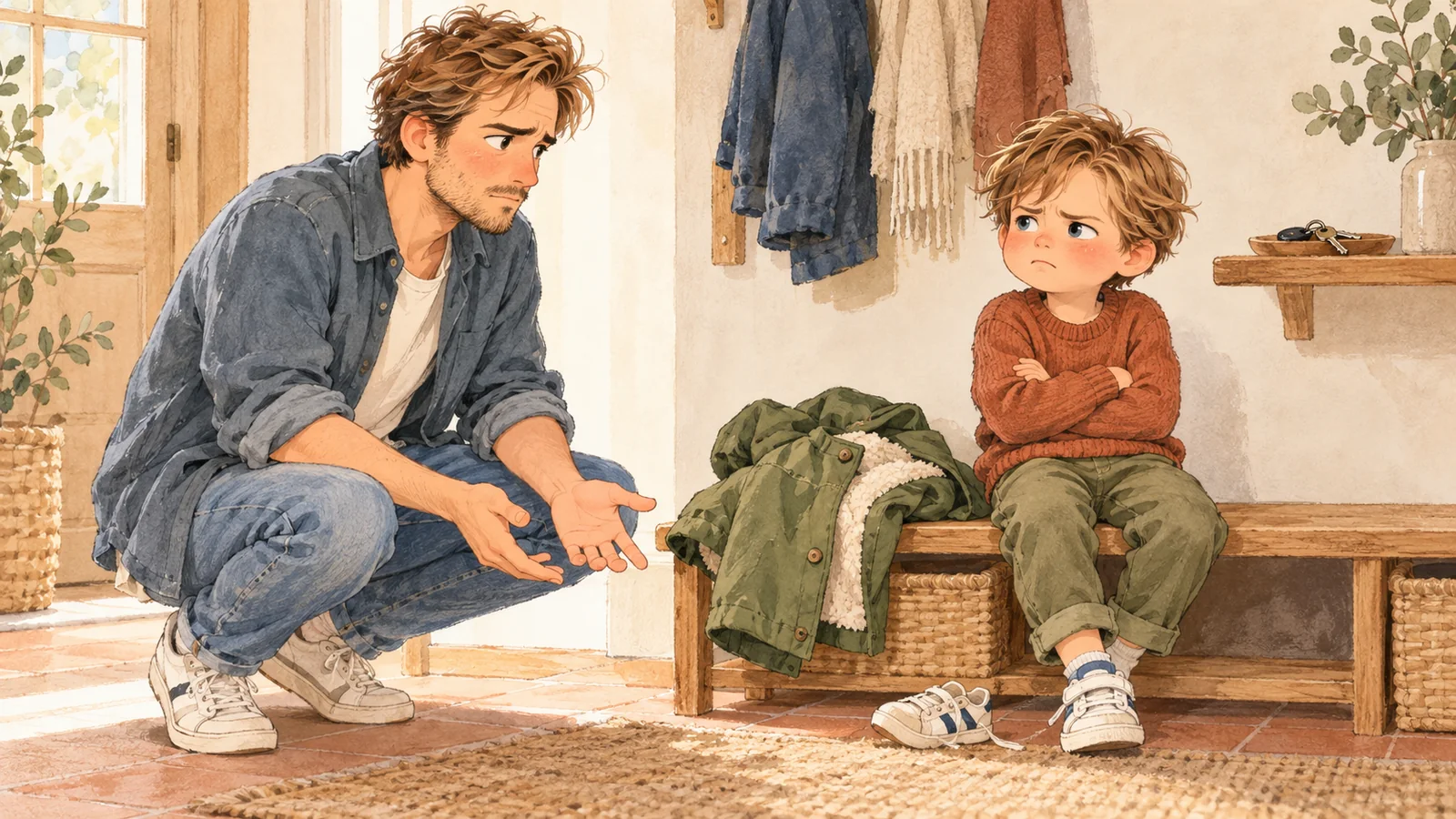
They stood for a moment by the open door. Iris stretched a hand towards the garden, then looked at her boots. Nora explained that they were going to walk, not run down the hall.
For this outing, she kept the coat requirement. Iris could, however, put it on while sitting on the bench or just in front of the door, and try it with the zip open before they left.
“You feel hot now. Outside, we’ll be walking and it’s cooler.”
“The coat is coming with us. I’ll help you put it on, and you can tell me if something bothers you.”
The discussion revealed another detail: Iris didn’t like the fastening near her chin. Nora checked the collar and moved the fabric aside. It wasn’t necessarily the whole reason for the refusal, but it was something she could fix.
Another day, in different conditions, she could allow more choice. She would stay attentive and change her decision if the situation required it, without asking Iris to keep a promise made by a warmer version of herself.
Iris put on the coat on the bench. Before leaving, she asked if she could keep her boots.
They already agreed about the boots.