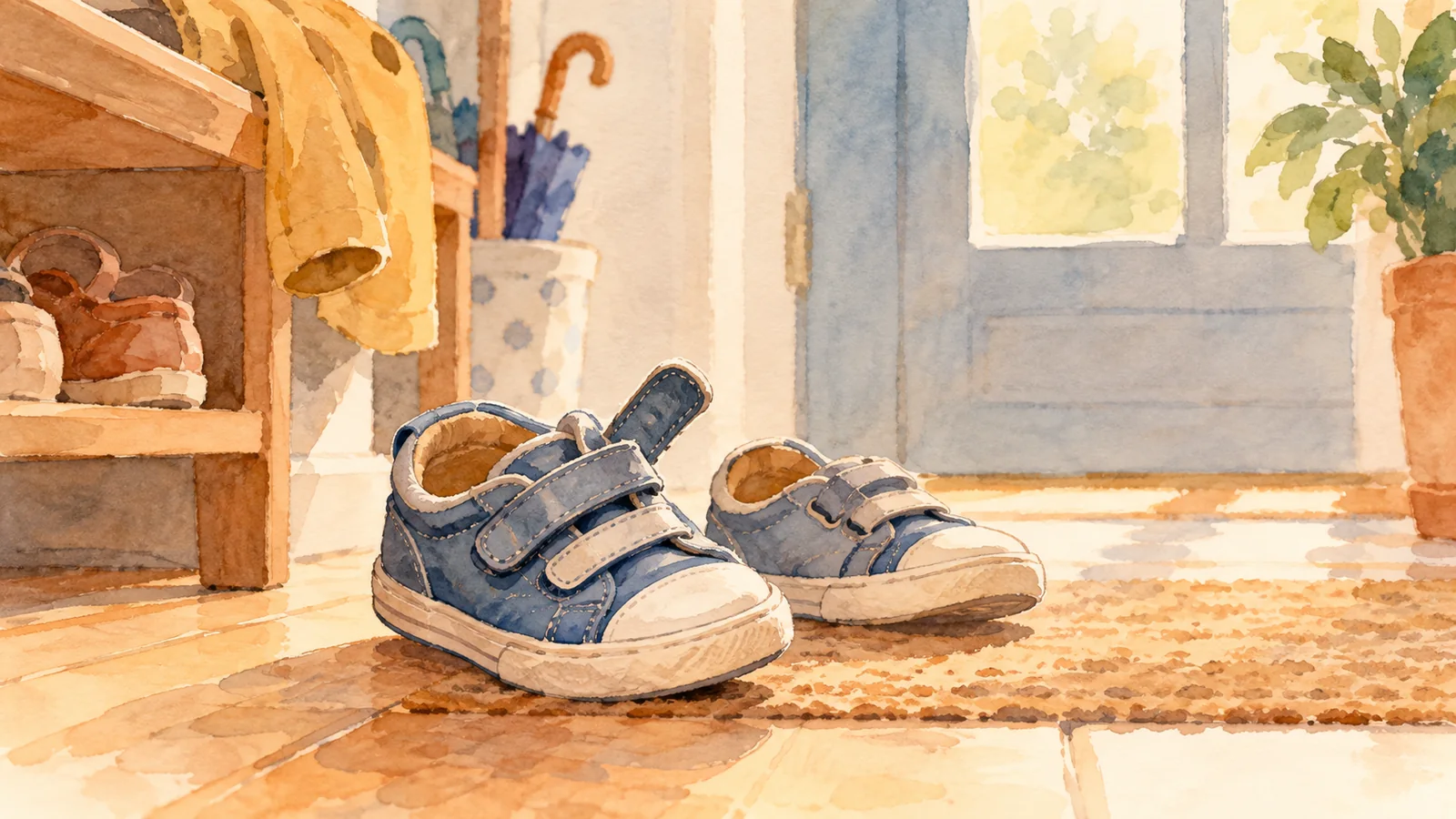
Malo wanted to put his shoes on by himself. Camille was watching the clock.
He had chosen the right shoe, found the right foot and started pulling the tongue with absolute concentration. Then his heel got stuck. He tried again, once, then twice.
Camille knew she could crouch down and sort it out in twenty seconds. They needed to leave. So eventually she said, “Come here, I’ll help,” and the shoe was on almost immediately.
Except Malo had not finished.
He wanted to do it himself. So he took off the shoe she had just put on.
And those twenty seconds she had saved suddenly began to cost a lot more.
It is a familiar paradox with young children. We want them to become independent, but learning to do things alone means doing them slowly for quite a while.
The problem is that our days do not always allow that time. Some mornings, waiting five minutes in front of a pair of shoes simply is not realistic.
But perhaps there is some space between “do absolutely everything yourself” and “let me do it for you”.
Camille can try leaving him a small piece of control:
“You put this shoe on and I’ll do the other one.”
“Do you want one more try or would you like me to help now?”
“I know you wanted to do it yourself. This morning we have to leave, so I’m going to help. You can try again tonight.”
That obviously does not guarantee Malo will accept it with a smile. But instead of only asking him to hurry, Camille acknowledges what he was trying to do and leaves him, when possible, a small amount of control.
Because when a child insists on putting on a shoe that stubbornly refuses to cooperate, they are not necessarily trying to make leaving the house difficult.
They may simply be learning something and not be finished yet.