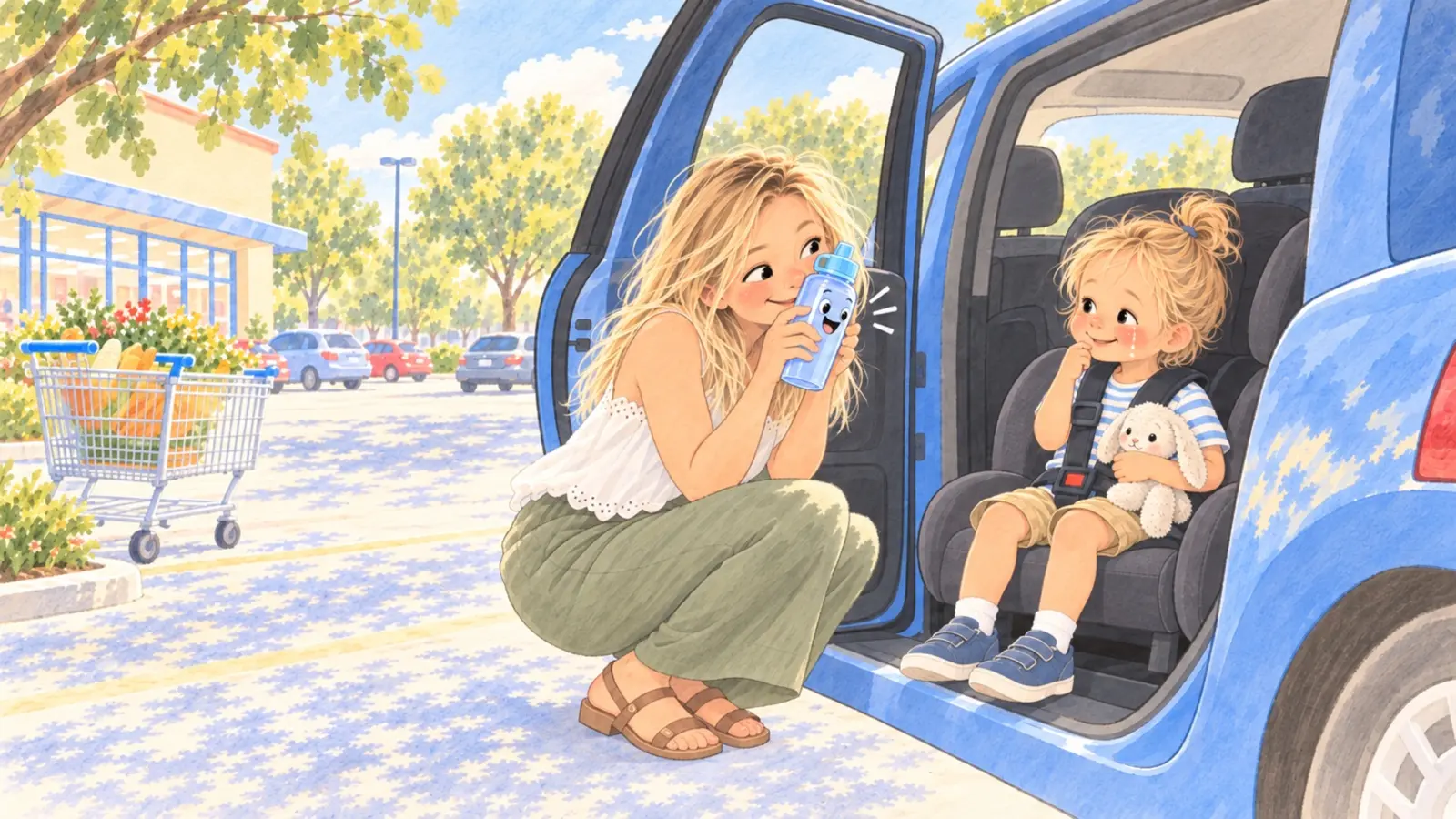
The meltdown began in a shop because of a snowplough toy.
Gabriel wanted us to buy it. I said no, and within seconds the disappointment became enormous. I carried him to the car so we could move through the moment somewhere quieter, without feeling as if the whole shop was watching.
Once we were settled, I tried several of the tools that sometimes help us. I named what he was feeling:
I suggested adding it to his wish list.
I also tried helping him get the anger out through his body by breaking small twigs to show me how big it felt. But this time he was not interested.
Then I tried imagination:
None of it really helped.
For almost 45 minutes, Gabriel kept crying, protesting and coming back again and again to that snowplough.
I think those moments matter too. We talk a lot about the tools that work, and much less about the times when we use everything we know and our child is still completely overwhelmed.
What finally opened a tiny door was not a perfectly worded new technique. It was probably a mixture of time, feeling heard and a little play.
A water bottle in the car suddenly started talking to Gabriel in a completely ridiculous voice.
And in the middle of the tears, I saw the smallest smile.
When nothing seems to work during a big meltdown
It is easy to end up searching for the right technique, the one that will let us acknowledge the feeling and quickly bring calm back.
But children’s emotions do not work like a formula. Naming, writing, moving, playing and using imagination can help. And sometimes none of them changes what is happening straight away.
Maybe Gabriel simply needed those 45 minutes to be angry while knowing I was still there.
Our job is not always to make the feeling disappear. Sometimes it is simply to stay with our child until it passes.