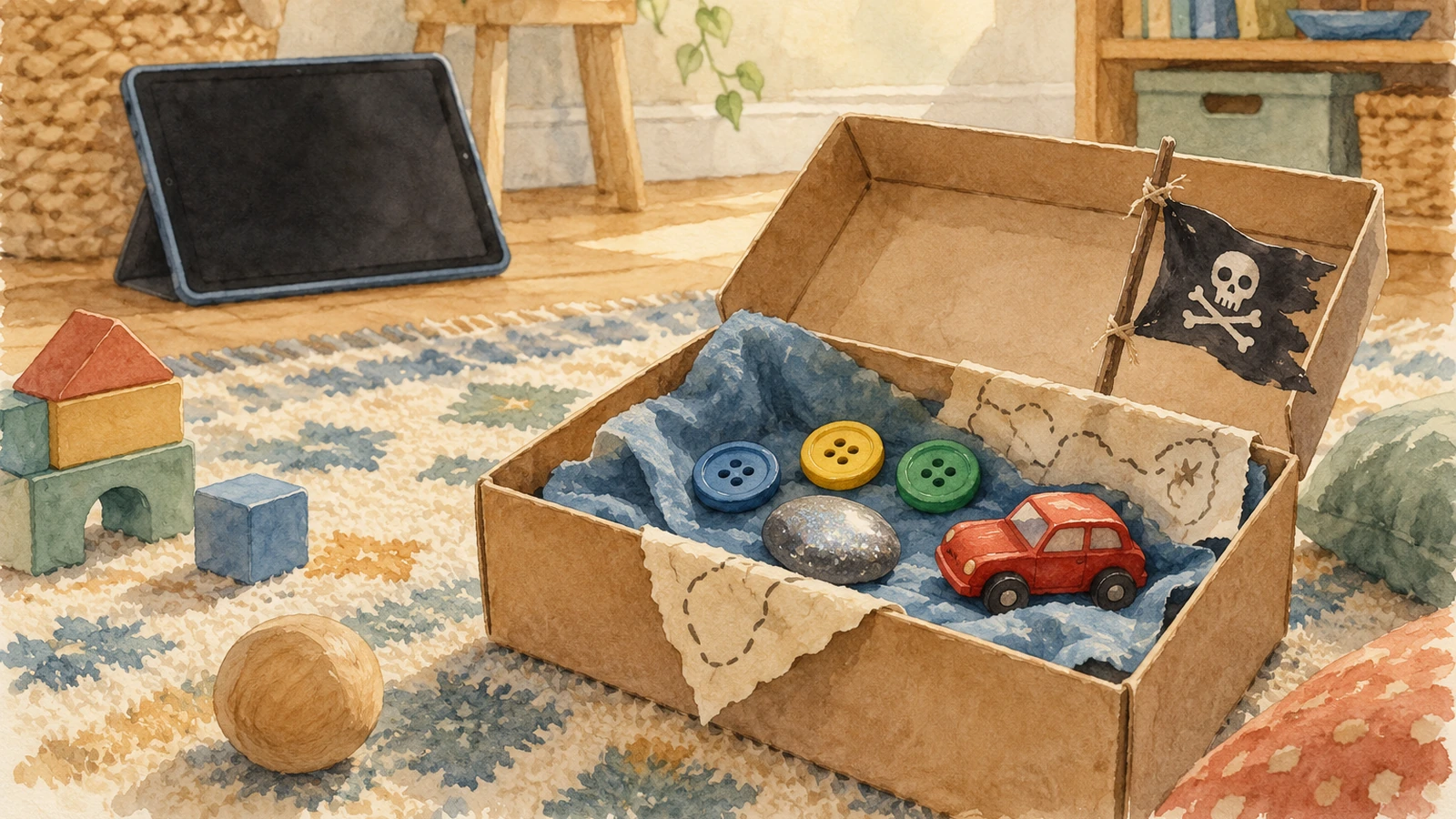
Louise, five, had asked Élodie, her mum, to get an artificial intelligence tool to invent a pirate story. Within seconds, the screen had produced a captain, an island, some treasure and even the line the parrot was supposed to say.
Élodie expected Louise to run off and fetch her figures. Instead, she asked for the next part. Then the next.
When Élodie suggested inventing what was hidden inside the chest, Louise shrugged.
The tool had become very good at playing. Perhaps a little too good.
When artificial intelligence enters pretend play
A qualitative preprint presented ten parents with different ways AI might be used in imaginative play. They saw interesting possibilities: inventing a character, helping a tired parent get going or making some games more accessible. They also worried that the tool might direct the story, replace human exchanges or become a character their child grew attached to.
These interviews describe parents’ hopes and concerns, not measured effects on children. But their hesitation raises a useful question: does the tool offer a starting point, or supply every decision?
Élodie closed the screen after one last paragraph.
Louise initially asked for the AI’s answer. Then she put three buttons, a shiny stone and a little car into a shoebox. The treasure was a tiny vehicle that could drive under the sea. No generator had planned that.
Keeping the child as the author
It is possible to use a digital tool without handing it the whole game. An adult can ask for a single idea, then turn off the screen. They can suggest changing a character, drawing what happens next or acting out the scene with real objects. If the tool asks questions, the child does not have to answer or share personal information.
A clear boundary helps too: AI is neither a friend who knows everything nor an endlessly available presence. It is a tool whose use, duration and conditions are the adult’s responsibility.
That day, Élodie did not ban generated stories. She simply stopped asking them to fill every silence.
Louise sailed her chest-car under the table. The parrot had vanished from the plot and the captain had become a tortoise. The story was less neatly constructed than the one on the screen.
It belonged to the child again.
Keep this handy
The situation
AI supplies every plot twist and your child waits for the next instalment instead of inventing their own game.
Try this
If you choose a suitable tool, ask for a single starting idea together, then put it aside and continue with objects, drawings or figures.
- “Let’s keep that idea. What would you like to change?”
- “We can invent an answer without asking the screen, too.”
Keep in mind: AI is not necessary for play. Follow the tool’s age conditions and keep the adult responsible for any interaction.