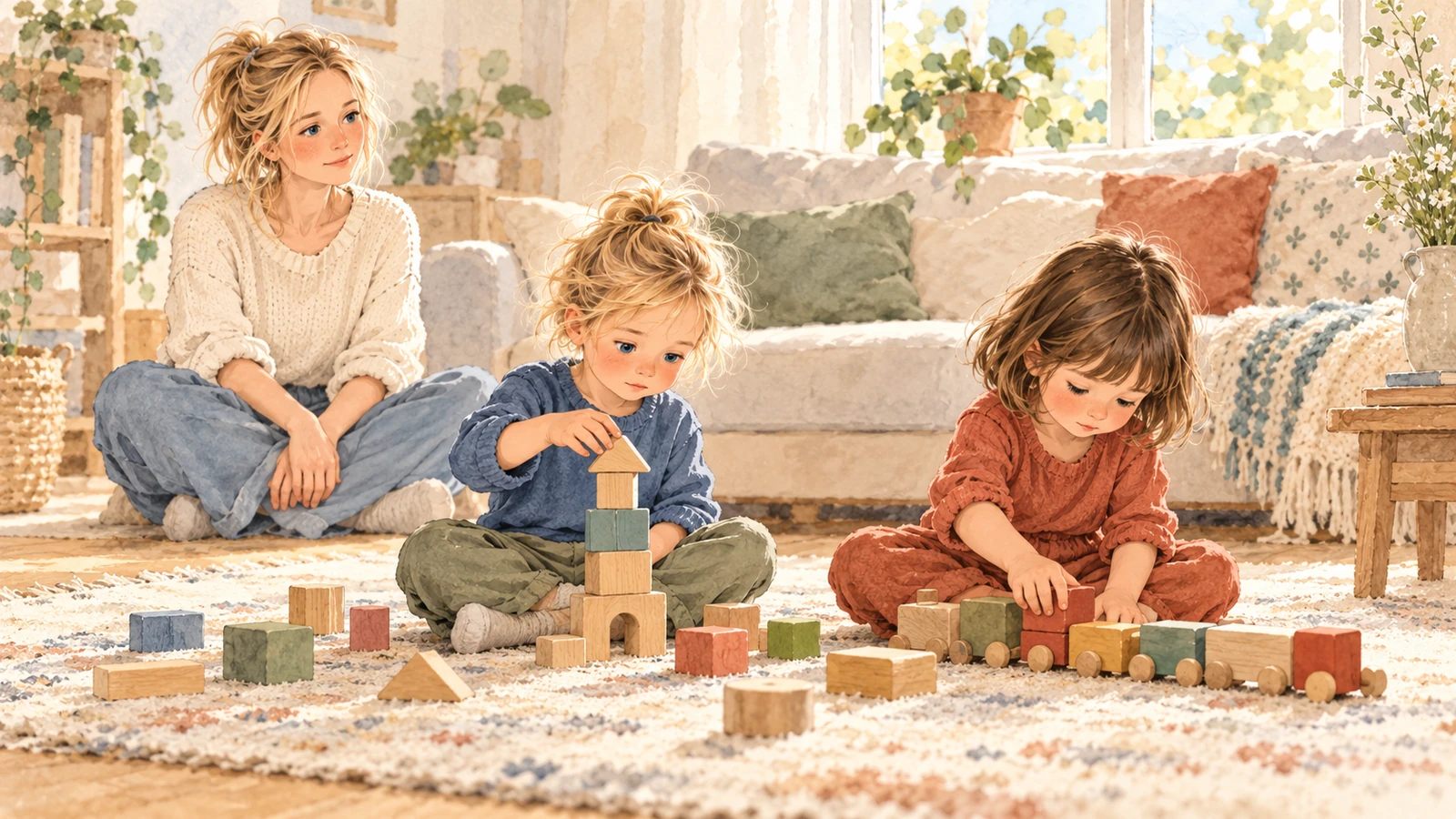
Gabriel, three and a half, was at home with his mum Marie, playing with Inès, a little neighbour. They had put their blocks on the same rug. Gabriel was building a tower. Inès was lining hers up like a train. They hardly spoke.
Marie suggested a bridge between the two constructions. Neither child answered. She then tried sharing: “Gabriel, you could give Inès a red block.”
Gabriel held on to his block. Inès turned her train the other way.
Marie wanted to help them play together. Perhaps they were already learning how to be together.
Playing alongside doesn’t necessarily mean ignoring each other
For young children, meeting someone doesn’t always look like the group play adults imagine. Two children can watch each other’s movements, choose a similar object, borrow an idea or simply tolerate someone very close by without building the same story.
Gabriel hadn’t invited Inès into his tower. Yet when she stacked two blocks, he tried the same thing. Inès watched his tower fall, then added a block beneath her train. Their games remained separate, but they were responding to each other in little ways.
Marie moved back. She hadn’t ruled out offering an object or reminding them of a boundary if one snatched the other’s toy. She had simply stopped turning every silence into a problem to solve.
Making space without forcing a connection
Playing side by side doesn’t explain everything. A child who always seems isolated, wherever they are, or whose communication is causing concern may need a broader look and, if necessary, professional advice. But one quiet scene on a rug isn’t enough to conclude that they don’t know how to play with others.
We can support a meeting with a gentle suggestion, then accept that it may not be taken up.
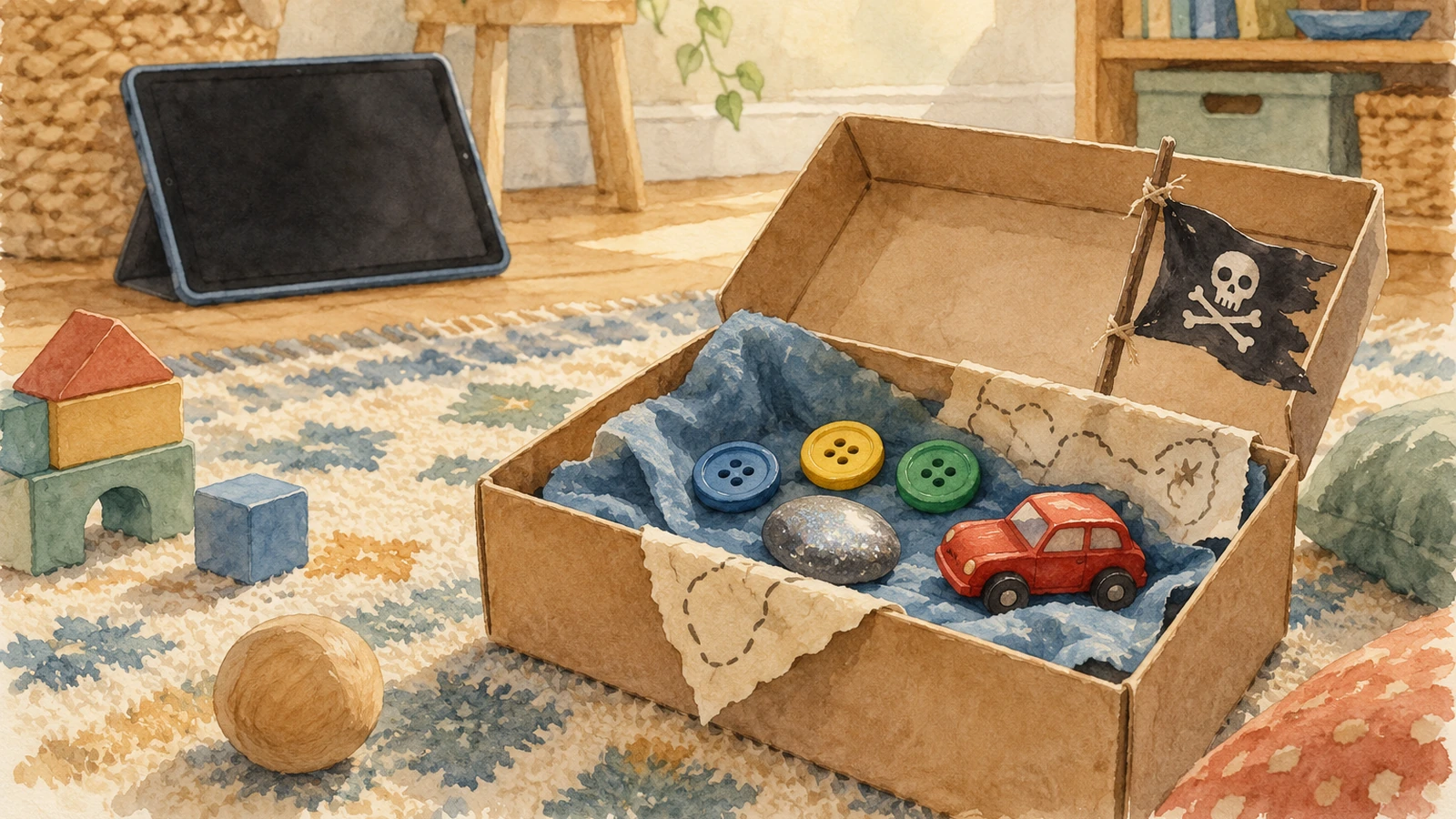
A few minutes later, Gabriel rolled a car close to Inès’s train. She opened a gap between her blocks. Nobody announced that they were playing together.
Marie hadn’t needed to name the meeting for it to begin.
Keep this handy
The situation
Two children play side by side without much interaction, and you wonder whether to make them play together.
Try this
Notice what they are already doing, leave the door open to interaction and avoid forcing a shared game.
- “You can each build your own thing.”
- “If you'd like to connect your two games, I can help.”
Keep in mind: Parallel play is common. Ongoing isolation across different settings may deserve a closer look.