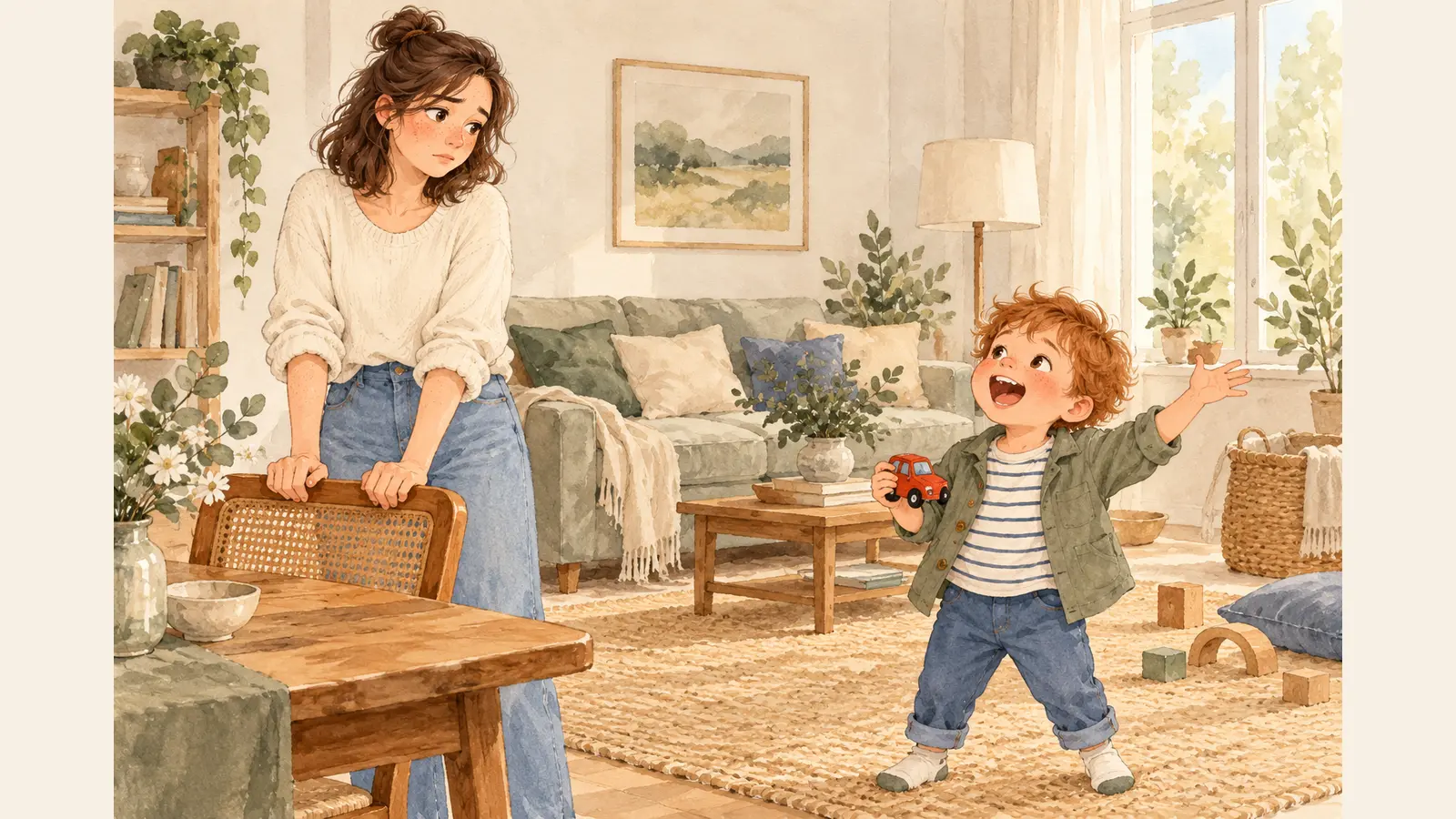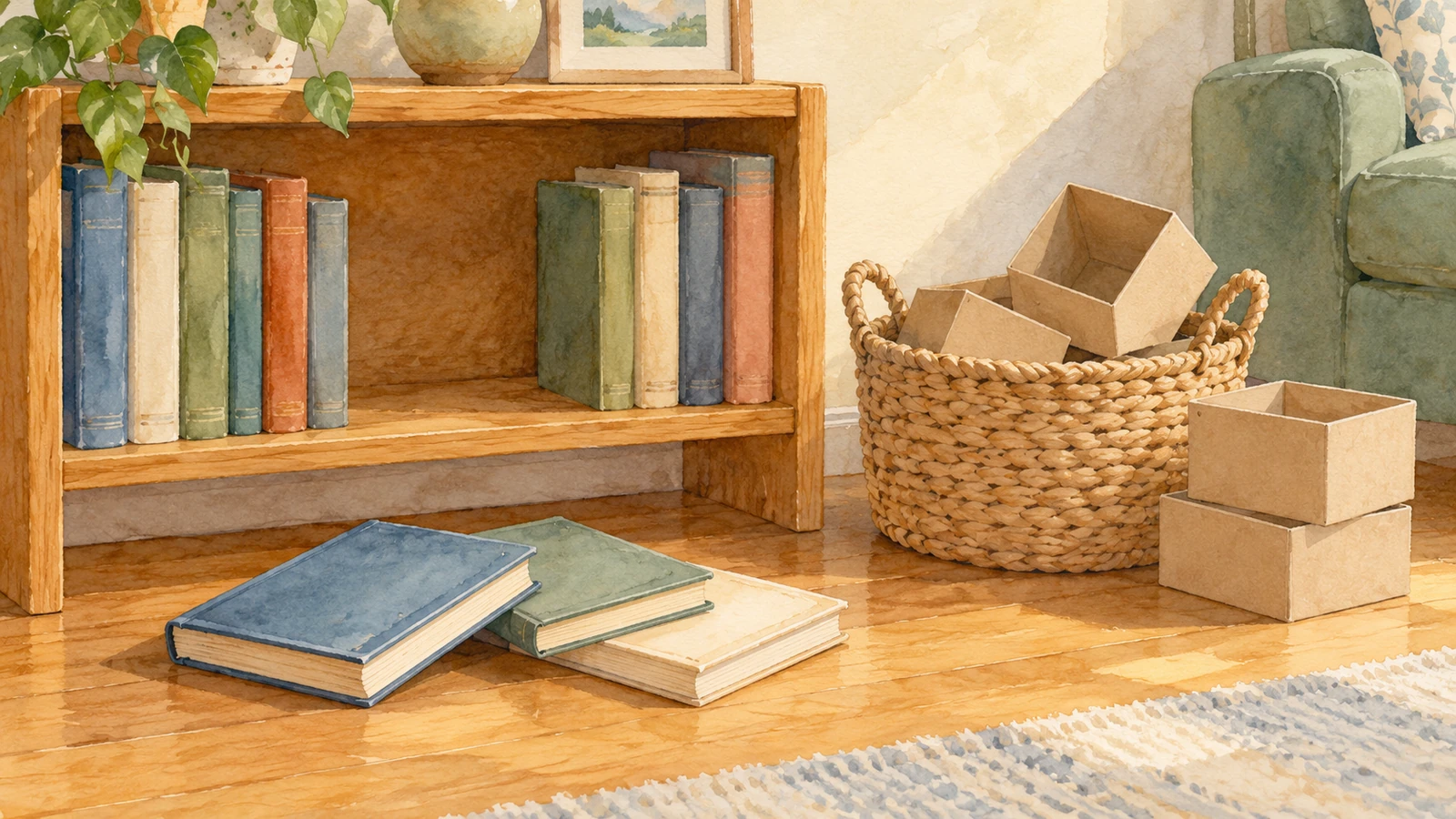
Gabriel, Marie’s son, is three and a half. One afternoon, he pulled a book from the shelf, then a second. At the third, Marie asked him to stop. Gabriel sped up until a whole row fell onto the floor.
Marie saw bent pages, tidying to do and an ignored instruction. Gabriel was watching the books fall one by one, then all together. He varied their height, pushed harder or more gently and listened to the sound.
When a child empties a bookshelf, watching what they do does not mean letting them damage the books. It simply helps you set a limit that also responds to what they were looking for.
The limit can stay very simple
Marie did not need to guess exactly what was going on inside Gabriel’s head. Was it the sound? The weight? The repetition? The pleasure of causing an avalanche? Several answers could be true.
She stopped his hand and said:
That sentence does not turn the action into a brilliant scientific experiment. It simply separates two things: the impulse can be acknowledged, and the object still protected.
That is sometimes what is missing when we redirect a child. We suggest a different activity without keeping the movement that interested them. “Come and draw” offers little to someone who wanted to push, stack, tip things over and start again.
Find an alternative that is close enough
Marie put some lightweight boxes and cardboard tubes on the floor. Gabriel stacked them against the sofa, then knocked them down. The sound was less satisfying than the books; he went back to the shelf twice. So the limit had to be repeated.
“The books stay on the shelf. You can knock the boxes down.”
“Would you like one big tower or several little towers to knock over?”
An alternative does not cancel frustration. It offers a possible way forward. If the child continues, the adult can block access, move the books or change rooms. Understanding the need does not mean negotiating forever.
Later, Gabriel helped put the books back. Not as a solemn punishment: Marie put away most of them, and he slid a few into place. The aim was not to make him pay for the experiment, but to repair what could be repaired.
Marie had started by seeing a mess. Looking again, she had also seen a question being explored through movement. The books were not available to answer it. The boxes were.
A limit protects the object; a useful redirection also tries to preserve curiosity.
Keep this handy
The situation
Your child empties a bookshelf or throws books to see them fall.
Try this
Protect the books, offer other things they can knock down, and put the books back together without an outsized punishment.
- “Books can get damaged. You can knock these boxes down instead.”
- “Will you help me put these books back on the shelf?”
Keep in mind: Understanding curiosity does not mean allowing objects to be damaged or negotiating the limit forever.