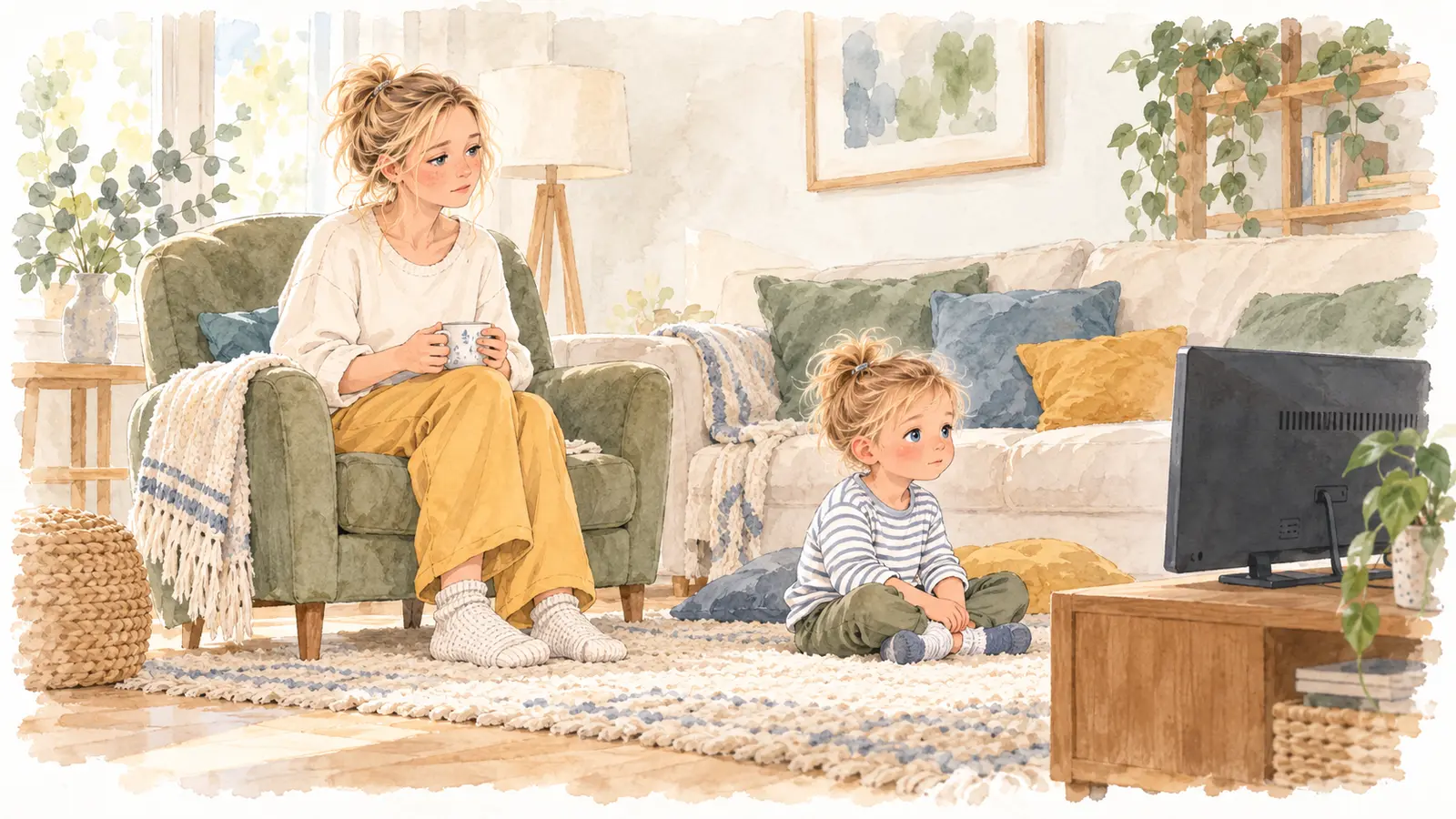
Malo, almost three, had come up with a wonderful song. It had three notes and just one word, repeated with undiminished enthusiasm since breakfast.
Camille, his mum, had smiled for the first five minutes. After ten, she had started hearing the tune inside her head. After fifteen, she wanted to ask the whole building to be quiet.
The most irritating part was that Malo wasn’t doing anything wrong. He was playing, experimenting with his voice and clearly delighted with his invention.
When the noise gets too much for the adult
With a young child, sounds get repeated a lot. A sentence, a song, a car noise or an animal impression can return twenty times without losing any appeal for the person making it.
For the adult, it isn’t necessarily as enjoyable. Between questions, things falling over, notifications and ongoing tasks, one more repetition can be the one that tips everything over.
Camille first thought of saying, “Stop, it’s unbearable.” Then she realised she was describing her own state, not the quality of Malo’s game.
She tried something else:
“I can hear how much you love that song. My ears need a little quiet.”
Malo asked why. Camille replied that you could love songs and still need a break.
A sound limit isn’t a criticism of the child
She wasn’t going to forbid him to sing. Camille suggested continuing in his room, singing more quietly or saving the song for their walk. Malo chose the whispered version, which made him laugh for about thirty seconds before he returned to his usual volume.
Camille then opened the window, drank a glass of water and took two minutes without conversation. It wasn’t a sophisticated parenting technique. It was a small boundary to protect her own ability to be present.
Of course, not all children immediately accept this kind of request. And some days are so noisy that a well-worded sentence isn’t enough. But naming the need for quiet lets you set a limit without making the child the problem.
Late that afternoon, Malo started his song again in the hallway. Camille looked up at him.
“You still remember it?”
He replied very seriously:
“Yes. I haven't lost it.”
She’d had a feeling he hadn’t.
Keep this handy
The situation
Your child repeats a song endlessly and the noise wears you out.
Try this
Offer the meal without negotiating every mouthful, and look at eating patterns across several days.
- “This is what we're having. You can choose what to eat from your plate.”
Keep in mind: Persistent eating concerns deserve professional advice; this is not a rigid rule.