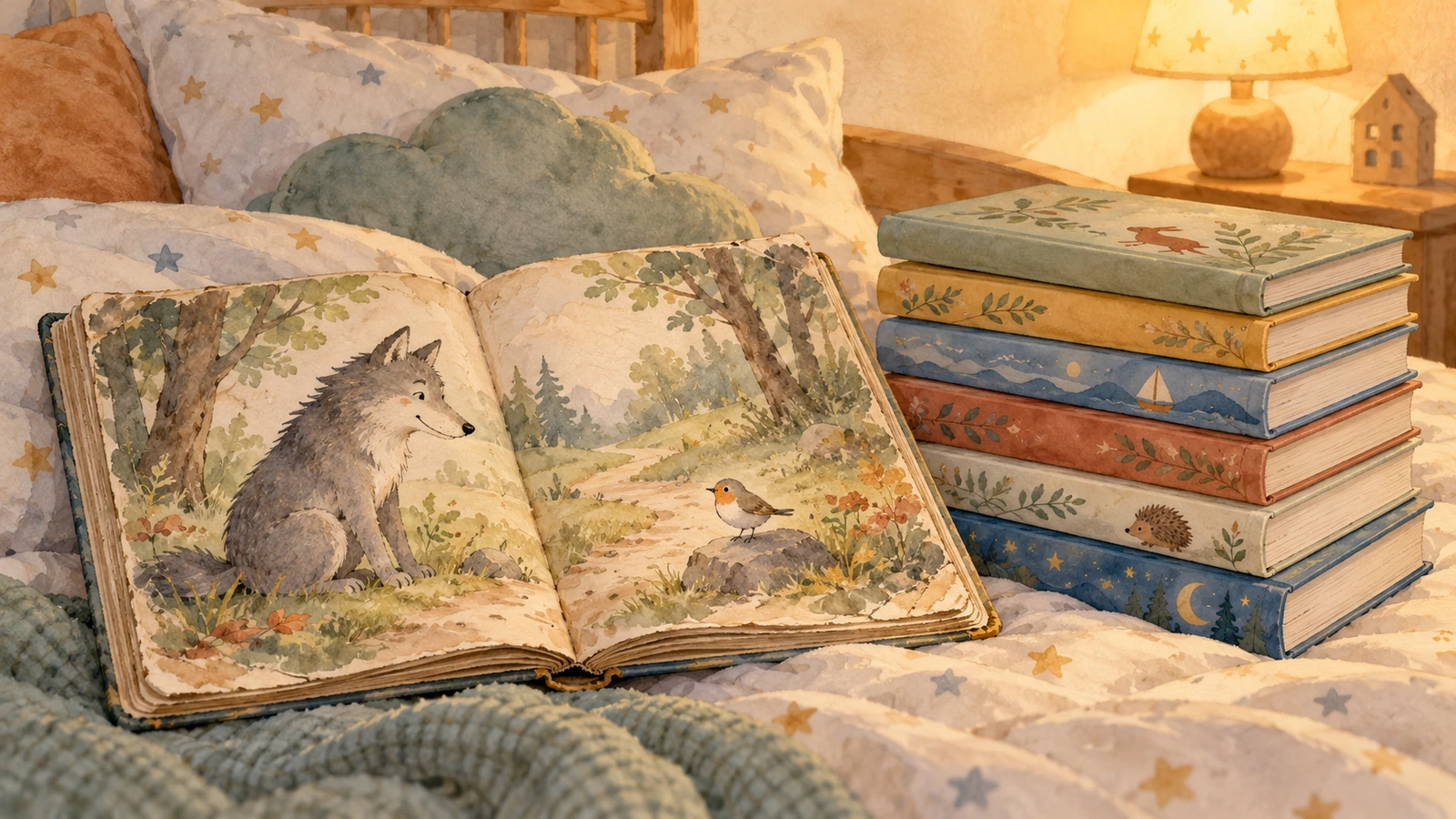
Malo, Camille’s son, was almost three. A stack of six new books had been waiting in his bedroom since the weekend. There was a train, a whale and even a dragon.
But when it was time for his bedtime story, Malo crossed the room to fetch a picture book with a cover that was starting to come apart.
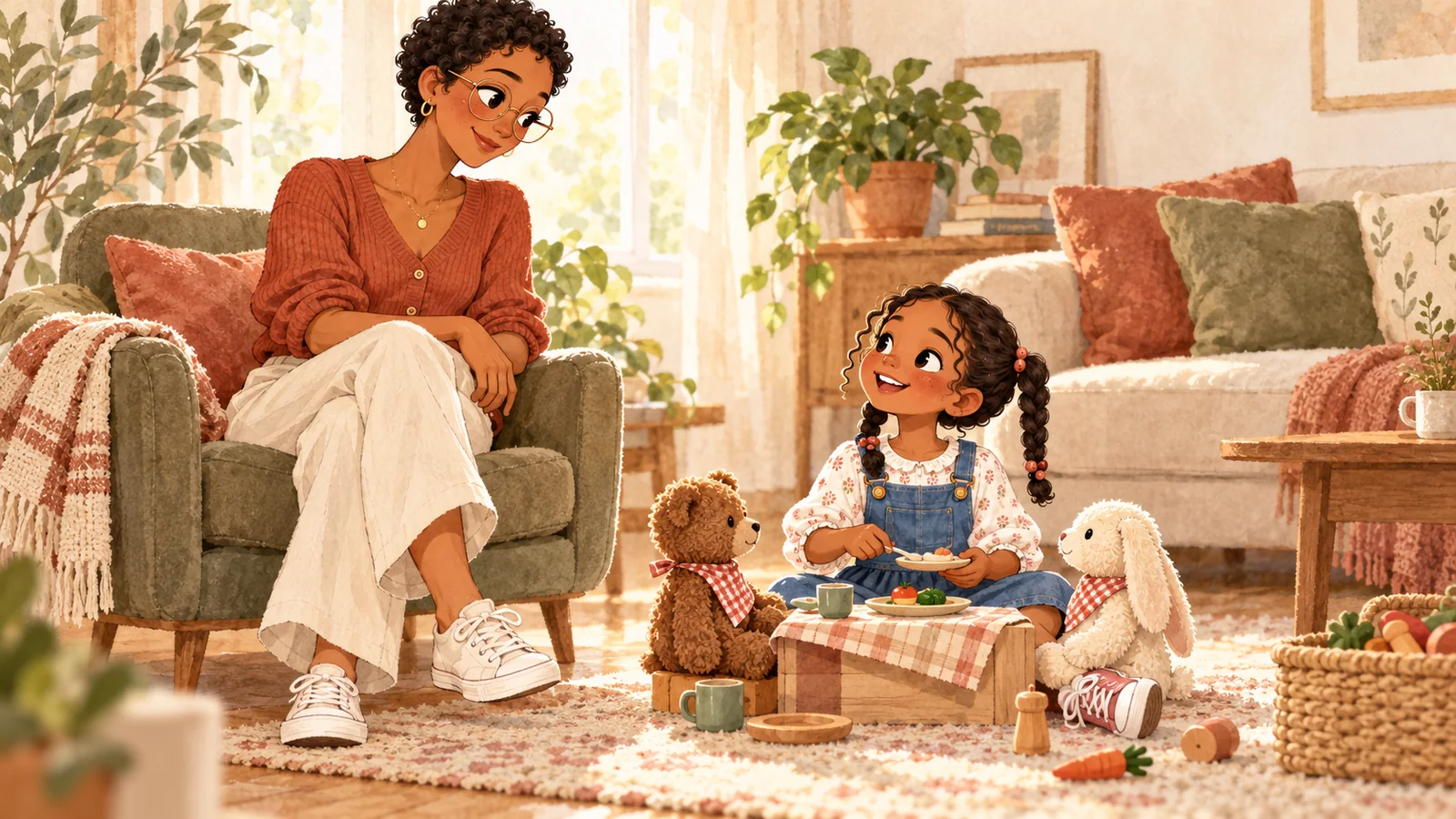
Camille, his mum, tried to negotiate. She already knew the wolf’s lines, his three encounters and the last page by heart. Malo hugged the book.
It was the fifth time that week. Perhaps the tenth.
Camille wanted to introduce him to something new. Malo clearly wanted to return to exactly the same story.
Why a child keeps asking for the same book
On a first reading, a young child meets the characters and tries to follow what happens. On later readings, they know the wolf is about to meet a rabbit behind the tree. They can anticipate, recognise a detail and sometimes finish a sentence before the adult.
Repetition does not necessarily mean they are refusing to discover the world. It can be a way of making a story their own, returning to a predictable moment or simply enjoying something they love.
Camille opened the book. Before she had even started, Malo pointed to a little bird hidden on the first page.
She had never noticed it.
On the third page, he asked why the wolf had taken a different path. Camille looked at the picture. He was right: she had read that page so often without really looking at the path.
Making room for repetition without getting stuck in it
Camille had not decided to read the same book until he turned eighteen. Some nights, she could offer another book before the wolf. On others, she could explain that she only had the energy for one story, even if Malo would have preferred three readings.
She could also let him choose a page to tell himself, or ask what he noticed today. Not to turn every reading into an exercise, simply to share his enjoyment in another way.
That evening, they read the wolf again. Camille spent longer looking at the pictures, and Malo corrected a word she had changed by accident.
When she closed the book, she did not feel she had introduced her son to a great new discovery.
But they had found a bird, a path and something to laugh about. All in a story she had thought she knew inside out.
Keep this handy
The situation
Your child asks for the same book every evening while you would like a different story.
Try this
Read the chosen book again if you have the energy, and say how many readings you can manage. Let your child point out a detail or tell a page without turning it into an exercise.
- “We’ll read it once tonight, then turn out the light.”
- “Would you like to look at the pictures or tell me one page?”
Keep in mind: Repetition can be enjoyable for a child and tiring for an adult. You can also set a limit or suggest a different book.