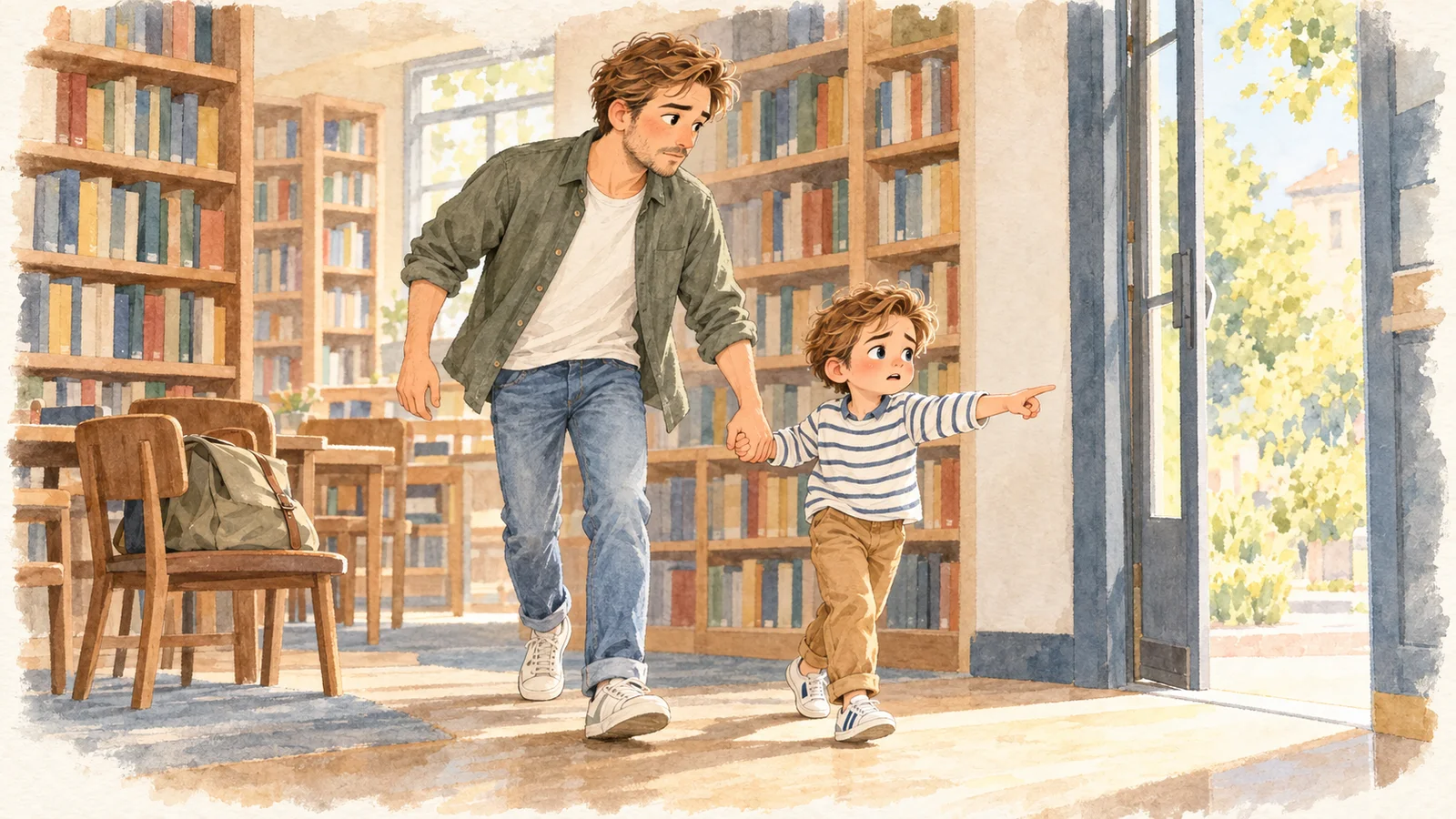
The alarm interrupted our visit to the library. Oscar, my four-and-a-half-year-old son, stood up and pointed to the door at the back. “We go out that way.”
For a second, my hand searched for my keys in my bag, just as it would before any other departure. Then a staff member asked us to leave our belongings and follow her. I took Oscar’s hand.
We reached the assembly point with the other visitors. Oscar knew the way, but his fingers gripped mine. Preparing for a fire evacuation didn’t mean he would find the alarm pleasant.
Preparing for an evacuation without asking a child to be brave
At school, Oscar had already taken part in drills: stop what you’re doing, listen to the adult and go to the designated place. He had also noticed this door during our visit.
I had mainly told him not to be afraid. He had more usable information: who to listen to and where to go with the adult.
An explanation given calmly can make a situation less unfamiliar. It doesn’t promise to remove fear or guarantee that a child will remember everything. A sudden noise, hurried adults or a different place can still unsettle them.
Outside, Oscar asked me whether the books would burn. He knew how to leave the building. That didn’t answer all his questions.
I said we were waiting for information from the staff, without inventing a certainty for him. I stayed close while they checked the situation.
Simple cues, an adult’s responsibility
Preparing a young child doesn’t mean handing over responsibility for the family’s safety. It is for the adult to plan, accompany the child and follow the instructions for that place.
We can ask the school how its drills work, then use the same words at home. Explaining that an alarm can be very loud and that we listen to the adult present is already more practical than “you’ll know what to do”.
“If the alarm sounds here, we stop our activity and listen to the adult.”
“You stay with me. Our belongings can wait.”
At home, the plan also depends on the type of home and the building’s instructions. We prepare it calmly, using guidance from emergency services, without turning it into a frightening scenario or sending the child off alone.
Once the all-clear was given, we collected our belongings. Oscar wanted to know whether we could still borrow the book he had chosen.
I found my keys at the bottom of the bag. That evening, I cleared the entrance and chose a fixed place for them. There were still a few preparations to make on the adults’ side.