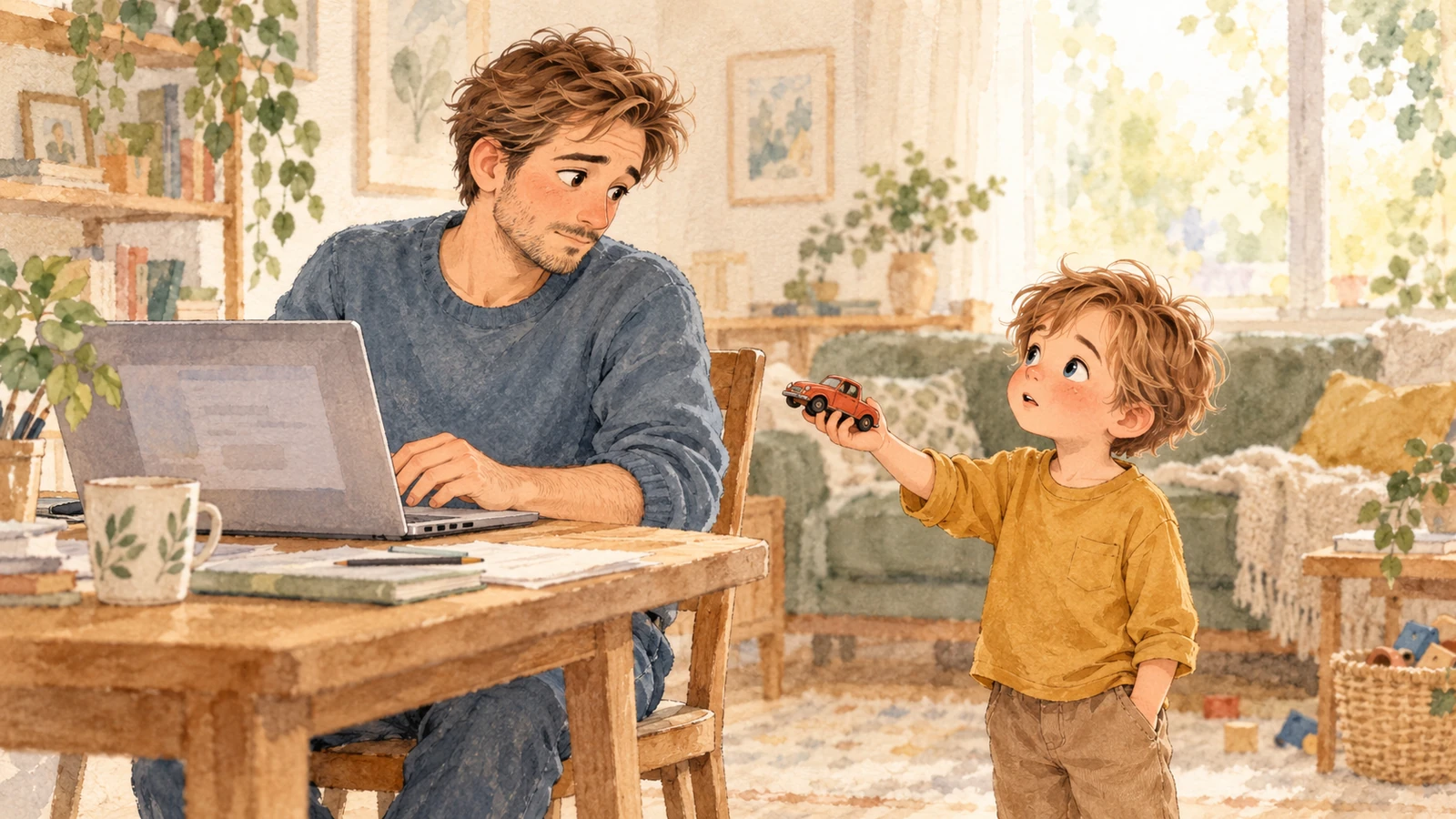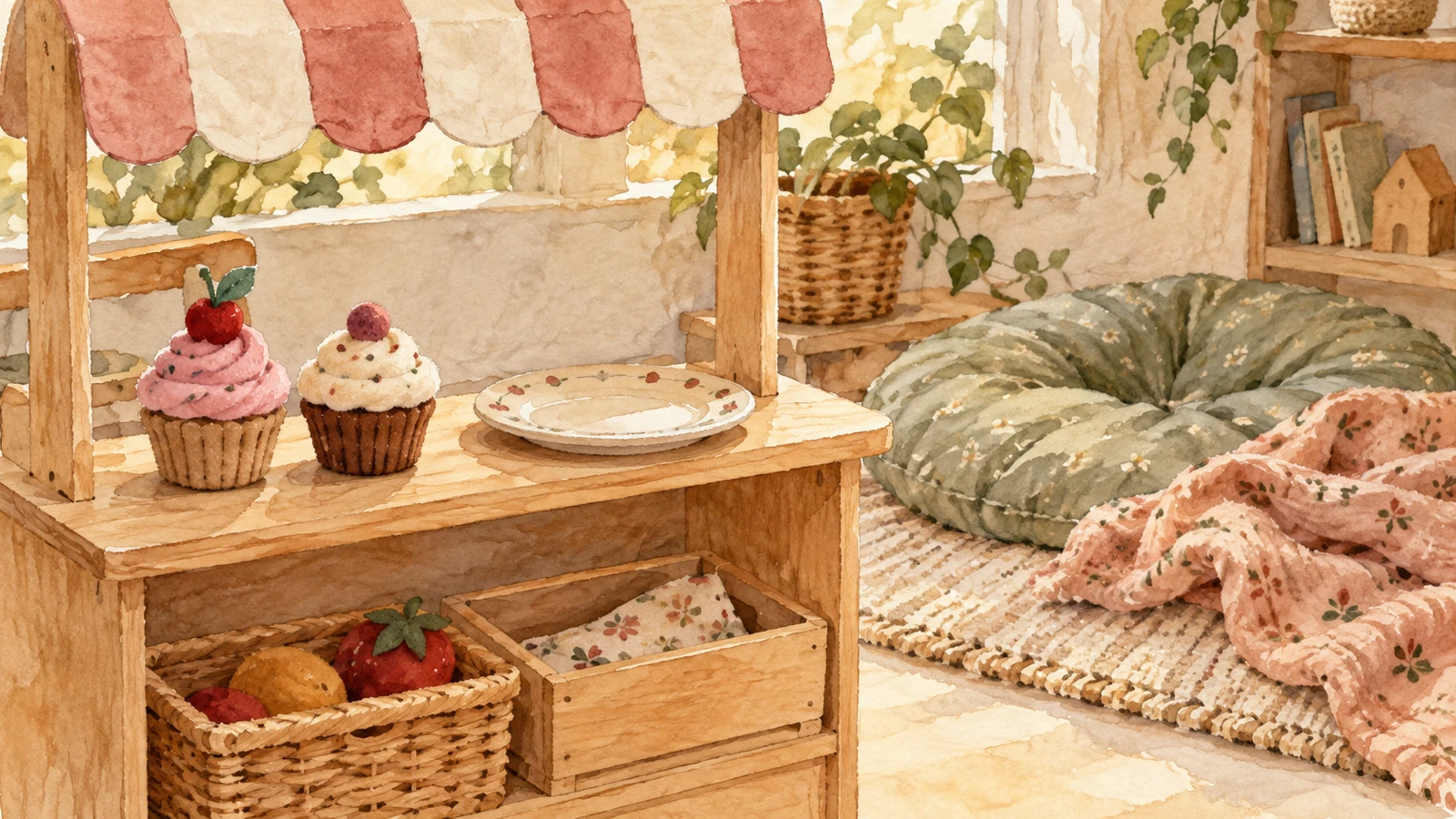
Iris, three and a half, had opened a bakery between the sofa and the little table. Nora, her mum, sat on the customers’ side. There were felt cakes, a plate and a very personal approach to service.
Nora ordered a cake. Iris looked at the counter, then replied:
She went to lie on a cushion with her little blanket. The customer remained in front of an empty plate. The establishment had closed without notice but with remarkable administrative calm.
“Not right now” can simply end the game
Nora nearly tried again: just one cake, since Iris had suggested playing shop in the first place. Then she looked at Iris, already settled quietly.
This was neither a real meal being refused nor an essential care task. Nora was asking the game to continue when her daughter had just stepped out of it. One person’s wish did not create an obligation for the other.
A small scene cannot tell us whether Iris had identified a great need for rest, copied a familiar phrase or added a break to her story. Young children can do all those things without writing an explanation for adults.
What was observable was enough: she had said no without shouting, left the counter and found somewhere quiet. Nora did not need the volume to rise to check whether the refusal really counted.
Hear the calm before negotiating
We readily recognise a boundary when it comes with tears. A quiet one can look more like an answer still available for negotiation.
Yet if we want to help children say what they need, we can make room for words that arrive before a crisis too. That does not require praising their maturity or asking them to justify every break.
In this situation, replies could stay short:
“All right, you’re stopping the game. I’ll leave the cakes here.”
“Would you like some quiet? I’ll sit on the other side.”
For care, departures or safety, the adult has other responsibilities. They can acknowledge a refusal and work out how to do what remains necessary. Here, nobody needed their imaginary cake to be dressed, fed or safe.
Nora put the plate by the counter and picked up her book. Iris did not fall asleep. She lay there for a few minutes, then called her mum to show her a fold in the blanket. The bakery could wait.
Keep this handy
The situation
Your child calmly stops a game you would like to continue.
Try this
Accept the end of an optional activity and make room for a break without demanding an explanation or prompting until a crisis happens.
- “You can take a break even if the game was fun.”
Keep in mind: Stopping a game does not prove exceptional maturity. Necessary care and safety remain the adult’s responsibility.