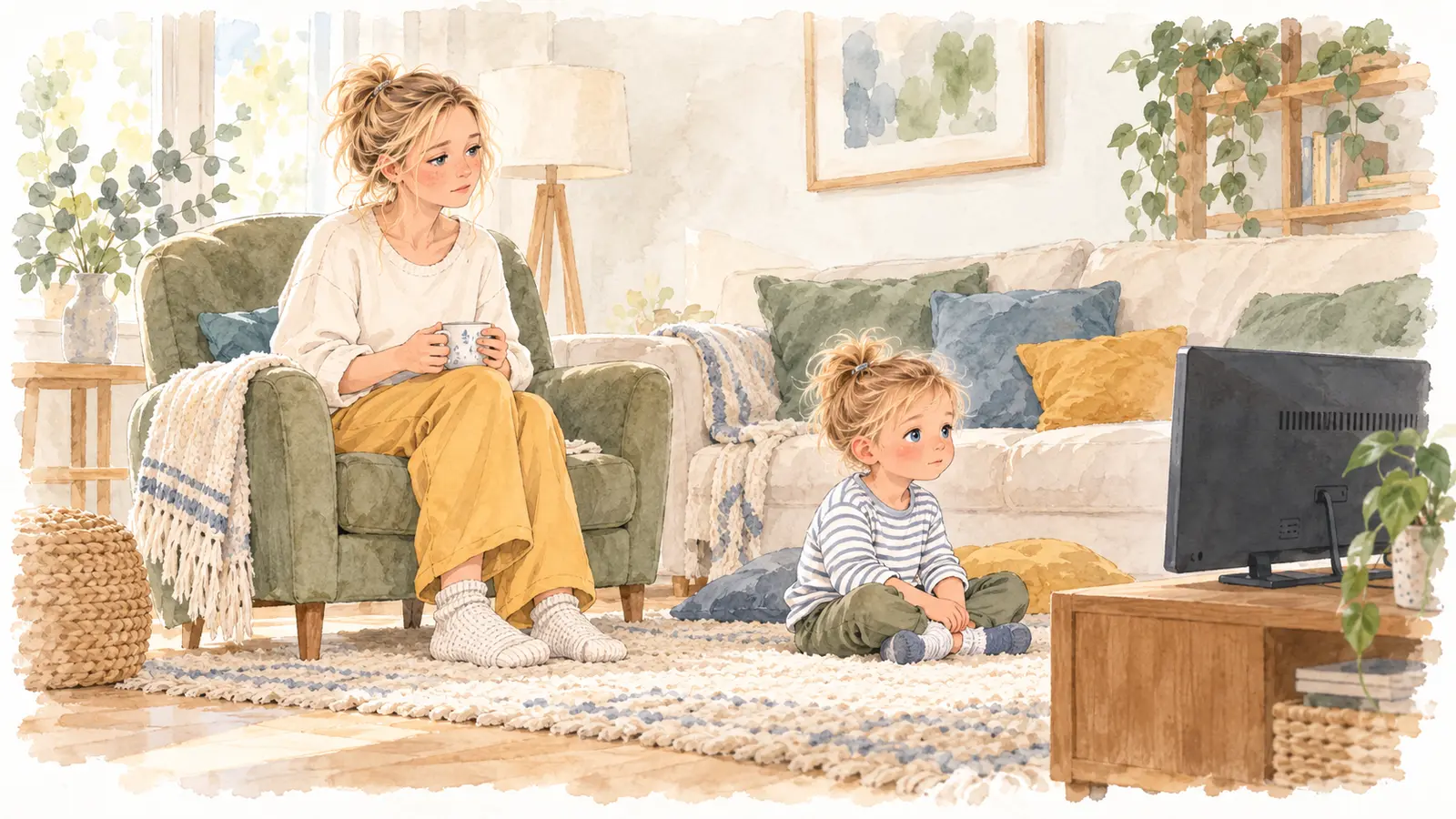
I’d put a cartoon on for Gabriel, my almost four-year-old son. Dinner was over and I finally had a hot cup in front of me.
I could have said the programme was interesting, that the language was good or that he was learning something. All of that would mostly have dressed up a much simpler reason.
I needed ten minutes of peace.
It wasn’t a crisis to interrupt or a child to cheer up. It was me who didn’t want to answer straight away any more.
The parent’s break deserves to be named
I didn’t want to turn this moment into a demonstration of the benefits of screens. A programme didn’t automatically become necessary or educational because I was tired.
But pretending I’d chosen it solely for Gabriel let me avoid looking at my own need. I could keep acting as though I were endlessly available while quietly searching for a way not to be.
I chose an episode whose content and ending I knew. I stayed in the room. I drank my tea without trying to make every minute productive by tidying something.
That break didn’t fix our organisation. Nor did it mean all screen use was equal. It had a specific place, that evening, in a day when I needed to stop.
Prepare for the end without expecting perfect gratitude
Before starting the episode, I’d said we’d switch off afterwards. I turned autoplay off and kept the remote near me.
Gabriel asked for another episode when the credits appeared. I’d had ten quiet minutes; that didn’t buy me a child who would accept what came next without protesting.
“You'd like to keep watching. We planned this episode, and now we're switching off.”
I returned to his side for the transition. If I hadn’t had any capacity for that ending, I would have needed to take it into account before starting, not just hope the off button would be enough.
And if every evening depended on this one way of getting through, I could also look at what was missing around us: someone taking over, one task removed or a less crowded moment. My need for rest couldn’t depend solely on his ability to stay occupied.
That evening, I’d drunk my cup while it was hot. I could acknowledge that this was the reason for the cartoon without presenting that little respite as the whole answer to our tiredness.
Keep this handy
The situation
You put a screen on to have a quiet moment?
Try this
Explain what happens next and help with the transition rather than repeating warnings.
- “We'll finish this, then we'll do something else together.”
Keep in mind: Context and content matter too; a difficult transition is not a failure.