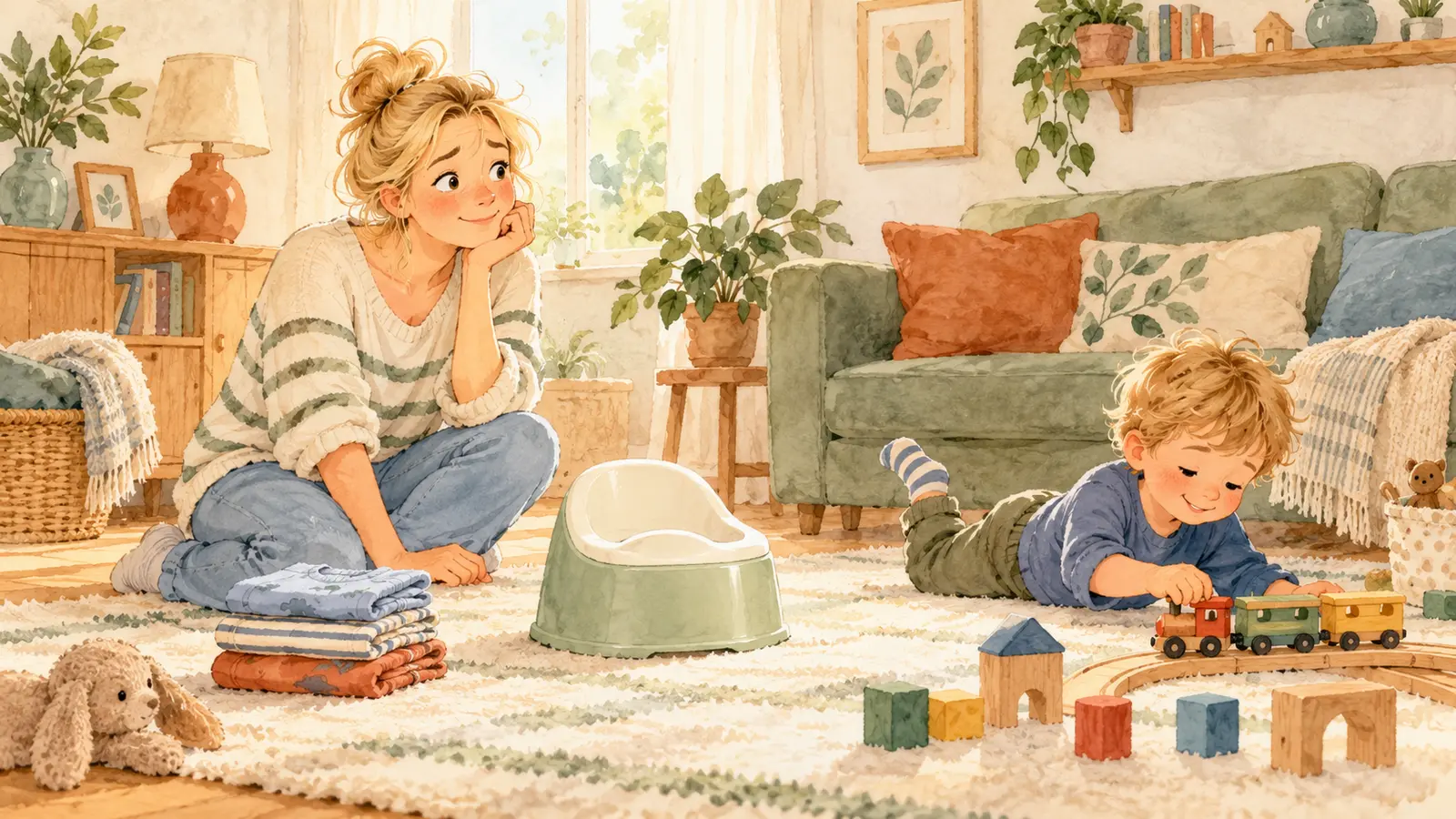
Malo, Camille’s son, who was nearly three, had weed in the potty twice that day. In the evening, he asked for a nappy.
Camille, his mum, pointed to the potty. It was right there. Malo shook his head and repeated his request.
So he knew how to use the potty, but not for everything. In Camille’s mind, that difference looked like a step he didn’t want to take. She was already tempted to explain that he could try, because he was a big boy now.
Malo was still waiting for his nappy.
Weeing in the potty doesn’t necessarily settle the question of poo
Camille had put the learning into one box: using the potty. Her son seemed to be experiencing two different situations.
She couldn’t know just by looking what was holding him back. The nappy might feel more familiar. He might be frightened, or have had pain before. This wasn’t the moment to turn those guesses into a diagnosis, let alone proof of unwillingness.
Still, the question changed. Instead of looking for a way to get a poo in the potty that evening, Camille could start by understanding what made it difficult.
A child who holds poo in can enter a cycle in which stools become harder and more painful, making them even more reluctant to let go. Pain, hard stools or suspected constipation are reasons to seek medical advice promptly, without waiting for patience alone to solve the problem. The NHS describes these signs and the value of getting help early.
Not making a nappy a reward to be earned
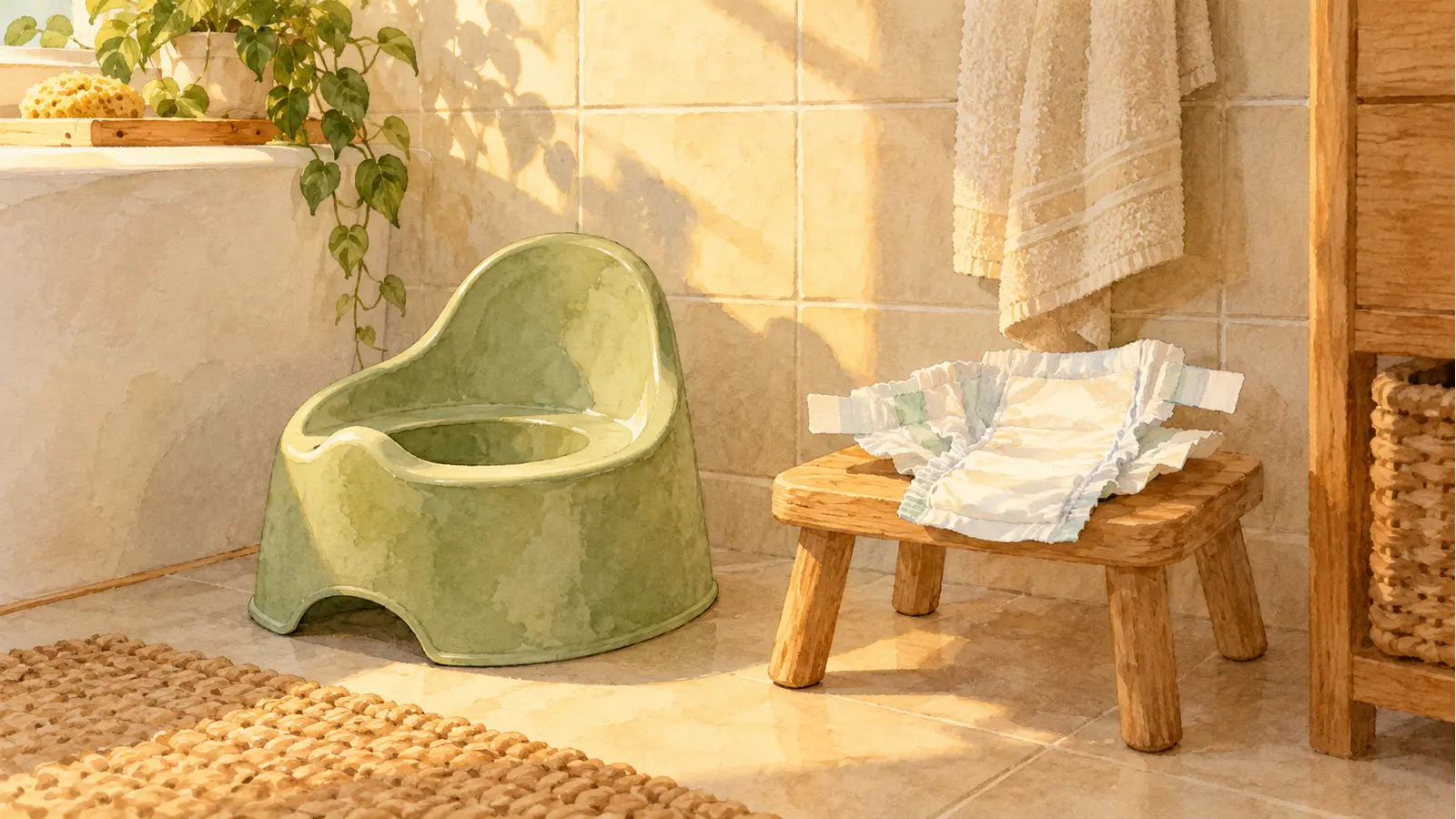
Camille gave him the nappy he had asked for. She didn’t keep it out of reach until Malo agreed to sit down. That evening, she wanted to avoid him holding on even longer to meet the potty goal.
She could leave the potty available, offer without insisting, and provide a quiet moment away from people passing through. If Malo chose to sit, his feet needed proper support, with no obligation to produce anything.
“You can tell me if it hurts or if something frightens you.”
“You need your nappy to do a poo. I’ll help you. We don’t have to manage it in the potty tonight.”
The potty would still be available tomorrow. Removing pressure doesn’t replace treatment when a child is constipated.
Camille had seen unfinished independence. For now, she was mainly looking after a child who needed to poo without it becoming an ordeal.
Keep this handy
The situation
Does your child wee in the potty but ask for a nappy to poo?
Try this
She could leave the potty available, offer without insisting, and provide a quiet moment away from people passing through.
- “What would help make this part a little easier?”
Keep in mind: Sleep needs vary with age and circumstances; a routine is a tool, not an absolute rule.