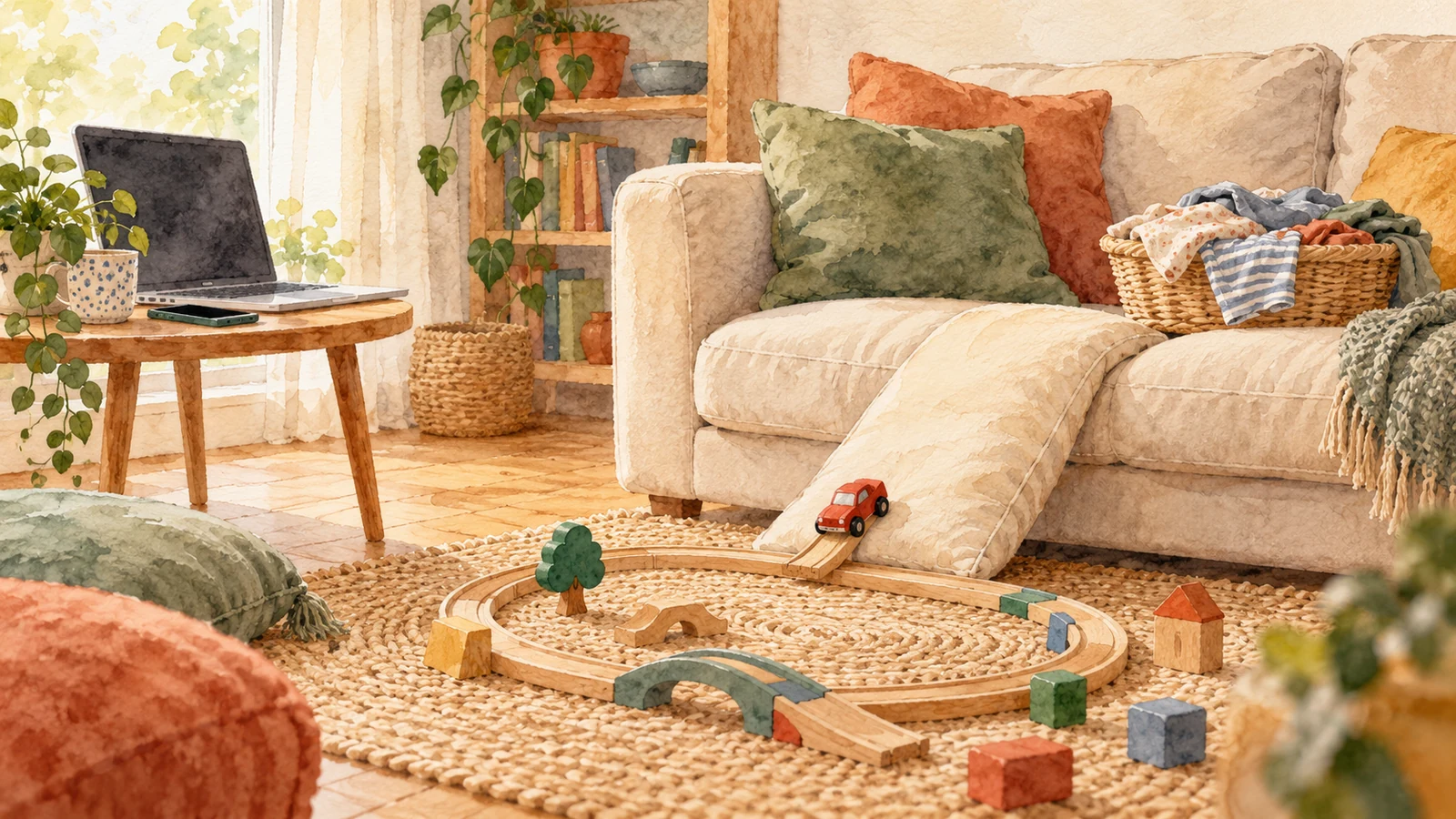
Everyone was in the living room. Malo, nearly three, was sending a little car down a cushion. Camille, his mum, was folding laundry while replying to a message. The car made its first trip.
Camille glanced up for half a second.
The car went again. Then a third time, with a much more convincing engine noise.
Camille had been there all along. Less than a metre away, in fact. Yet Malo was still looking for someone to share what was happening.
Being with your child without being available every moment
It is a familiar mismatch at the end of the day. We are physically together, but each of us is getting on with a separate task: making dinner, tidying, answering a message, finishing work or simply trying to recover. Our child plays nearby, and we feel available because we have not left the room.
For a child, though, the difference between “near me” and “with me” can be very clear. They are not necessarily asking for an hour of play or an organised activity. Sometimes they just want someone to see the car fall, notice the finished tower or hear the sentence they have invented.
This does not mean a parent should drop everything at every “look”. Family life also includes meals to make and adults who need a breather. Connection does not require complete, constant attention. It can fit into a short but wholehearted moment. Counting the seconds matters less than coming back when we said we would watch, without promising more.
A small moment your child can count on
Camille put down the T-shirt she was folding and sat at the edge of the rug.
Malo positioned the car very carefully. The descent lasted four seconds. Camille commented on the missed turn, then told him she was going back to the laundry.
“I’ll finish this plate, then come and give it one proper look.”
“I’ve got two minutes now. Show me what matters in your game.”
These phrases do not offer unlimited availability. They simply make the moment clear: I cannot right now, then I will really be here, even briefly.
Malo did not ask Camille to stay until dinner. Once she had watched his best run, he went back to his track. The room had not grown quieter, nor the tasks fewer. During that run, Camille had really watched what Malo wanted to show her.
Keep this handy
The situation
Your child is trying to get your attention while you are in the same room, busy with something else.
Try this
When possible, name a realistic moment to watch or listen, then actually put your task aside when that moment comes.
- “I’m putting my phone down. What did you want to show me?”
- “I can’t watch right now. I’ll come after I’ve folded these two things.”
Keep in mind: A brief moment will not always be enough. Your child may need more closeness, and you can also keep time for your tasks or rest.