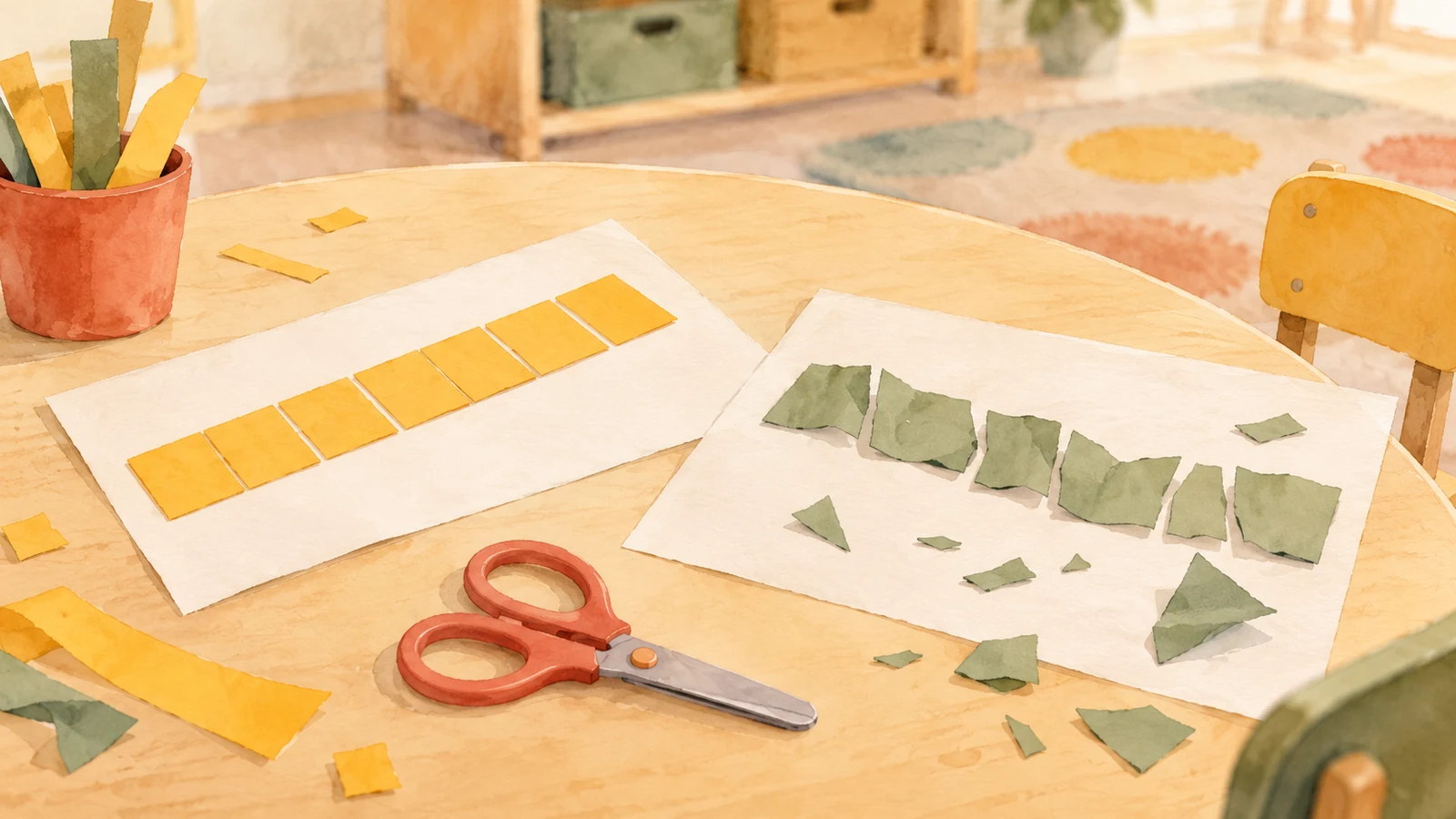
I took a sheet of paper out of the bag belonging to Louise, my five-year-old daughter. Strips had been cut out and glued onto it. Some were straight. Others looked like roads after a landslide.
The day before, another mum had shown me her son’s work from the same class. His strips looked as though a factory had delivered them. I had thought they were lovely, then rather less lovely when I looked at Louise’s.
Was my daughter, born late in the year, finding preschool harder than the other children? I was already planning cutting practice at home.
Born late in the year, but compared with the whole class
When I spoke to that mum again, I learnt that her son was born in January. Louise was born in December. They were both five, but almost eleven months separated them.
Of course I knew that. I simply hadn’t thought about it while looking at the sheets.
The class put them under the same label. In my mind, it had also given them exactly the same starting point. I was looking at two results as though each child had had the same amount of time to grow, practise holding scissors and adjust their movements.
That didn’t necessarily explain every crooked strip. Louise might have been tired, eager to join a game or still finding scissors tricky. Her birth month didn’t tell the whole story. But it was missing from my comparison.
And above all, one sheet of cut paper couldn’t tell me what she would be capable of.
Ask what is improving, rather than who does it better
I eventually spoke to the teacher before turning our table into a catch-up workshop. She showed me an earlier sheet: Louise was holding her scissors better and had managed to follow part of the line this time.
I was looking for how far she was behind another child. The teacher was showing me her progress since the previous attempt.
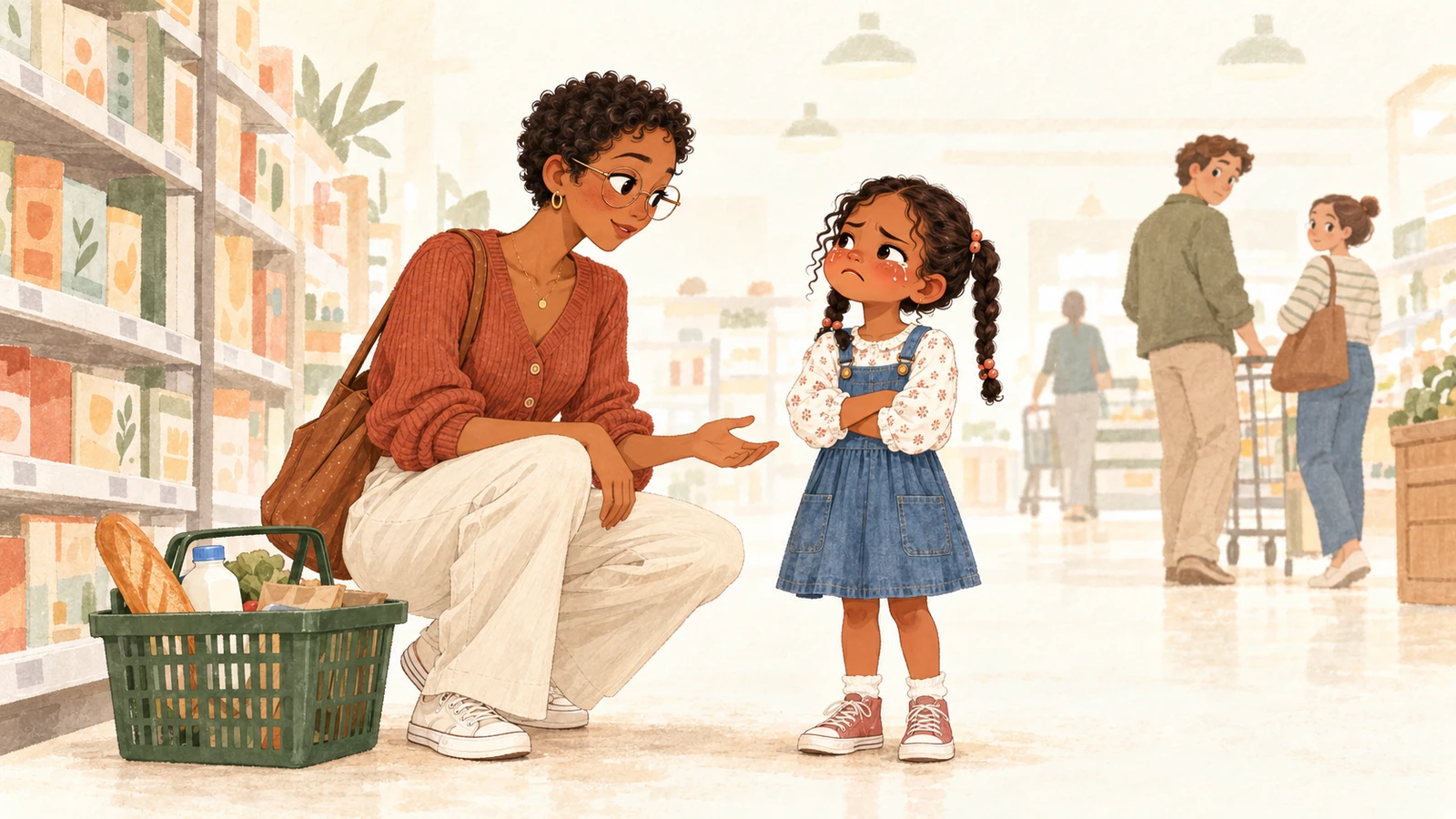
We can keep our feet on the ground: take age into account without blaming every difficulty on the calendar. If a difficulty persists or affects a child’s everyday life, it deserves a conversation with the team to find suitable help.
Two questions can make that conversation more specific.
“What can she do now that she couldn't do a few weeks ago?”
“What does she need help with at the moment and how can we support her without comparing her with the others?”
At home, Louise wanted to make a crown. I held the paper while she cut, without getting her classmate’s sheet out as a model.
The crown was a little lopsided. It stayed on her head perfectly well.