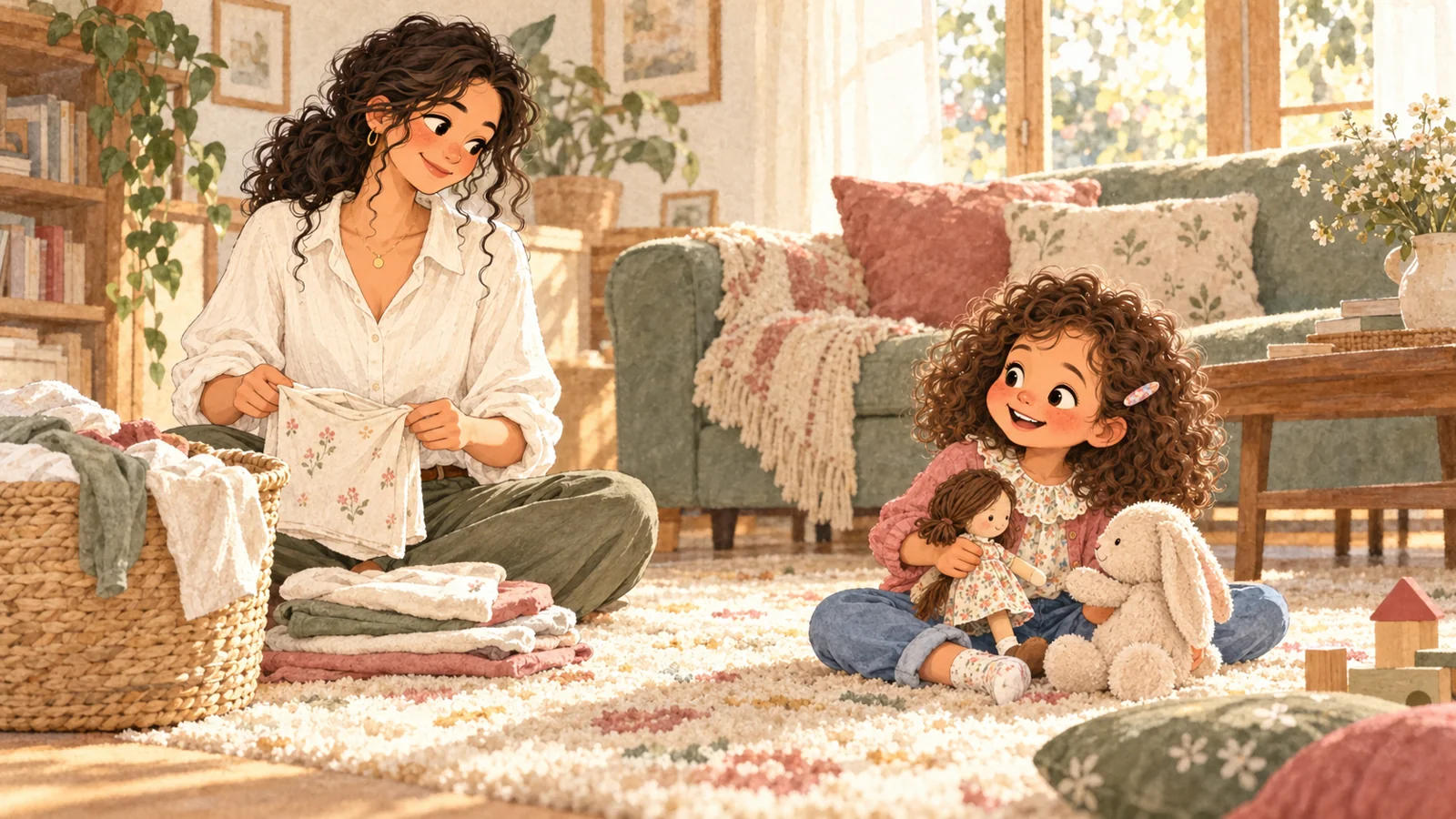
Iris, three and a half, was playing on the floor with a doll and a cuddly rabbit. Her mum, Nora, was putting away laundry nearby without really listening.
Then the doll put on a very serious voice.
Nora stopped with a T-shirt in her hands. The day before, she had used almost exactly those words when Iris had started throwing the sofa cushions. Same tone. Same rhythm.
Her first instinct was to ask why the doll was speaking like that. Then she held back. Iris didn’t look sad. She didn’t seem to be sending her a hidden message either. She was playing.
Play isn’t always just play
At this age, children copy a lot of what they see. They feed soft toys, put dolls to bed, drive cars to work and organise arguments between two dinosaurs.
Sometimes, a familiar scene finds its way in.
That doesn’t mean we need to analyse every phrase or look for a problem behind every story. But pretend play offers something that direct questions don’t always provide: a space where children can switch roles, repeat a situation and, above all, change the ending.
A few minutes later, Iris’s cuddly toy started throwing imaginary objects again. The doll sighed. Then Iris made her say: “You can throw balls outside.”
Nora smiled. That part came from the day before too.
Observe before interpreting
Since then, Nora sometimes tries not to jump straight into the game with her adult questions.
She listens.
If Iris asks her to join in, she does. If a scene keeps coming back, she can keep it in mind. But she avoids turning the doll into an interrogation in disguise.
The most interesting thing isn’t necessarily knowing whether the game tells us exactly what Iris feels. It’s seeing that she has somewhere she can revisit a scene in her own way.
In real life, Nora sometimes decides when it’s time to stop throwing the cushions.
In play, Iris can become the mum, the cuddly toy, the doll or everyone at once.
And that evening, the doll ended up taking the cuddly toy in her arms.
Nora didn’t ask anything. She just carried on folding the laundry, a little more slowly than before.