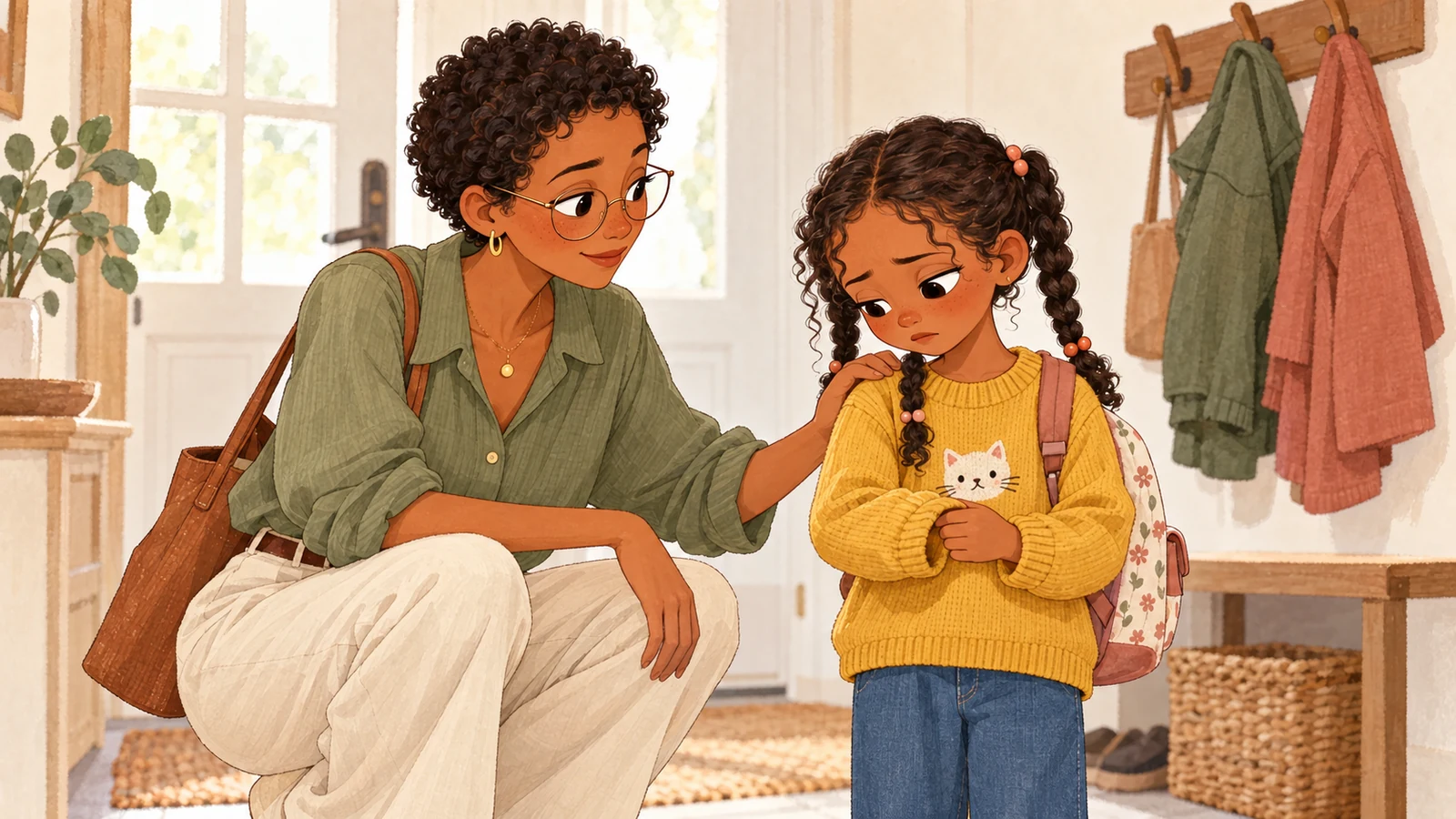
Louise, my five-year-old daughter, asked me to put her jumper right at the back of the cupboard. That very morning, she had chosen it because it had a cat on the front.
At school, a child had told her it was ugly.
I said I thought it was very pretty. She shook her head: “But it is ugly.”
When a comment hurts my child, I want to counter it immediately with something kind. Except now we had two opinions and her classmate’s seemed to carry much more weight than mine.
A hurtful comment isn’t always a fact
Before adding another compliment, I looked with her at what had changed since that morning: the jumper was still yellow, the cat was still sewn onto it and someone had just given their opinion.
“It’s yellow” and “It’s ugly” weren’t saying the same thing.
The first sentence described its colour. The second said what that child thought of it. They could dislike the jumper without deciding for Louise that she shouldn’t like it any more either.
That didn’t make the comment pleasant. Understanding that something is an opinion doesn’t make the hurt disappear, especially when it comes from a child you’d like to play with.
But I no longer had to win a contest for the most convincing compliment.
Try it with something that doesn’t hurt
Later, we played a little game with a banana. It was yellow, on the table and, in my opinion, delicious. Louise disagreed with that last point.
We could check its colour and where it was together. As for the taste, we each kept our own opinion. The banana hadn’t changed between the two.
The aim wasn’t to make her recite a definition. We can start with a few everyday examples, then gently return to what hurt the child.
“They don't like your jumper. You liked it this morning. You can still have your own opinion.”
“You can say: ‘I like it.’ You don't have to convince them.”
That doesn’t mean dealing with everything alone. If comments are repeated, humiliate a child or stop them joining in, we talk to the school team. Calling them opinions doesn’t make them acceptable.
Louise eventually put her jumper on the chair instead of at the back of the cupboard. I didn’t ask her to wear it the next day to show she had understood.
The cat was still there. Louise would choose the next day's jumper.