There are moments when you know exactly how a situation is going to end.
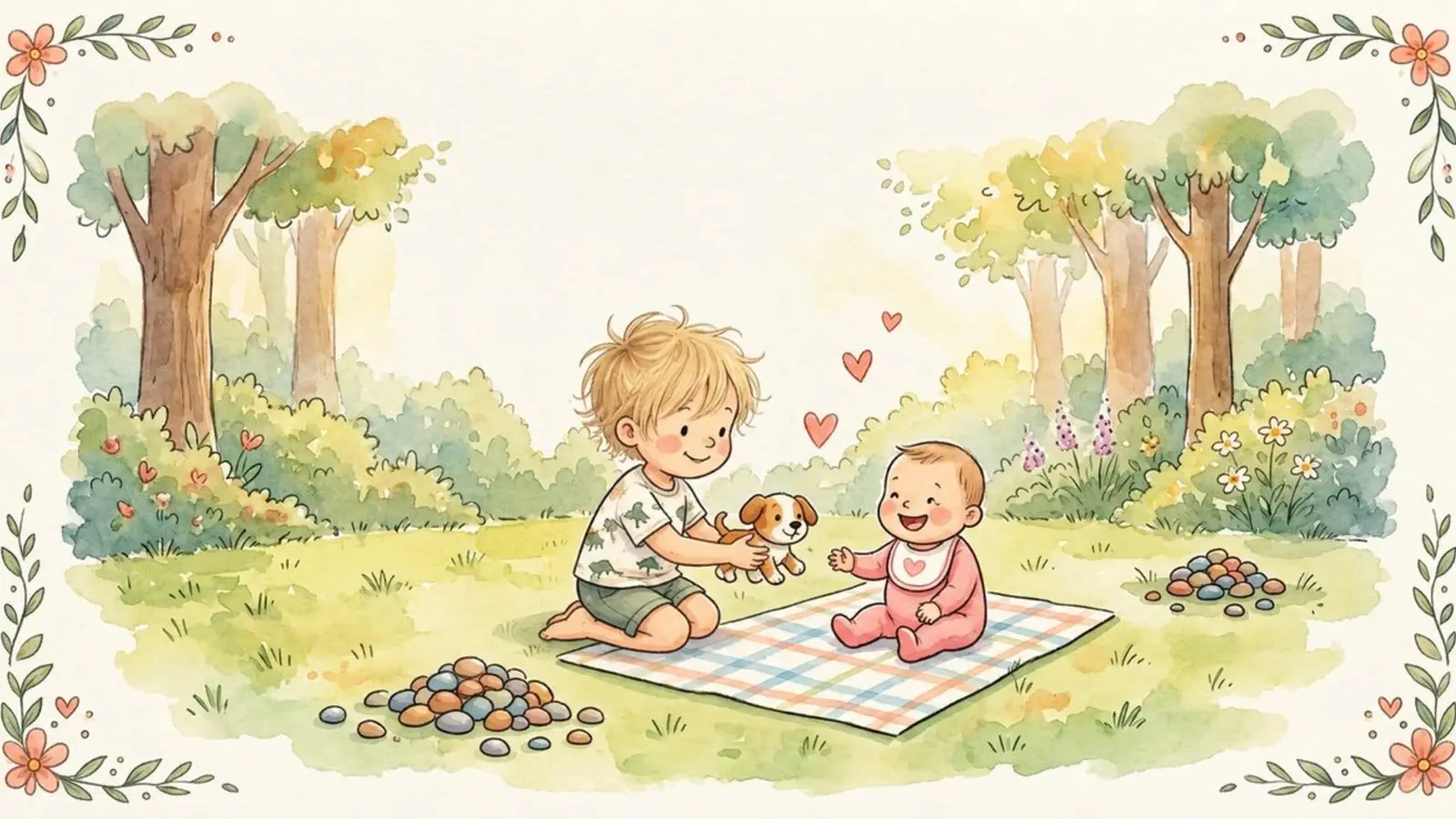
That day, Gabriel had picked up some stones in the garden. His baby sister was right beside him and I could already see what might happen: give her the stones, throw them towards her or, worse, put them straight into her hands so she could carry them directly to her mouth.
The most natural reaction would have been to say no. Instead, I tried something else: tell him what he could do.
Gabriel did not argue. He went to get his little dog toy and sat down beside his sister to play with her.
And I thought: this is exactly why alternatives can work so well with very young children.
1. Say what they can do, not only what they cannot do
For a young child, “don’t do that” does not really offer a solution. “Don’t throw stones” tells him where the boundary is. “You can throw the stones in that corner when nobody is there” shows him what he can do.
2. Offer two acceptable choices
Young children have a strong need to feel that they have some control over what they do. So we can offer two options that are both acceptable to us.
I was not giving him the option of handing stones to the baby. The limit was clear. But inside that limit, he still had a real choice.
3. Look for what the child is actually trying to do
Behind a behaviour that causes a problem, there is often a perfectly acceptable intention. Gabriel probably was not trying to put his sister in danger. He wanted to play. He had found something interesting and perhaps wanted to share the activity with her.
Instead of simply blocking his idea, I tried to preserve the intention while changing the way he did it. Stones? No. Playing with his sister? Yes. He just needed another way to get there.
The goal is not to stop saying “no” forever
Of course, there will always be moments when “no” is necessary. Some behaviour is dangerous and non-negotiable. But not every boundary needs to begin with the word “no”.
And when the boundary creates frustration, we can also acknowledge the feeling before returning to the rule.
When possible, we can try turning “Don’t do that” into “Here is what you can do instead.”
It is a small difference in our words, but it can make a big difference to a child’s reaction. Instead of simply closing a door, we open another one.