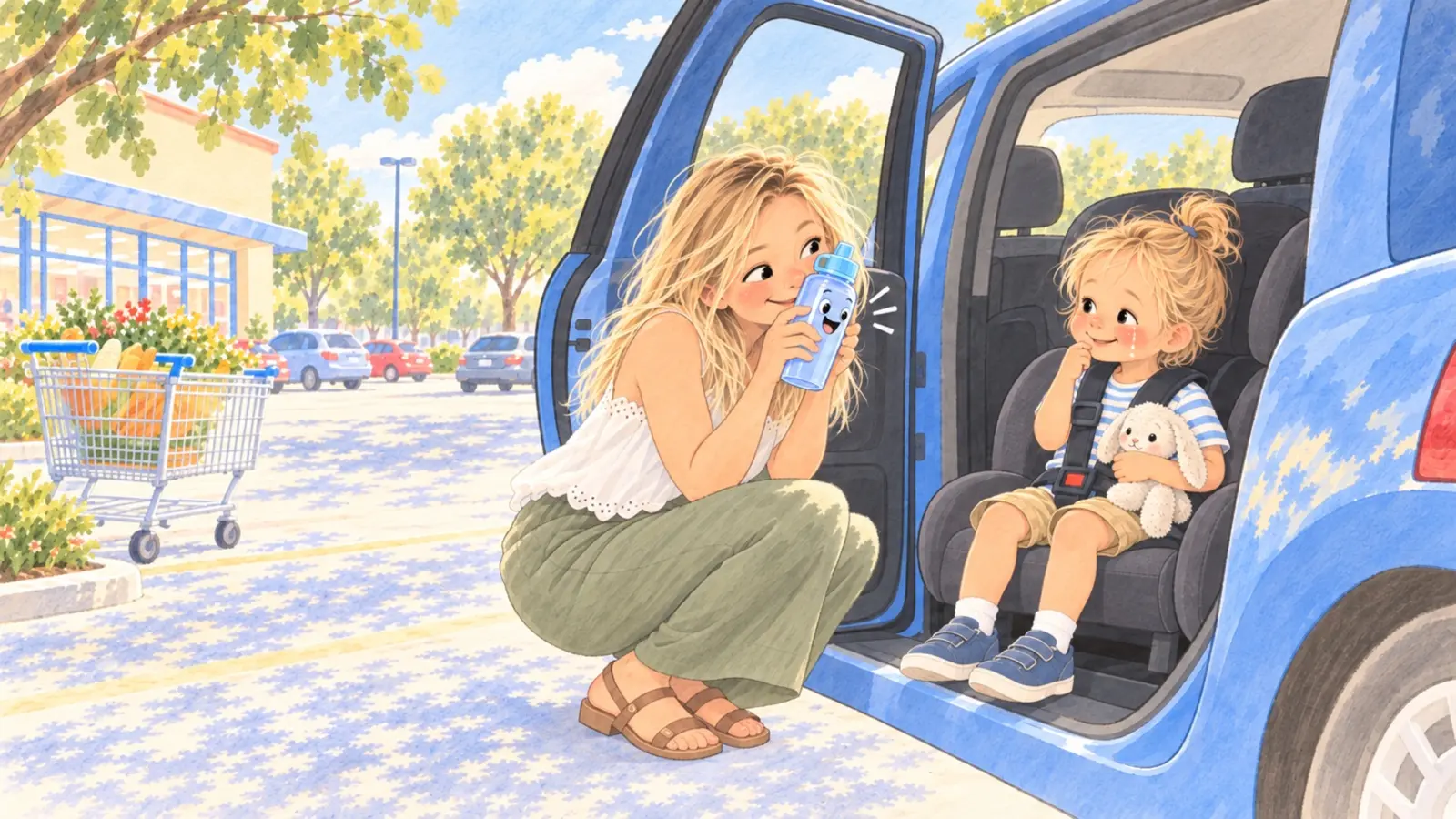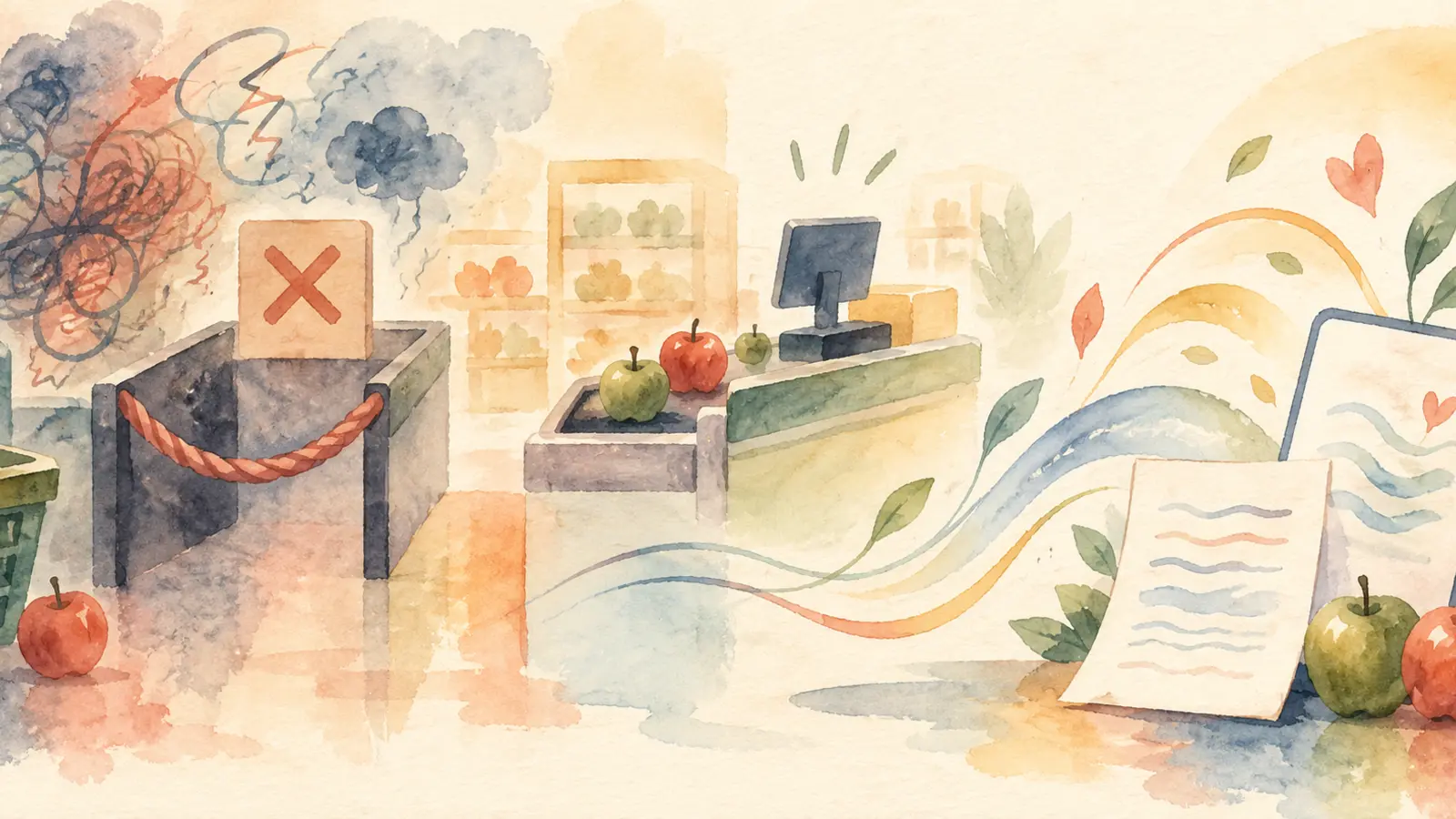
Sometimes a child’s big feeling does not settle because we find the right explanation. It settles when the child feels that their whole story has been heard.
A meltdown at the checkout
We were at the supermarket buying apples. When it was time to pay, only the second checkout was open.
Gabriel pointed to the first one. He wanted to go through that checkout, but it was closed.
The meltdown began while we were paying. It continued all the way into the street.
I started with the tools I usually use. I acknowledged what he was feeling:
I tried a few other things that sometimes help. Nothing seemed to bring him down.
Then I had an idea.
I took out my phone, opened a blank note and asked:
He answered with a small, shy “yes”.
So I started writing, reading the sentences aloud as I typed:
We even added a deliberately exaggerated sentence about how much he disliked the second checkout.
By then, he had completely stopped crying. He was listening closely.
When we finished, we read the note together. I asked whether I had written everything properly. He said yes.
And just like that, we carried on our way calmly.
When a big feeling needs somewhere to land
Writing did not change the situation. The first checkout was still closed. We did not find a magic solution and we did not try to convince him that his anger made no sense.
But writing gave shape to what he was experiencing.
His frustration, which had felt huge and impossible to contain, became a story. A story with a beginning, a problem, a wish for next time and even a slightly ridiculous line.
Most importantly, Gabriel felt that the moment mattered. His experience had been seen, heard and kept somewhere. Once his story was “stored” in the note, he could move on.
How to try it
This will not work every time. But when the words are hard to find, we can offer to write without forcing it:
It does not need to be long. A few simple sentences are enough: what happened, what the child wanted, how they felt and what they would like next time.
We can include their own words too, even the funny or exaggerated ones. The goal is not a perfect report. It is to show that their experience deserves a place.
Sometimes children do not need us to fix the problem. They need reassurance that we really understood what happened to them.
When feelings are big, creativity can sometimes open a door that logic cannot.