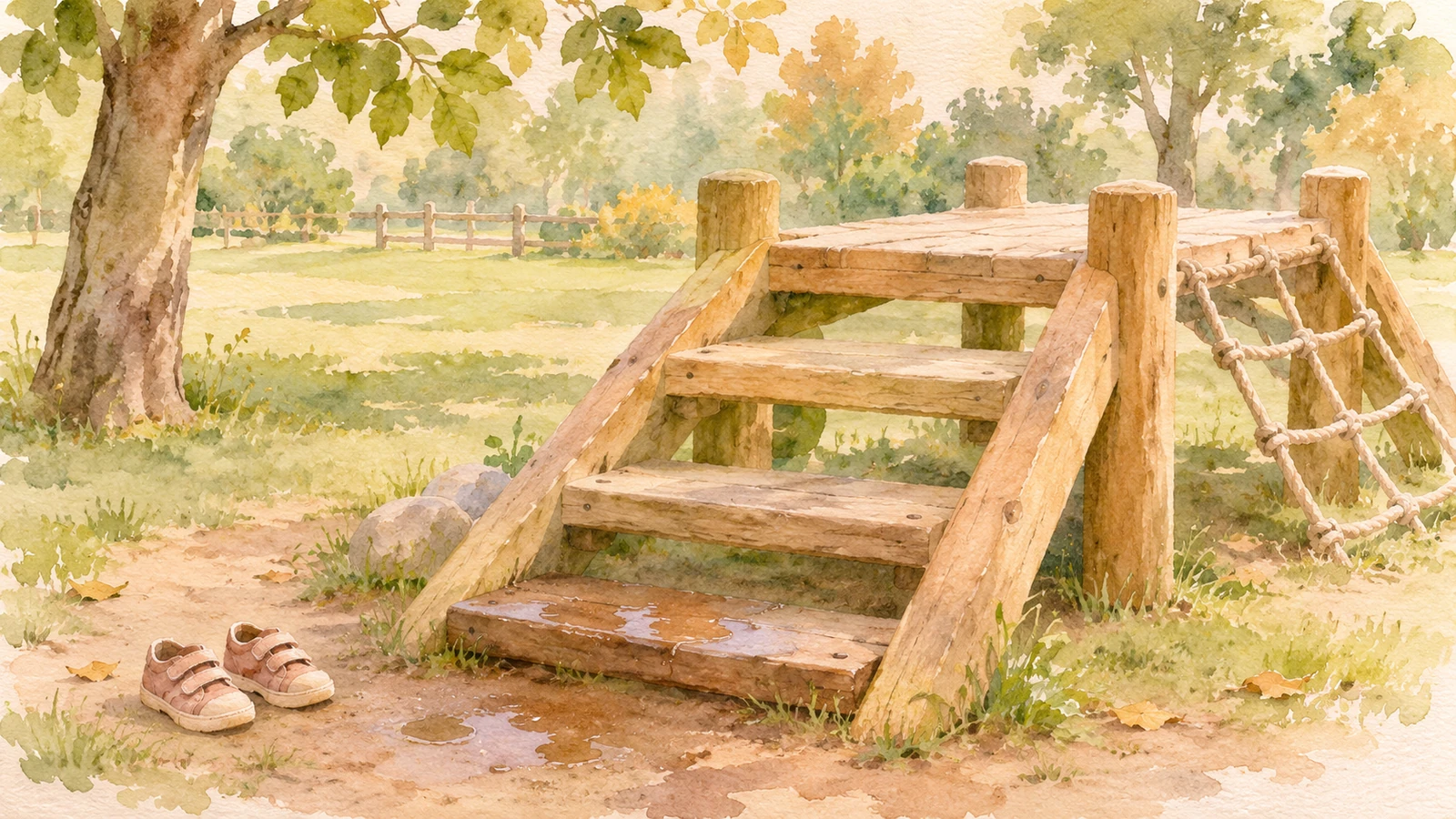
Iris, my three-and-a-half-year-old daughter, had put one foot on the first step of the climbing frame. I had already warned her about the gravel, the edge and the slippery surface. She took her foot off.
Then she asked whether she was allowed to try. The structure was low and suitable for her age. My commentary, meanwhile, had installed an alarm on every level.
When our warnings take up all the space
I wanted her to be careful. But my warning didn’t tell her what to notice or how to proceed. By anticipating every movement, I could also suggest that the next one would probably be a mistake.
Her hesitation didn’t necessarily have a single cause. Tiredness, the texture under her shoes or a bad experience could matter. I couldn’t attribute all her caution to my words. I could, however, listen to how much space they occupied.
A specific danger needs a specific response. A broken step doesn’t become acceptable because I have decided to sound confident. Beside a road, I hold her hand without waiting for her own assessment of the traffic.
Here, I had mostly repeated a general worry about something she could try. Iris was looking at me more than at the handholds.
Give useful information, then leave room to try
I checked the ground and footholds, then moved closer without lifting her. Instead of announcing a possible fall, I could name what needed her attention and give her time to decide.
“The step is damp. You can look for a place where your foot feels secure.”
“I'll stay here. You can try this step or climb down.”
That didn’t mean replacing every warning with encouragement to climb. Deciding against it remained an option. Independence didn’t have to become a bravery contest whose height I had set.
Iris put her foot back, tested the handhold and climbed one step. She stopped there. I almost suggested the next one, before noticing that I was again about to decide her movement.
She climbed down, then started again. This time, I didn’t comment on either journey.
Keep this handy
The situation
Repeated warnings take up all the space before your child tries.
Try this
Check safety, name something specific to notice and leave room to try or decide against it.
- “You can look for somewhere to put your hands.”
Keep in mind: Real danger requires intervention; independence doesn't mean climbing higher.