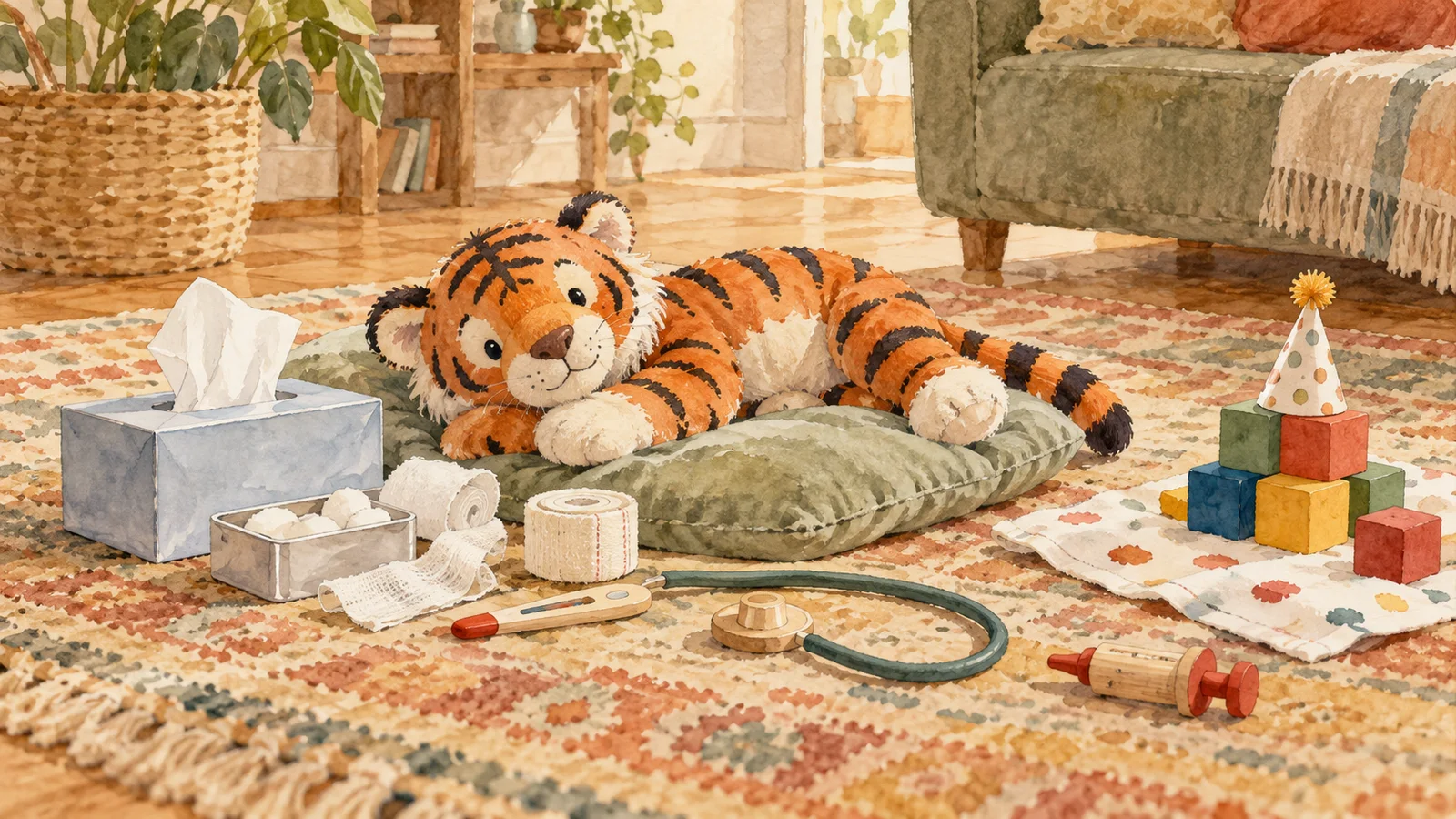
Oscar, four and a half, had turned the living room into a veterinary clinic. A cushion was the examination table, three stuffed animals waited their turn and a tissue box served as the pharmacy.
When Zoé, a friend visiting to play, arrived, everything seemed perfect. Until both children wanted to be vets.
“I’m treating the tiger!”
“No, it’s my tiger and I’m the doctor!”
Julien, Oscar’s dad, heard their voices rising from the kitchen. His first instinct was to hand out roles: Oscar would be the vet, Zoé the assistant, then they would swap after five minutes.
But Oscar protested. So did Zoé. Neither wanted to be the other’s assistant.
Julien sat beside them without offering another solution yet.
Playing together doesn’t always mean agreeing
At this age, children can invent remarkable stories. They also start wanting others to follow them. In Oscar’s mind, the tiger needed an operation. For Zoé, it only needed a vaccination and a birthday cake.
The problem wasn’t sharing a stuffed animal. It was building a shared story from two different ideas.
By immediately imposing fair roles, Julien might have stopped the argument. But he would also have chosen what their game should become.
He asked what each of them wanted to do. Oscar explained the operation. Zoé described the party. They interrupted each other several times, then finally listened long enough to understand that they were imagining different scenarios.
A rule can be invented together too
Julien didn’t ask the children to agree on everything. He simply set the limit: nobody could snatch the tiger from the other’s hands or shout in their face.
Then he offered a question: “How could your tiger need both of you?”
Oscar thought about it. Zoé announced that the tiger would have its operation first, then be invited to her party. They set up a second table with a napkin and blocks for presents.
Ten minutes later, another argument broke out over the colour of the cake. Julien didn’t conclude that his first intervention had failed.
Learning to play with others doesn’t mean never arguing again. It also means discovering that rules, roles and even the story can be negotiated.
Sometimes an adult needs to make the decision, especially when someone gets hurt. But when it’s only about who treats the tiger, giving children a few moments to look for an answer together can be part of the game.