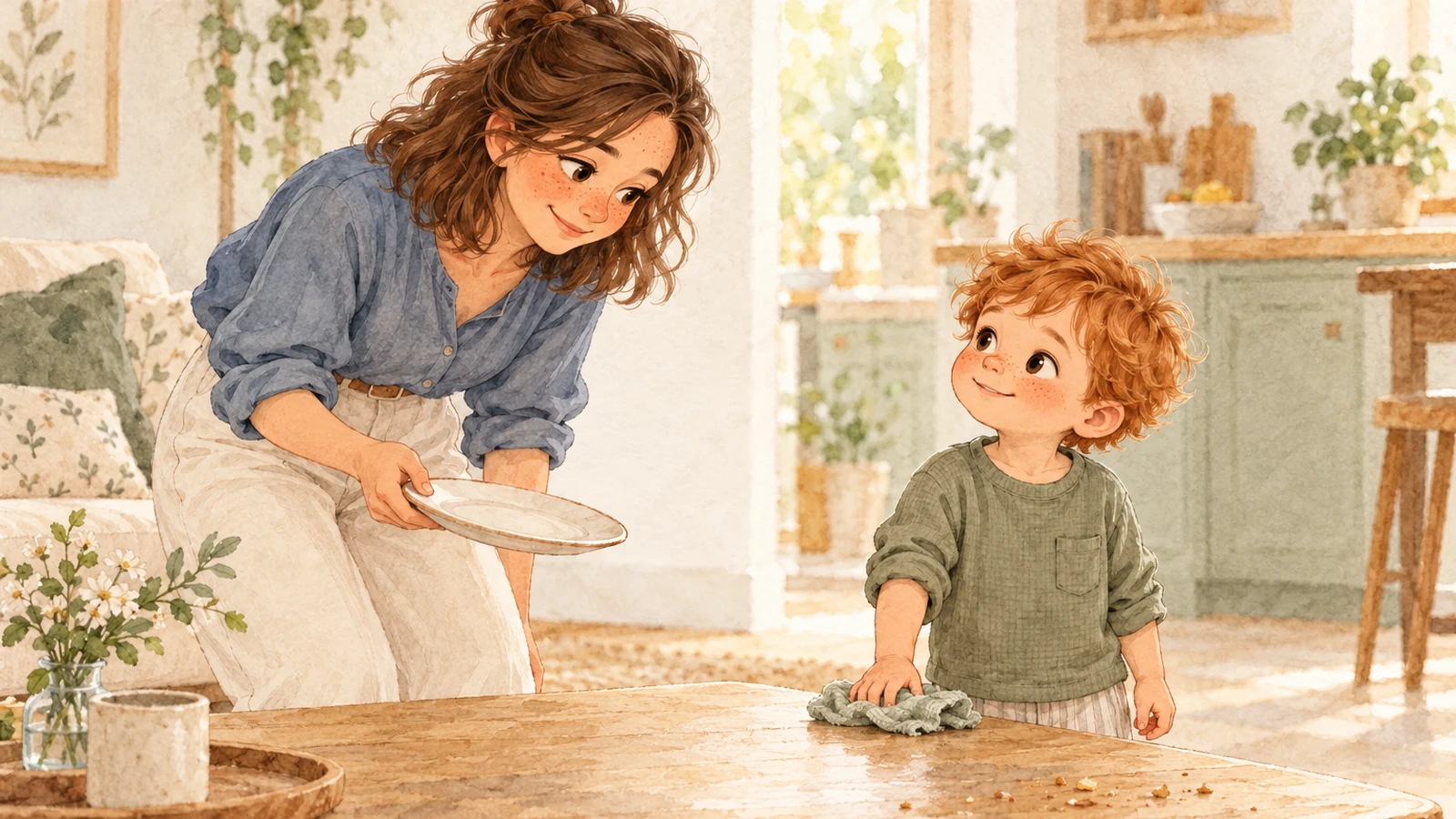
Malo, my almost-three-year-old son, had grabbed the little cloth before I did. He wanted to wipe the table after his snack. I’d removed the glasses and left the crumbs for him.
He rubbed the same spot very seriously, then looked at me.
“Well done!”
My answer came automatically. He stayed beside the table, cloth in hand. I didn’t know what else he was waiting for. But I noticed I’d praised him without really talking about his help.
Helping at home isn’t just succeeding at an exercise
I was watching how he held the cloth, his movements and the little clean patch. He’d just taken part in snack time right through to clearing up.
This wasn’t a demonstration arranged for me. The table needed wiping and he’d done part of it. I could tell him what that changed: we now had a clean space for the dinner plates.
“Well done” hadn’t damaged anything. I could be pleased to see him try and show him that. But if my responses always sound like a grade at the end of a task, I may miss what makes it real.
I wasn’t only watching his progress. I was also the person he’d just helped.
A specific thank you, without handing him the whole house
I placed a plate on the spot he’d cleaned.
“Thank you, you've wiped this bit. I can put the plate down now.”
Malo looked at the plate, then at the cloth. He showed me the crumbs on the other side.
I could have used his enthusiasm to expand his mission until the entire table was spotless. I preferred to keep a small task with an ending. He’d rubbed the bit he could reach; I could finish the rest.
Saying thank you doesn’t mean pretending everything is clean. I can recognise his contribution and help where it’s still difficult without inspecting every mark before answering.
I can also avoid the compliment that signs him up for tomorrow: “You’re my big helper, you’ll always do this!” Help appreciated today doesn’t automatically become permanent availability.
Malo wanted to rinse the cloth. We did it together, then he left it on the edge of the sink. Dinner wasn’t ready and a few crumbs remained on the table.
But his work had been useful. He hadn’t only succeeded under my gaze: he’d made a space for us.
Keep this handy
The situation
Your child helps wipe the table and you praise them.
Try this
Notice what your child is trying to do and leave room before offering another idea.
- “Would you like me to join in, or would you rather carry on?”
Keep in mind: Play does not need to be directed or turned into a learning activity every time.