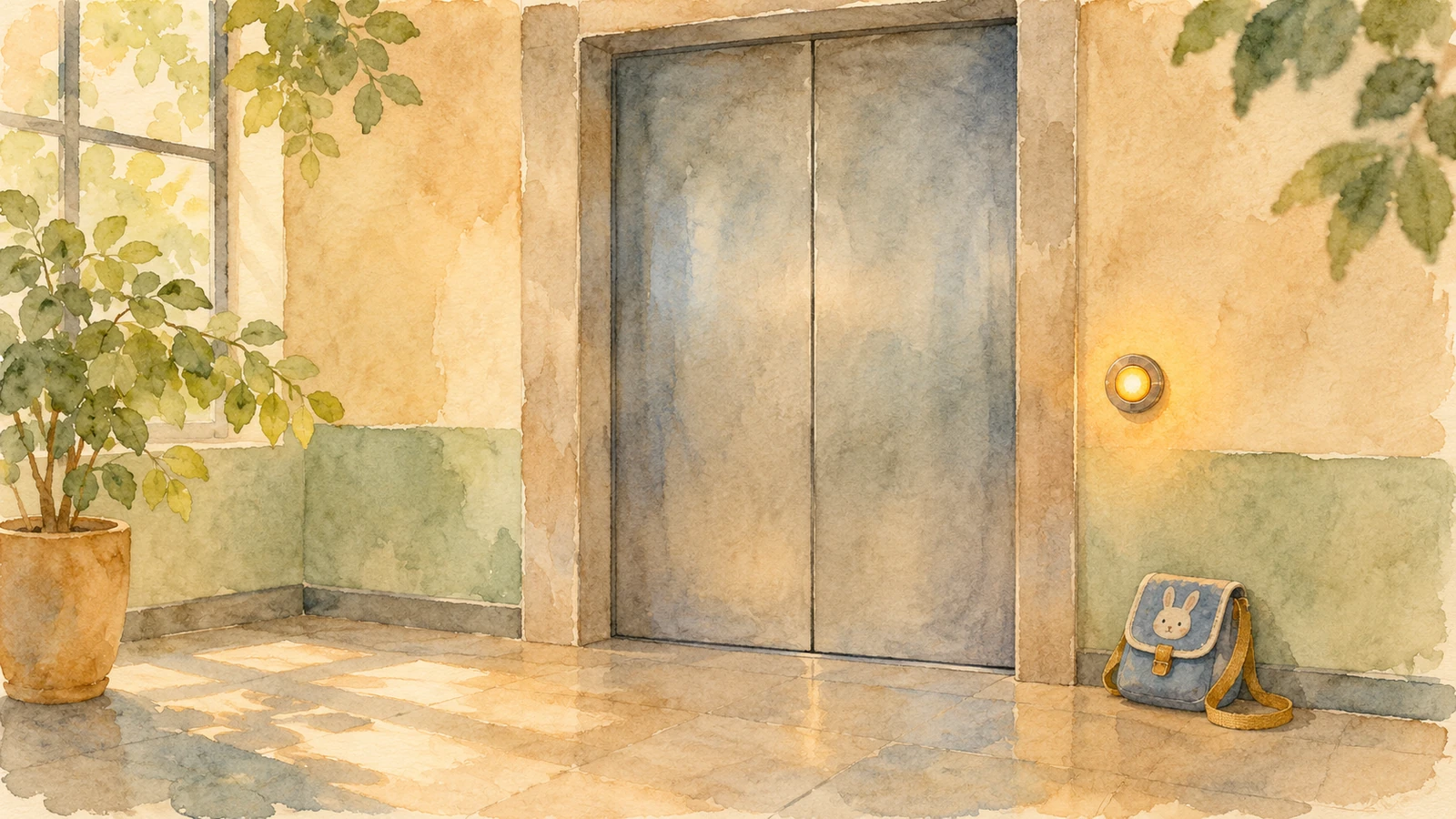
I pressed the lift button while Oscar, my four-and-a-half-year-old son, was coming through the hall door. He looked at the glowing light, then collapsed on the floor.
He had wanted to do it. I had simply wanted the lift to arrive. We had taken the same route with rather different projects in mind.
I almost answered that it was only a button. A technically sound argument with no chance of switching off his tears.
The lift-button upset is about a missed opportunity
Pressing offers a small, complete action: I do something, the light comes on, the lift arrives. In a day largely decided by adults, that role can matter.
That doesn’t mean I always know the reason for a meltdown, or that every button belongs to him. Tiredness and frustration could be involved too. But Oscar had just lost an action he had planned, without being able to do it again properly.
Pressing the lit button ten times wouldn’t take us back to the previous second. I could acknowledge the disappointment without pretending that a replacement would be identical.
And I didn’t need to turn my ordinary action into a serious offence. I hadn’t known he was preparing that mission. Next time, we could understand each other better.
Acknowledge the loss without inventing a rewind
I moved closer and kept the passage clear. We needed to stop anyone tripping while giving Oscar time to recover.
“You wanted to press it. I did it before you, and you're very disappointed.”
“This one is already lit. Inside, you can choose our floor with me.”
I offered that next opportunity only because it was possible. If the floor button had already been pressed, I would have needed to say so too. An impossible promise would have added a second disappointment to the first.
Next time, we could announce his little role before arriving. Sometimes, we would need to hurry or let someone else use the lift. Learning to participate includes moments when you can’t do everything.
Oscar was still crying when the doors opened. He got up with my help, then put his finger on the button for our floor. I didn’t ask him to acknowledge that everything was fine now. We went up together.
Keep this handy
The situation
You pressed the button before your child and they are upset about the lost opportunity.
Try this
Name the disappointment, keep the passage safe and offer only a next opportunity that is genuinely possible.
- “I can't go back to before I pressed it. I can stay with you while you're disappointed.”
Keep in mind: The button isn't an exclusive right. Another opportunity mustn't become an impossible promise.