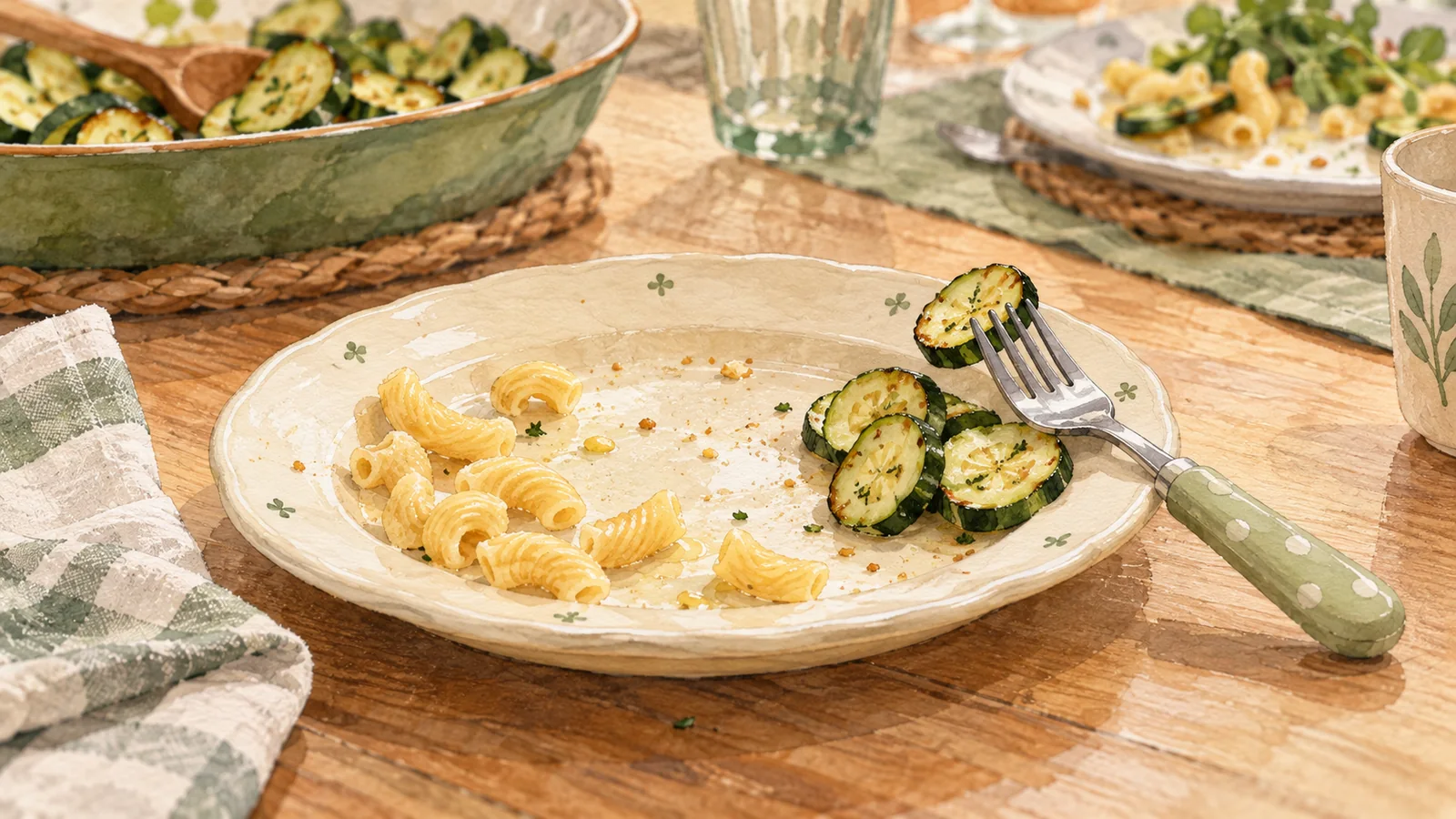
In June, Malo, my almost-three-year-old son, asked for a second helping of courgettes. In October, he looked at the slices on his plate and announced he’d never liked them.
I said he had. He ate them at home, at his grandmother’s, even cold once. I had enough evidence to open a little case file.
My child was refusing a food he used to enjoy. I was trying to show him that his story didn’t add up. He was mainly trying to tell me what he didn’t want to eat now.
Past tastes are not a commitment
The change annoyed me more than I would have expected. Courgettes were among the things settled, the things I could buy without thinking. His refusal created work where I’d finally stopped expecting any.
I tried to find the detail that explained everything. Too thick? Less cooked? A different plate? Some of those details might matter. But I wouldn’t necessarily find the exact version that brought back his June enthusiasm.
A taste can change, a texture can bother him that day or a food can stop appealing. I could stay curious without asking Malo to give a consistent explanation at every meal.
He didn’t need to deny his entire history with courgettes. I didn’t need to recite it either.
Keep offering, without checking that he still likes it
I stopped the discussion. There was also pasta and chicken on the table. Malo ate the pasta, then the chicken, while the courgettes stayed to one side.
At another meal, I could offer them again, in a small amount and without announcing a grand comeback. Not hidden, so that I could prove afterwards he’d eaten them. I preferred him to know what was on his plate.
“You used to eat them. Today, you don’t feel like them.”
“There are some on the table if you want any. You don’t have to like them the way you did in June.”
I could also notice what he still accepted, rather than reduce all his meals to the rejected vegetable. That didn’t mean his diet no longer concerned me. If refusals became numerous or something worried me, I would ask for advice rather than rely on a magic phrase.
That evening, he asked why I was eating the courgettes. I said I liked them. He nodded and went back to a piece of pasta.
Our tastes were different at that moment. There was room for both at the table.