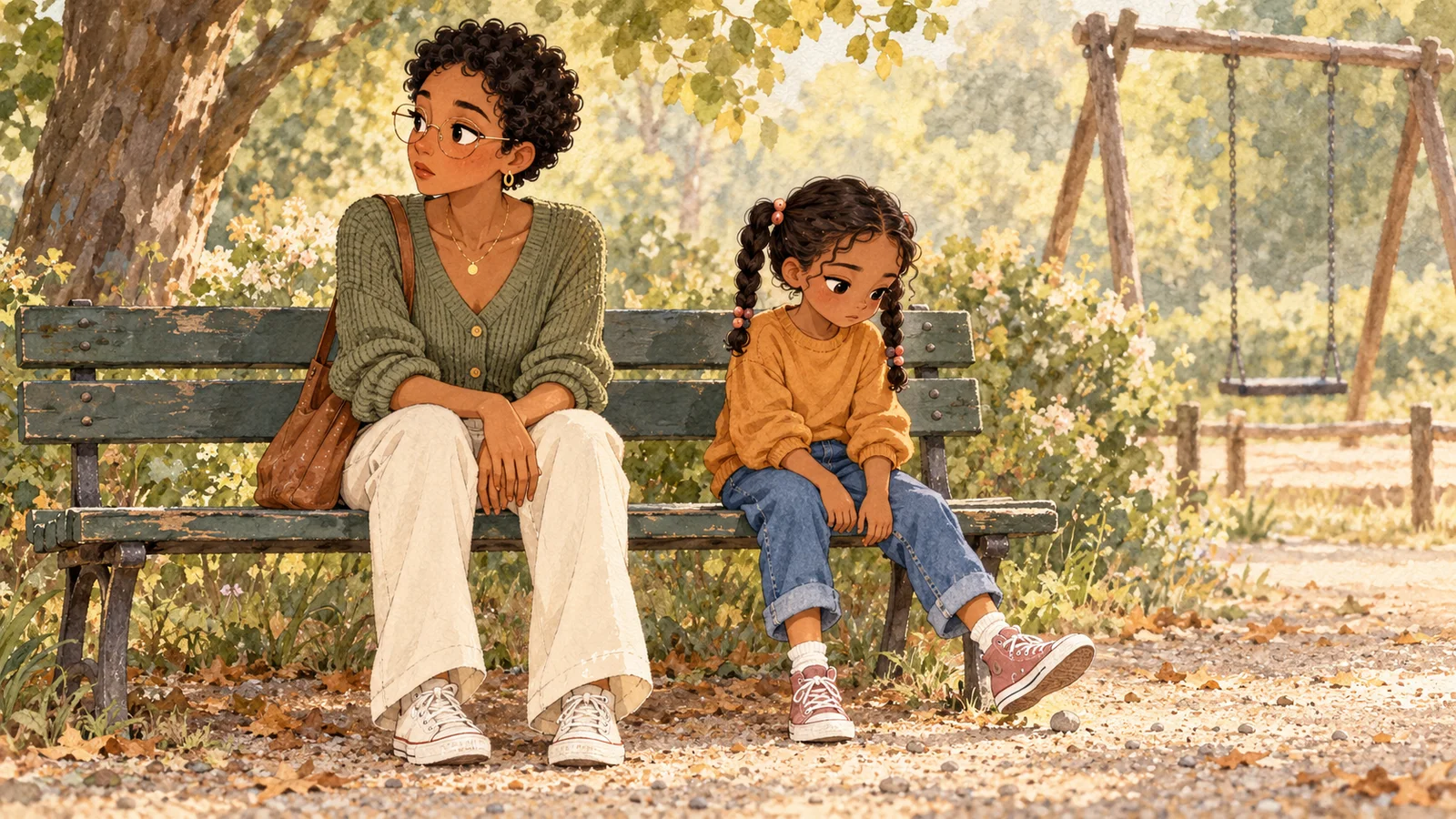
Louise, my five-year-old daughter, was sitting beside me on the bench. She was drawing lines in the gravel with her shoe. The swings were free, but she did not want to use them.
I did not want to be there either. Yet it was Saturday morning and we had taken the path to the park the way we take the path to school. Lately, our social life as parents had mostly consisted of outings that were supposed to appeal to children. That day, even the child was unconvinced.
When parents’ outings disappear from the calendar
I used to meet a friend occasionally in a café I enjoyed visiting. Now I always suggested meeting near a playground. That was convenient for Louise, less so for finishing a conversation.
Little by little, I had stopped asking myself what I wanted to do. The café had become too complicated, my friend lived too far away and the park had the advantage of requiring no decision.
There were good reasons for all this. A young child cannot keep up with every pace, sit at a table for ages or wait with nothing to do while adults talk. Adapting an outing can save us from spending the whole morning asking them to be patient.
But I had ended up confusing adapting our life with removing everything that was not aimed directly at Louise. And, without saying so, I was asking her to make that sacrifice worthwhile by enjoying herself.
An outing does not have to please everyone equally
The following week, I suggested coffee with my friend. Not a three-hour lunch: a short get-together, somewhere Louise could settle beside us and with a way to leave if it became too long.
Louise brought a small notebook. She drew, interrupted us several times and asked when we would leave. It was not a perfectly peaceful break. But I had seen my friend somewhere other than between pushes of a swing.
To give it a try, we can choose a modest adult pleasure and adjust its length, rather than look for an exceptional activity that will satisfy the whole family. And explain the plan without selling the get-together as an outing for the child.
“I’d like to see my friend. We’ll have a drink with her, then go home.”
“You can bring your notebook. I know this café isn’t as much fun for you as it is for me.”
When another adult can take over, going without the child is also an option. Not another obligation to fit in.
We still go to the park. But now I check that at least one of us wants to go.