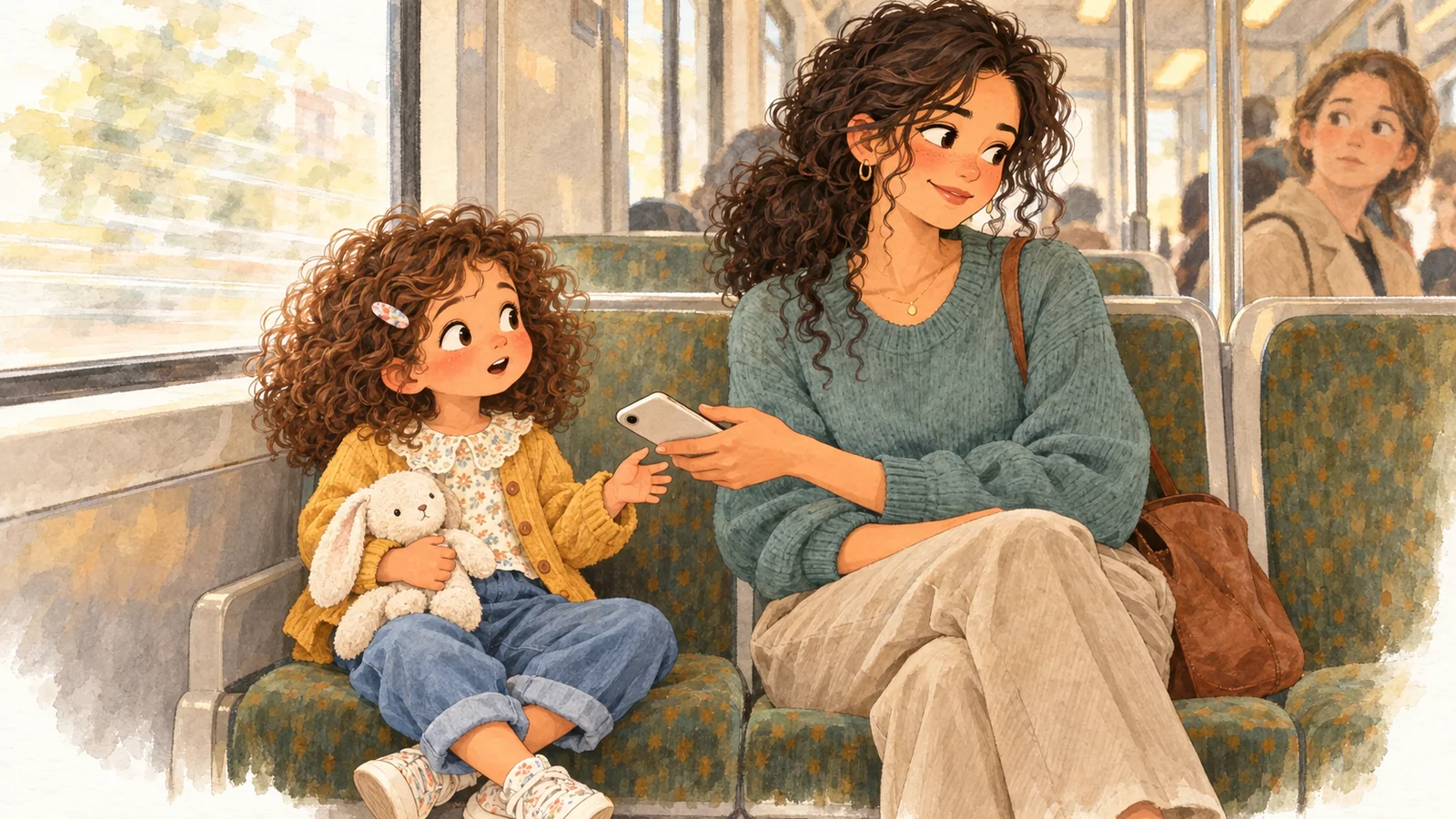
On the train, three-and-a-half-year-old Iris was taking her cloth rabbit on a journey between her knees and those of Nora, her mum. At each arrival, she announced the station in a very convincing conductor’s voice. Not necessarily a very quiet one.
A passenger looked up. Nora immediately took out her phone.
Iris had not asked for a screen. She was not even upset. But giving a child a screen on public transport suddenly seemed the quickest way to become a quiet family again.
Nora started a video with the sound off. Iris put down her rabbit.
Who was the screen for, exactly?
The journey was long and Nora had brought things to keep Iris occupied. She had not decided the phone would be forbidden. What surprised her was how quickly she had made the decision: one look had been enough.
She had no idea what the passenger was thinking. Perhaps he had simply heard the station announcement. In her own mind, though, she already needed to show she was doing something.
The phone solved several difficulties at once. Iris stayed seated, her voice fell silent and Nora could stop monitoring the looks around them.
That was a genuine relief. But it was not quite the same as asking what would help her daughter get through the journey.
And the relief was fragile: now that Iris was watching a video, Nora also imagined comments about parents who give children too much screen time. She had changed the reason for feeling judged, not necessarily escaped it.
Plan the journey, not a parenting exam
Respecting other passengers still matters. We can help a child lower their voice without asking them to stop existing between stations. The rabbit could continue its journey; the announcements could be made close to Nora’s ear.
For another journey, she could keep a small game within reach and decide in advance when she would offer a video. That would not prevent tiredness or a change of plans. But she would have something to guide her besides the first person who looked up.
As she reached for the phone, one question could help:
Sometimes the answer would be both. She could still choose the screen without treating it as proof that she had failed or that Iris was impossible to occupy any other way.
At the next station, Iris asked for her rabbit back. Nora made room for the rabbit on her knees. The train kept going and so did the rabbit.