Grandma had sent her message while I was still looking for the second sock belonging to Alice, my two-year-old daughter. I replied with a thumbs-up, very dignified.
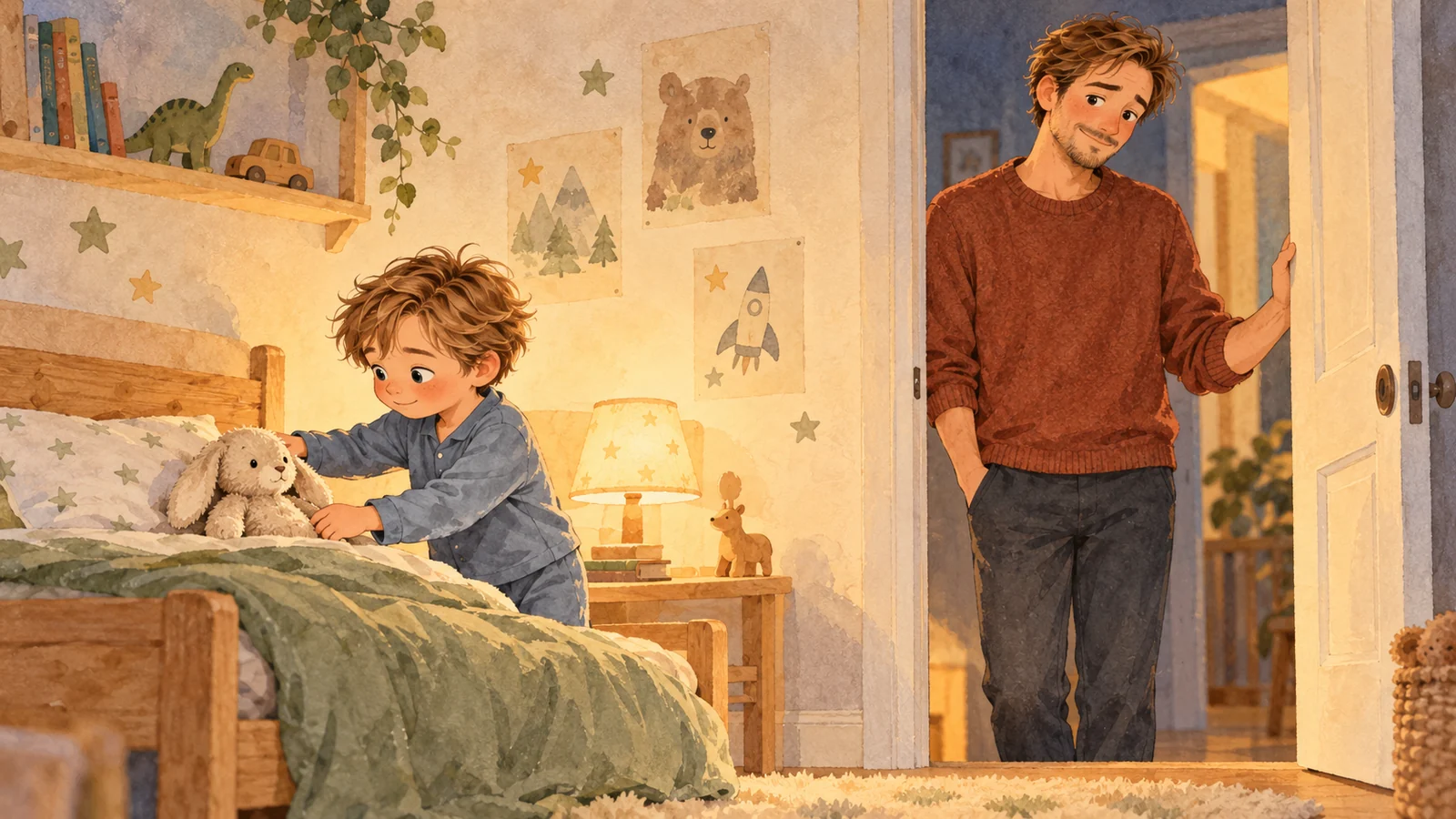
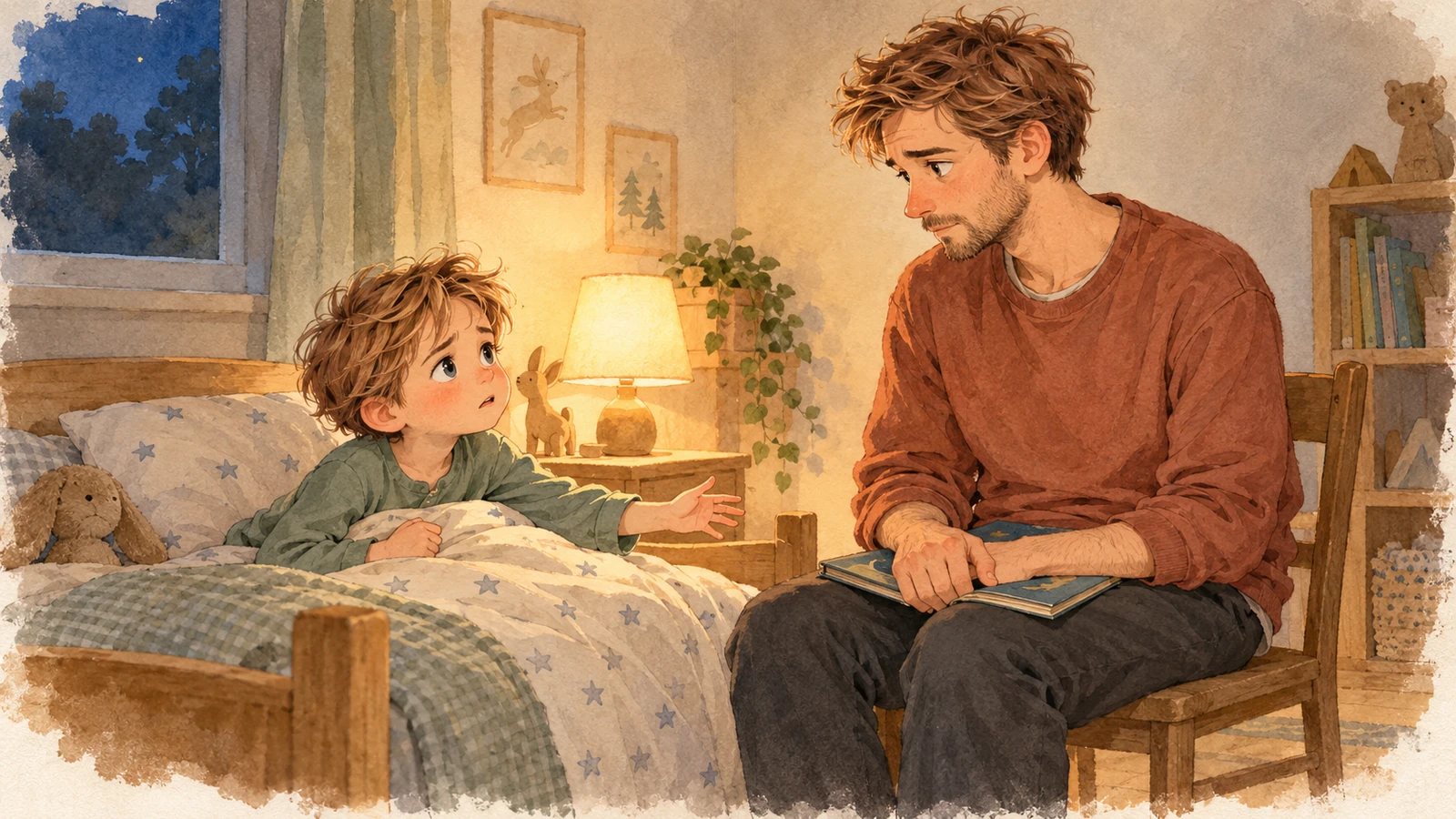
The following evening, Oscar, my four-and-a-half-year-old son, asked me to stay beside his bed. Then to bring the chair closer. Then he wanted to know whether, when you shut your eyes really tightly, you actually saw black.
My child slept better at his grandparents’ than at home. I had quietly concluded that Grandma had something I did not. Probably a button.
Two bedtimes do not make a league table of adults
First, I asked how she did it. One story, the little lamp, goodnight. We had a story and a lamp too. Apparently, the equipment was not enough to reproduce the result.
But I was comparing two lengths of time without looking at the two days. What time had he got up? Had he slept during the day? When had bedtime started? And what exactly happened after the last page?
A child does not fall asleep in a setting cut off from everything else. Habits, tiredness and the way they part from the adult can vary from place to place. Even the chosen bedtime does not tell us on its own when sleep will come.
Falling asleep easily elsewhere proved neither that Oscar was putting on an act with me nor that every difficulty at home demonstrated an especially secure relationship. The contrast offered questions to ask, not an automatic explanation.
Borrow one cue, not Grandma’s whole evening
Talking to her again, I realised she announced the ending before starting the book. I often decided how long to stay once I was sitting down, depending on the time and how exhausted I felt. Oscar had to guess that evening’s rule.
I kept our story and cuddle, then explained that I would sit beside him for one song. Afterwards, I would go into the next room. A sequence simple enough to follow again the next day.
The idea was not to vanish because he could sleep elsewhere.
“I’ll stay beside you for our song. Then I’ll go into the next room.”
“I heard you. You’d like me to stay longer. Tonight, we’re doing what we planned.”
We also needed to adjust if an unusual fear, pain or a difficult period changed the situation. And if sleep became persistently distressing or worrying, we would ask for advice without waiting to find the right routine.
Oscar still asked for the chair to be closer. I moved it and began to sing, without reopening the whole programme or counting the minutes Grandma would have needed.
Keep this handy
The situation
Your child falls asleep quickly at their grandparents’ but asks for more of your presence at home.
Try this
Compare the days, timing and the end of the bedtime routine. Choose a simple cue you can maintain without trying to reproduce bedtime in another household.
- “You have your routines at Grandma’s. Here, we’ll keep ours.”
- “I’ll tell you in advance how our evening will go.”
Keep in mind: Sleeping elsewhere does not reveal a child’s intentions or prove a single cause. Persistently difficult or worrying sleep deserves professional advice.