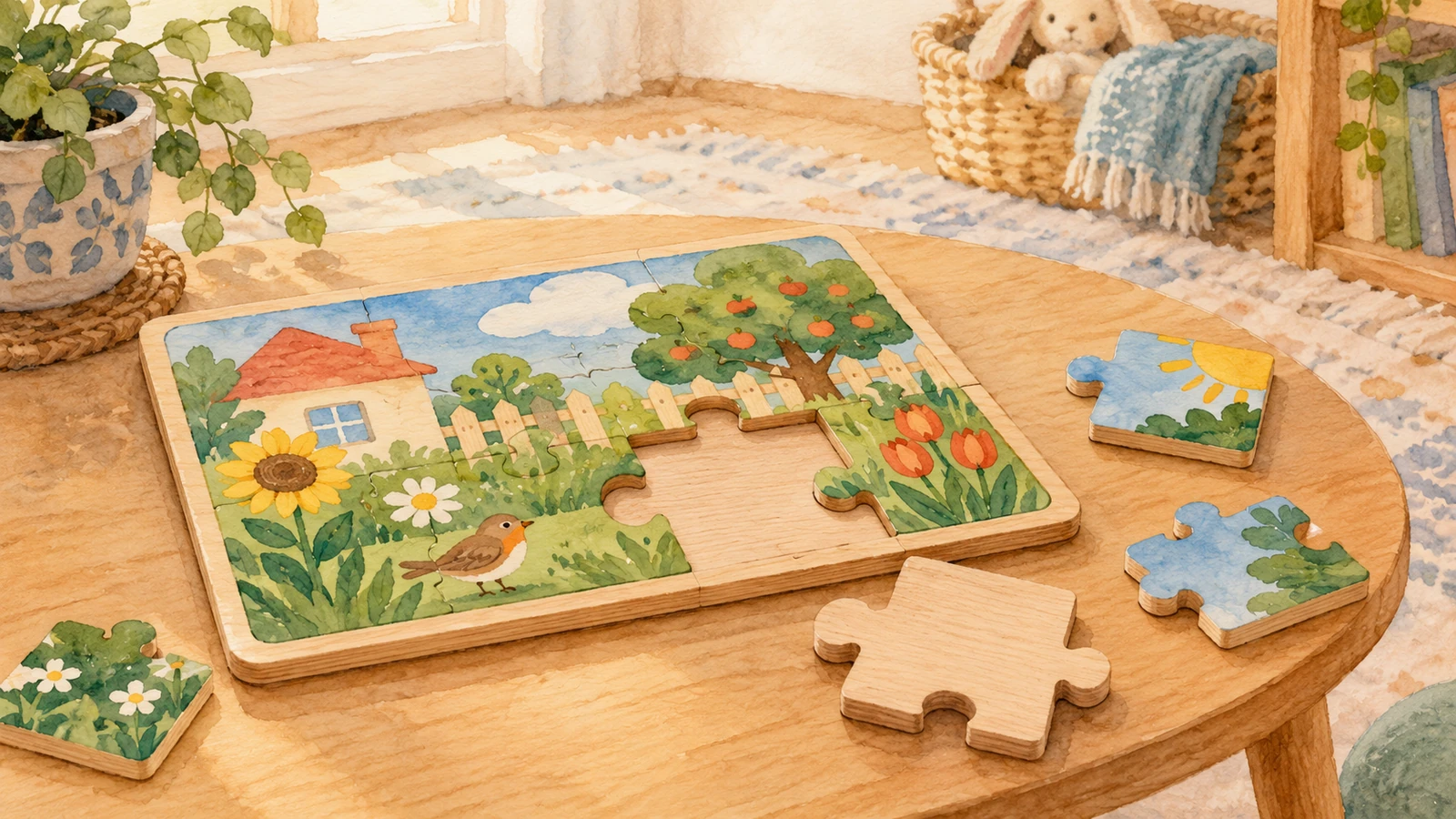
Gabriel, three and a half, was trying to finish a small wooden puzzle while Marie, his mum, cleared the table. One piece wouldn’t fit. He turned it one way, then another, and finally held it still in his hand.
Marie saw his furrowed brow and his silence. Her child seemed stuck in the game. She came closer, the answer already at her fingertips.
Gabriel pulled the piece away before she touched the board. “No, me.”
Marie wanted to help. Perhaps he was still trying to work it out.
When a child seems stuck in a game
Confusion isn’t always comfortable to watch. For adults too, it quickly creates an urge to solve things: show the right way round, suggest a strategy, stop the game ending in frustration.
Yet between “he knows” and “he doesn’t know”, there is a little space where a child compares, tries again and changes their mind. Their face may look serious. They may stay silent. It doesn’t necessarily mean they have given up or are asking for a demonstration.
Marie rested her hands on her knees. Gabriel tried the piece in another gap, then in the first one again. It still wouldn’t fit. He let out a big sigh.
Waiting didn’t mean leaving him alone with his difficulty. Marie stayed available, watching for the difference between focused searching and growing distress.
Helping without taking the piece
After a few attempts, Gabriel looked up. Marie asked what he wanted: a clue, a demonstration or a little more time.
He chose a clue. She simply turned the board towards him. Gabriel studied the shape, rotated his piece and put it down. This time, it fitted.
He hadn’t done everything without help. Marie hadn’t done everything for him either. They had found a middle distance, one that would probably shift with the day, his tiredness and how much the problem mattered.
When the urge to rescue the game arrives, one sentence can make that space:
The next day, Gabriel asked for help with the very first piece. Marie helped him. Waiting hadn’t become a new rule. It was simply one more option, just before her hands answered in place of his.
Keep this handy
The situation
Seeing your child hesitate and feeling tempted to show them the answer before they have finished trying.
Try this
Watch for a moment without stepping in. Let your child keep trying, then offer a small clue if they need one.
- “Would you like to try a little longer, or would a clue help?”
- “I’m here if you’d like a hand.”
Keep in mind: If your child asks for help or gets increasingly frustrated, step in. Waiting is an option, not a hard-and-fast rule.