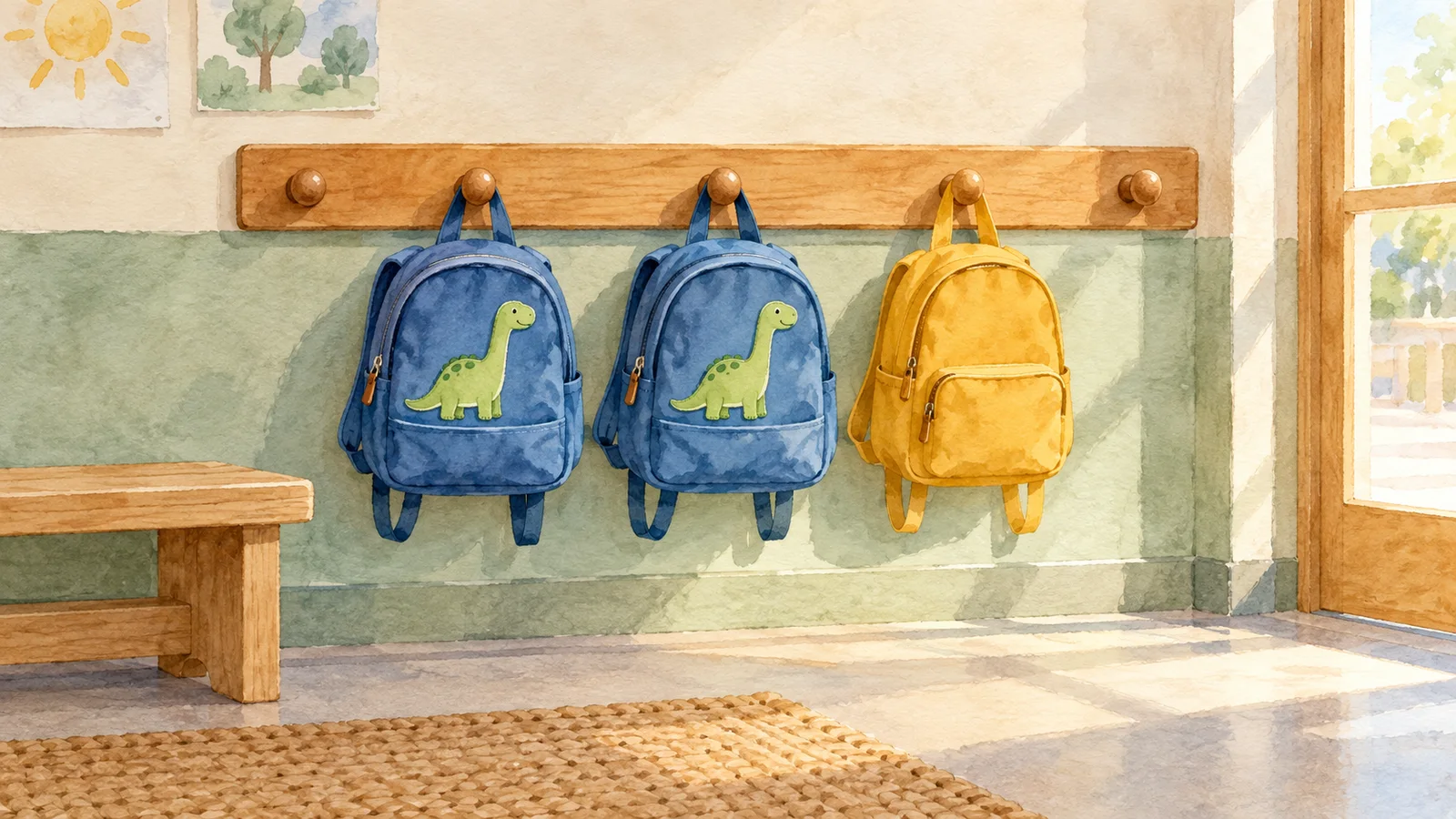
Iris, Nora’s three-and-a-half-year-old daughter, pointed to a small blue bag as they left preschool. It had a dinosaur on the front and belonged to a classmate. Another child had almost the same one.
On the way home, Iris announced that she wanted one too. Nora reminded her that her yellow bag was new, that it closed properly and that she had chosen it herself.
Iris said the others had the one with the dinosaur.
Her child wanted the same bag as her friends. Nora was explaining why she did not need a new bag. They were not quite talking about the same thing.
Wanting to be like friends, not just wanting to buy
Nora heard another request after a start to the school year already full of small expenses. She saw an object that did exactly the same job as the one hanging in their hallway.
For Iris, the important detail was not the zip. It was the dinosaur that two children in her class also carried. She had seen them comparing their bags by the pegs. She wanted to join that conversation.
That did not prove she was being left out, or that all the children had that model. But her wish had another dimension beyond an unnecessary purchase. She was looking for a small sign that would let her be like them.
Nora asked what she liked about the bag. Iris talked about the dinosaur, then the two friends. She had not stopped wanting the object. Nora understood better what she hoped to find in it.
Understanding the wish does not necessarily change the answer
Nora could acknowledge that wish without promising to buy anything. Their boundary remained the same: they were not going to replace a bag that still suited her.
She could avoid replying only with an explanation of how useful bags were, or a lesson about being different. Iris had not asked for a course in originality. She wanted to find something familiar in other people.
“You'd like to have the same dinosaur as them. I understand. We're keeping your yellow bag.”
“Do they like dinosaurs too? You could tell them about the one you drew.”
The drawing did not replace the bag and was not a trick to make the wish disappear. It was simply another way into the conversation, if Iris wanted to try it. If she spoke instead about teasing or repeatedly being excluded, Nora could try to understand the situation with the school.
The next day, Iris looked at the blue bag again. Nora did not restart her argument about the zip. She offered to carry Iris’s drawing to the classroom, while Iris wore her yellow bag on her back.