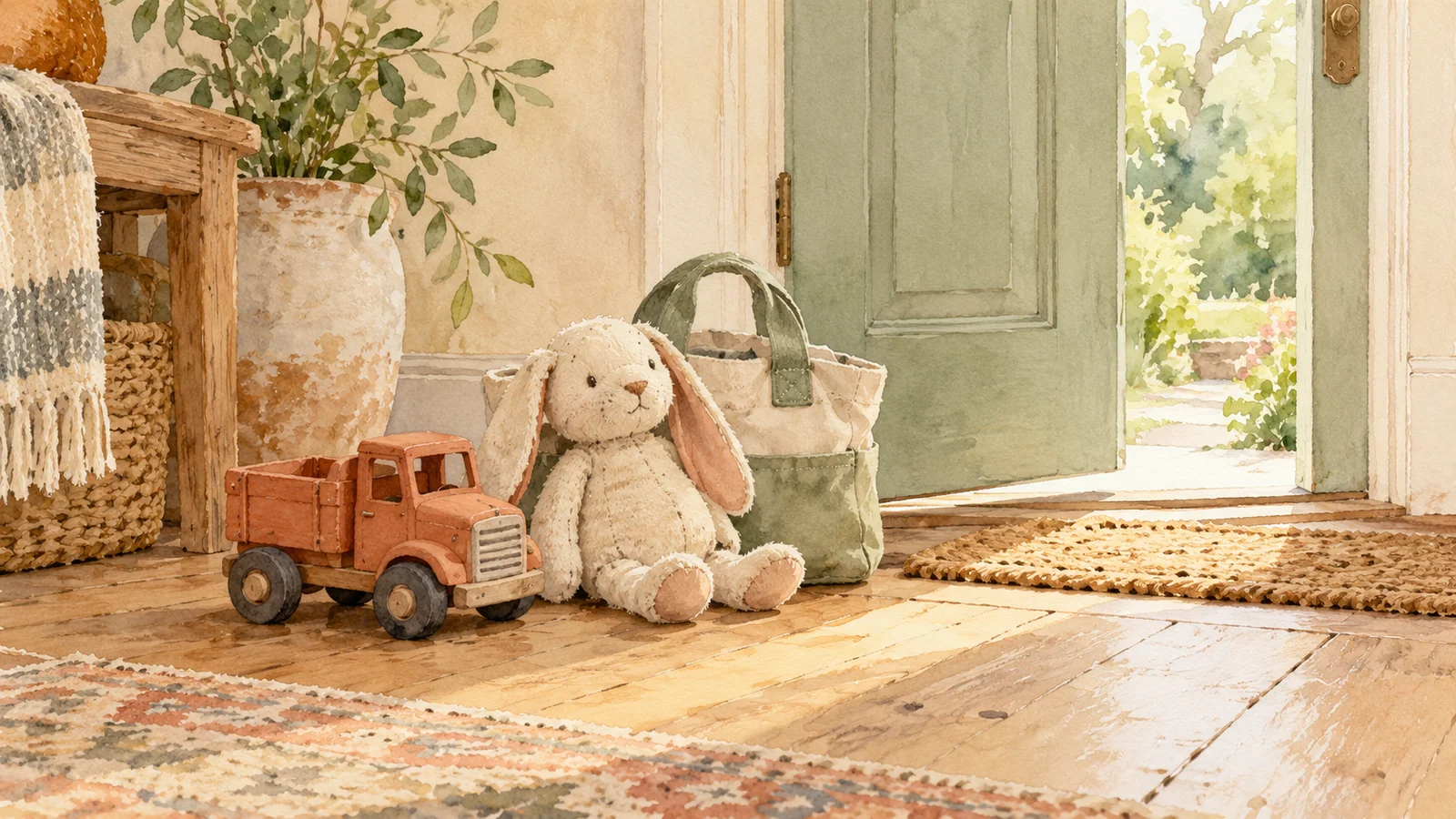
Oscar, four and a half, wanted to take his truck to the park. Julien, his dad, said no. Two minutes later, Alice, his two-year-old little sister, picked up her cloth rabbit. Julien was about to give the same answer, then stopped.
Doing the same thing is not always fair
Two children in the same household do not have the same age, the same temperament or always the same needs at the same moment. Raising two children fairly does not necessarily mean giving each of them exactly the same answer.
Julien let Alice take her rabbit. Oscar protested: “But she’s allowed!” Julien did not pretend the situations were identical. He explained: “Yes, today Alice is taking her rabbit. She still needs it to help her leave the house. We’re leaving your truck here because we’ve already lost it twice.”
Oscar grumbled for a few seconds. Then he left.
A difference can be explained
The instinct might have been to offer something in return straight away or take Alice’s rabbit away to restore perfect equality. But perfect equality between siblings is hard to maintain and, above all, it does not always make sense.
Sometimes one needs help getting dressed and the other does not. One can go to bed a little later. The other still needs to be carried after a long day.
That does not mean the rules change at random. It simply means they can take account of the child standing in front of us.
That day, Julien did not discover a big new parenting rule. He simply accepted that, within the same family, two different answers can sometimes both be fair.