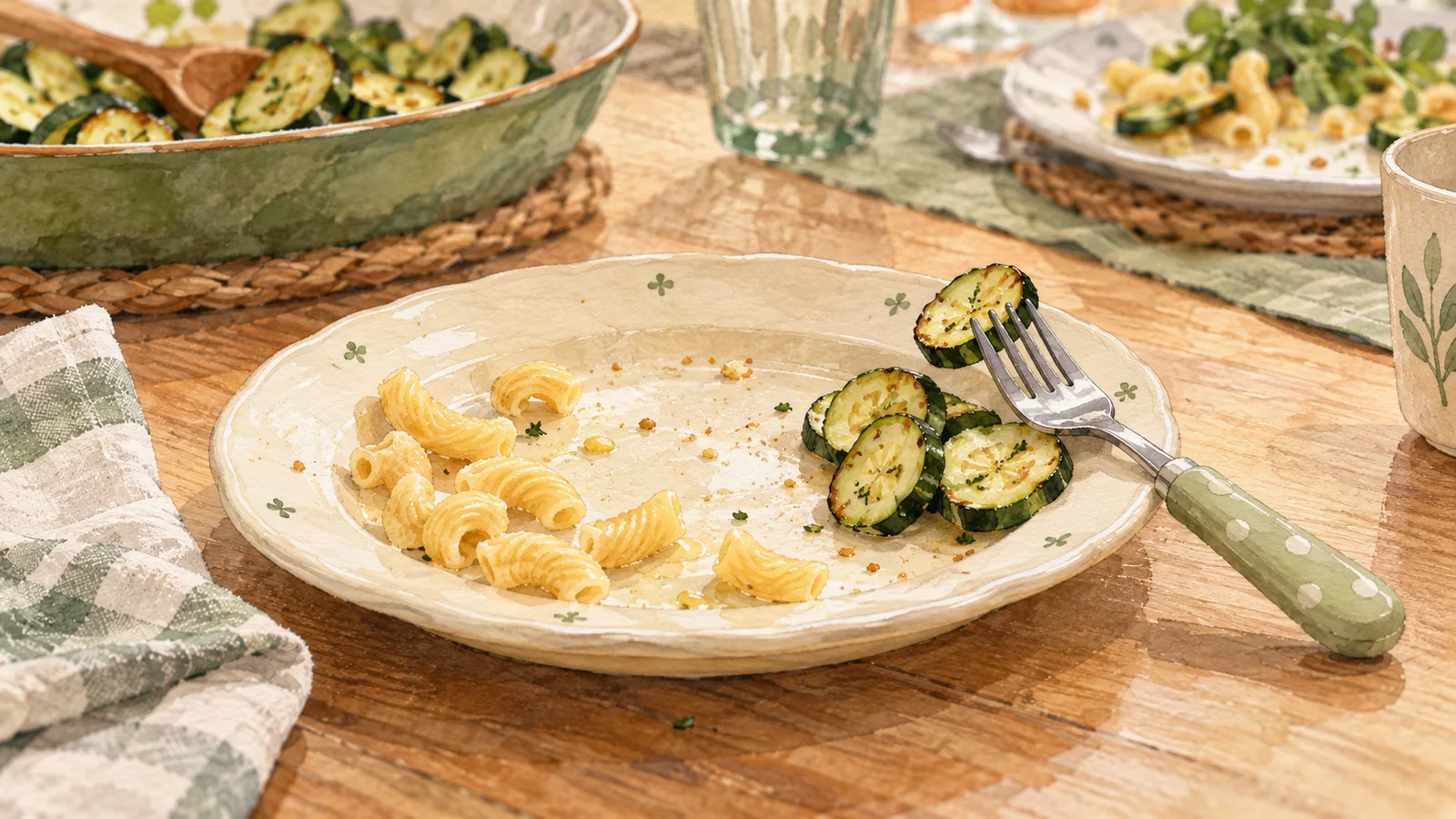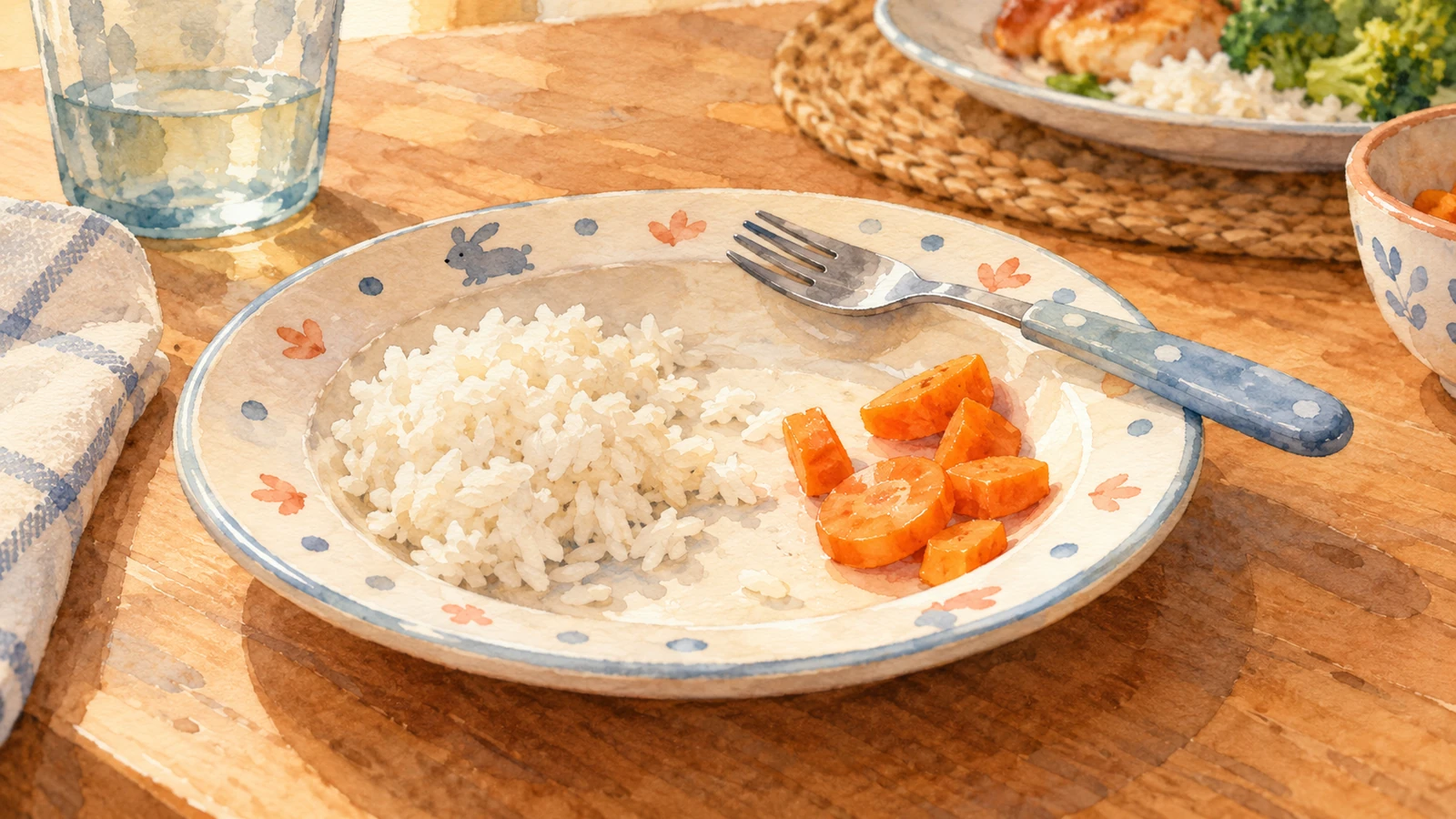
Louise, my five-year-old daughter, had separated the grains of rice touching the carrots. The rest of her plate was waiting. So was I.
I had cut the vegetables smaller, changed how I cooked them and even tried arranging them into a sun. Faced with my child’s fussy eating, I no longer saw just a rejected dinner. I saw my shopping, my efforts and, some evenings, a sort of mark for my performance as a mother.
One comment was enough to bring back the doubt: “Perhaps you’ve given her too much choice.”
Apparently, I was also responsible for diplomatic relations with the carrots.
Fussy eating: a plate doesn’t tell the whole story
When a child accepts few foods, explanations arrive quickly: too much negotiation, not enough firmness, bad habits. Some practices can indeed make meals harder. But they don’t tell the whole story.
A study of twins found a substantial genetic influence on differences in food fussiness between children. That doesn’t explain every food Louise refuses, or mean that nothing can change. It simply reminds us that children don’t all approach tastes and textures with the same ease.
Environment matters too, particularly for younger children. What we offer, the atmosphere at mealtimes and a child’s experiences all have a part. But influencing something isn’t controlling the outcome, still less deserving a verdict with every plate.
I had mostly confused two questions: how to help Louise feel more comfortable with food, and how to prove I was a good mother.
The second made the first a great deal noisier.
Another way to look at the meal
I didn’t decide that carrots were now banned from the premises. I kept offering a variety of foods in small amounts, without requiring a mouthful to validate my efforts. Louise could encounter a rejected food again another day. I could take care of dinner without negotiating every bite.
I also tried to look at her eating over several days rather than deliver a judgement at eight in the evening. If eating becomes very restricted or painful, or growth is a concern, seeking professional advice remains useful. Removing guilt doesn’t mean ignoring a difficulty.
At the table, a few words could be enough:
“You find that texture difficult. I'm not going to make you eat it.”
“We can offer it again another time. You can leave that piece.”
That evening, Louise left the carrots again. I put them away without reviewing my entire life as a mother.
Keep this handy
The situation
Your child rejects certain foods, and you start questioning your parenting.
Try this
Keep offering a variety of foods without pressure, and look at meals over time rather than judging one plate.
- “You can look at or smell this food without eating it.”
- “We can offer it another time if you don't want it today.”
Keep in mind: Seek professional advice if eating becomes very restricted or painful, or if growth is a concern.