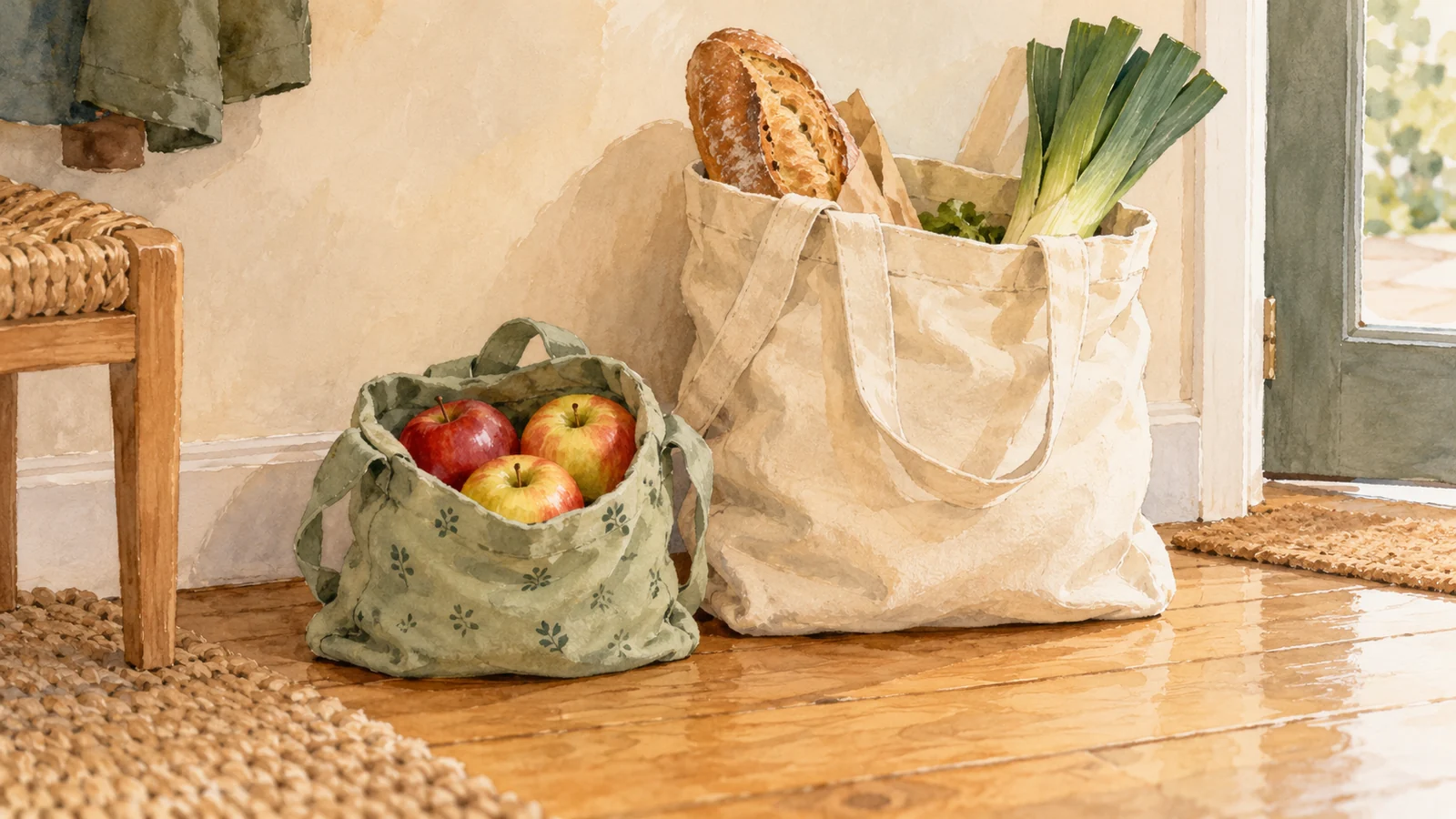
Camille had set aside Saturday morning for an activity with Malo, her almost three-year-old son. She was choosing between painting and a trip to the library. First, they needed bread, apples and something to make dinner.
She had announced the shopping as a chore to get through before the real plan. Malo had already picked up his little bag.
At the shop, he wanted to choose the apples. Camille pointed out a few and let him take three. He placed them in his bag with an attention she might happily have associated with a fine motor activity. But they were simply the apples for lunch.
Taking part in everyday life, for real
Grocery shopping with her child was hardly an exceptional outing. Camille was watching the time, Malo kept stopping and the bread threatened to fall. Yet he had something to do that really mattered.
He was not carrying plastic food while she dealt with the real groceries. His apples would end up on their table. Camille asked him to spot the bread on the bottom shelf. He showed her the one they usually bought.
Camille was looking for an activity he would enjoy. Malo was mainly trying to join in with the one she was already doing.
That did not make shopping miraculous. A crowded aisle, a long wait or a tired child could quickly change the mood. But that morning, she had almost written off as wasted time a moment he seemed to find interesting.
A small task, without a hidden programme
At the checkout, Camille took the bag back to stop the apples rolling everywhere. Malo protested: he was the one carrying them. She returned his bag after paying and kept the heavier shopping bag herself.
The idea was not to give him too much responsibility. A short task suited to what he could manage was enough: putting out napkins, bringing a vegetable or putting away a few groceries with her.
She could also leave it if the circumstances did not allow it. Everyday life did not have to become constant entertainment, just as she did not have to join in with every game.
“You can carry the three apples. I’ll take the rest.”
“Would you like to help put them in the basket, or would you rather watch?”
Back home, Malo put the apples on the table, then asked what they would eat with them. Camille showed him the bread.
Painting could still happen later. For now, Malo wanted to choose a slice for his plate. She had finished the shopping; he had not finished taking part.