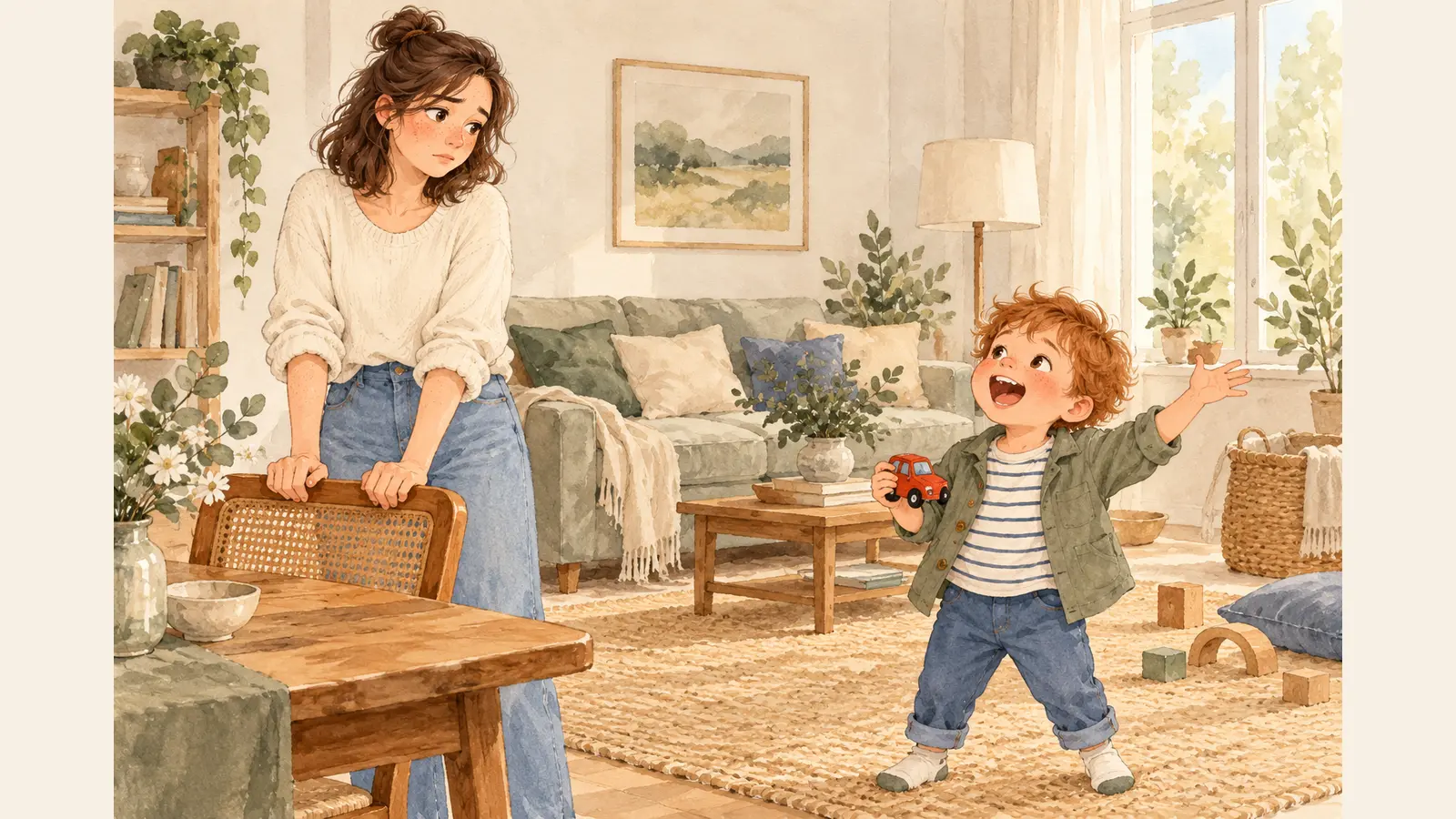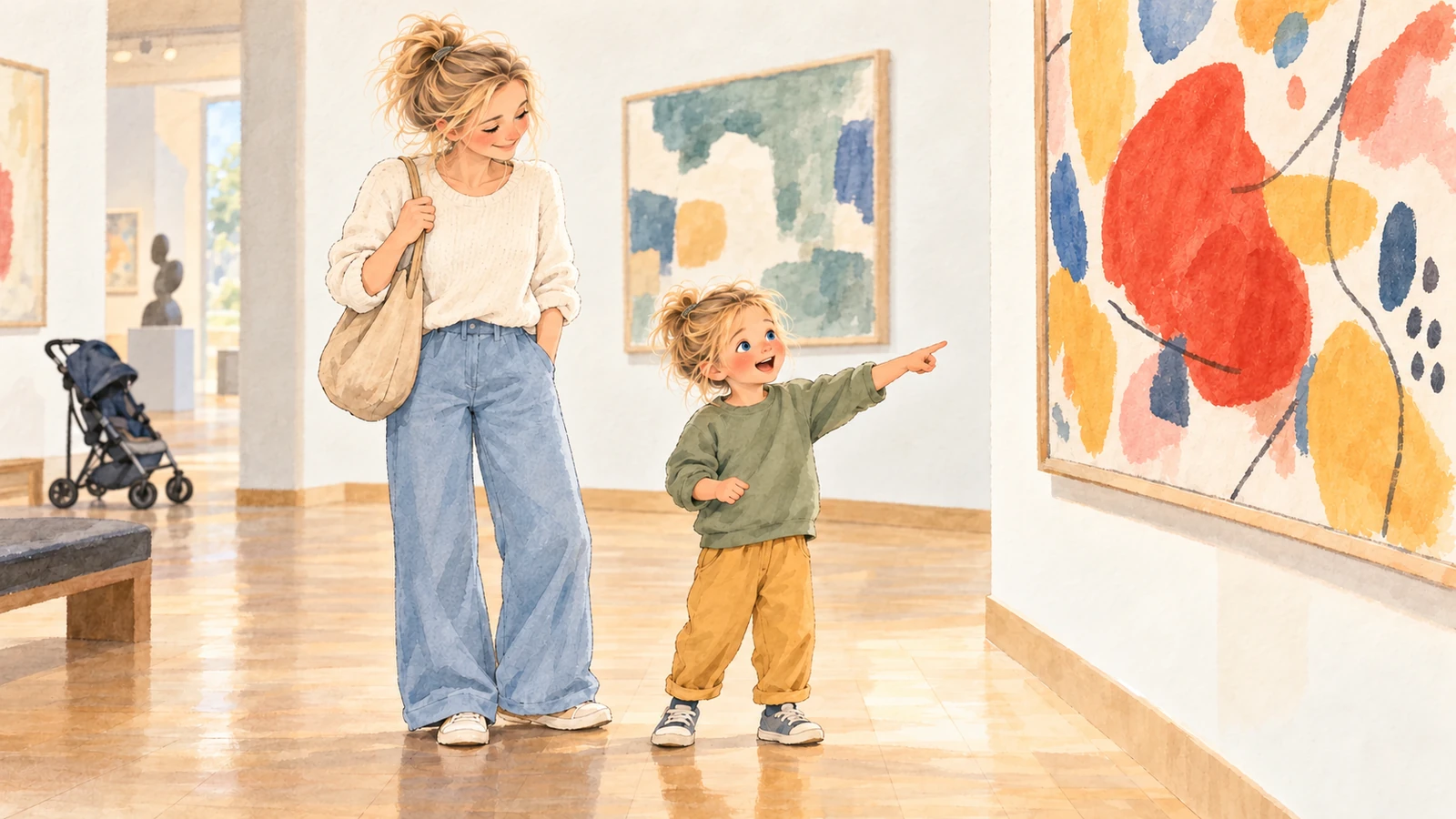
Gabriel, almost four, showed Marie, his mum, a red shape in the painting. Then he announced, far too loudly for Marie’s liking:
Marie already had her “shh” ready. But on this visit designed for families, nobody expected children to look in silence. Her mouth stayed open for a moment as she wondered what to do with her instruction.
Going to a museum with a young child usually seemed to involve two simultaneous activities: looking at the artworks and monitoring the little visitor’s volume.
A museum can prepare for children too
This kind of welcome exists, for example, at the National Museum of Modern Art, Tokyo. From 8 to 16 October 2026, its “Family Day, Kodomomat” events explicitly welcomed laughter and tears.
A report by Tokyo Sukusuku also describes pushchairs being allowed, baby-changing facilities and activities where children could touch selected materials in the building with staff accompanying them. Not the paintings: particular places and objects chosen for exploration.
That detail makes a considerable difference. The welcome involved more than a friendly phrase addressed to parents. The venue had planned activities, breaks and people to help.
Marie had prepared Gabriel so thoroughly not to disturb anyone that she had almost forgotten to invite him to look. Her first comment always concerned his behaviour. The painting came afterwards.
Keep rules without asking children to disappear
A family day does not turn every room into a playground. You can talk and still need to keep your distance from an artwork. Laugh and walk without running. Need to go outside for a few minutes without the visit becoming a failure.
Checking the format before coming can therefore matter as much as choosing the exhibition: which ages, how long, what breaks are possible and what exactly does “family-friendly” mean?
Once there, the staff’s guidance offers a more useful framework than “be good” trying to cover everything.
“Here, you can tell me what you see. We look at the painting without touching it.”
“Let’s ask the person at reception what we’re allowed to explore with our hands.”
And if your child has had enough after two artworks, you can take a break. The adult does not have to get their money’s worth from every room for something worthwhile to have happened.
Marie looked at the red shape too. She had not seen a nose in it, let alone an exploded one. She asked Gabriel to show her. For once, his voice had told her where to look.
Keep this handy
The situation
You are planning a museum visit with a young child and worry that you will spend the whole time keeping them quiet.
Try this
Look for a specific family programme, check the rules with staff and plan breaks. Let your child comment where this is welcome while protecting the artworks.
- “What made you look at that painting?”
- “We can ask where to take a break if you need one.”
Keep in mind: Family days have their own conditions. Being allowed to talk does not mean visitors can touch every artwork or run everywhere.