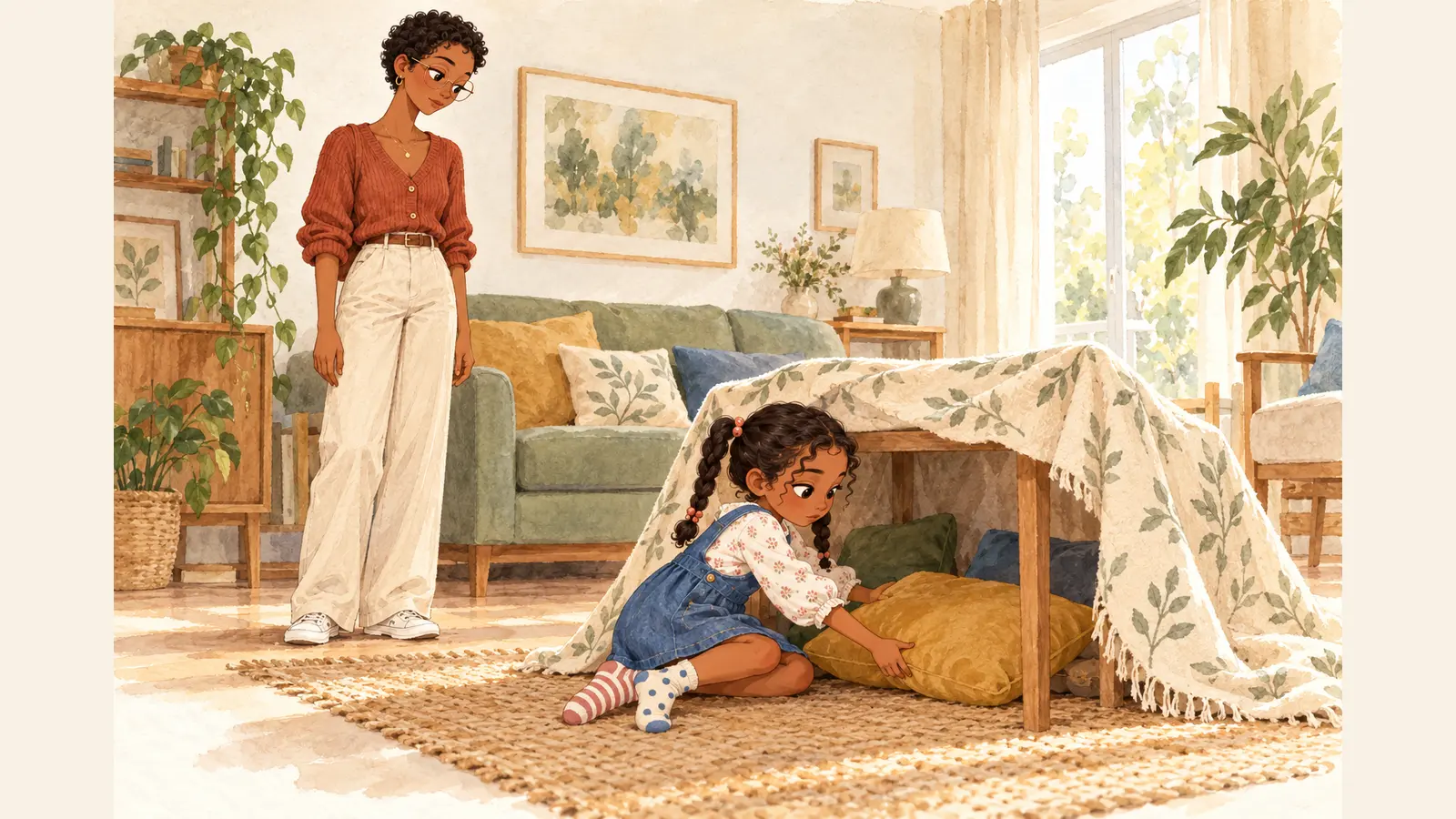
Louise, my five-year-old daughter, had chosen two different socks. I was about to suggest changing them when she began putting a blanket over the little living-room table.
I immediately thought the blanket would be better on the sofa and the cushions had no business under the table.
It wasn’t ten o’clock yet. I already had several opinions about things that weren’t asking very much of me.
Not everything that bothers me needs an intervention
The socks were clean and suitable for the day. The table was low, stable and had nothing on top. Louise was building a den, not creating a situation I needed to stop.
I could stay attentive without adding a correction at each stage.
Sometimes my worry had a specific reason. But it also mixed with my liking for matching things, furniture in its place and activities whose purpose I immediately understood.
By commenting on everything, I ended up giving the same weight to a chair in front of a door and a yellow sock worn with a blue one. Yet one could block the way. The other mainly contradicted my idea of a finished outfit.
Keep useful boundaries and let the rest happen
I hadn’t decided only to worry about extreme dangers. Safety wasn’t our only rule: we also needed to consider other people, belongings and shared space.
But before intervening, I could look for what my comment would actually protect. If all I found was “that’s not how I’d do it”, perhaps there was still a decision to leave to Louise.
The den could stay until lunch, with a clear route to the door. That was a boundary linked to our living room, not permission to direct her whole construction.
“The way through stays clear. You can organise the rest of your den.”
When she wanted the throw I was using, I said no and offered the available one. Intervening less didn’t mean my belongings automatically became hers.
Mostly, I tried to stop commenting on what she did with the blanket she could use. She folded it, unfolded it and moved it without asking for my approval.
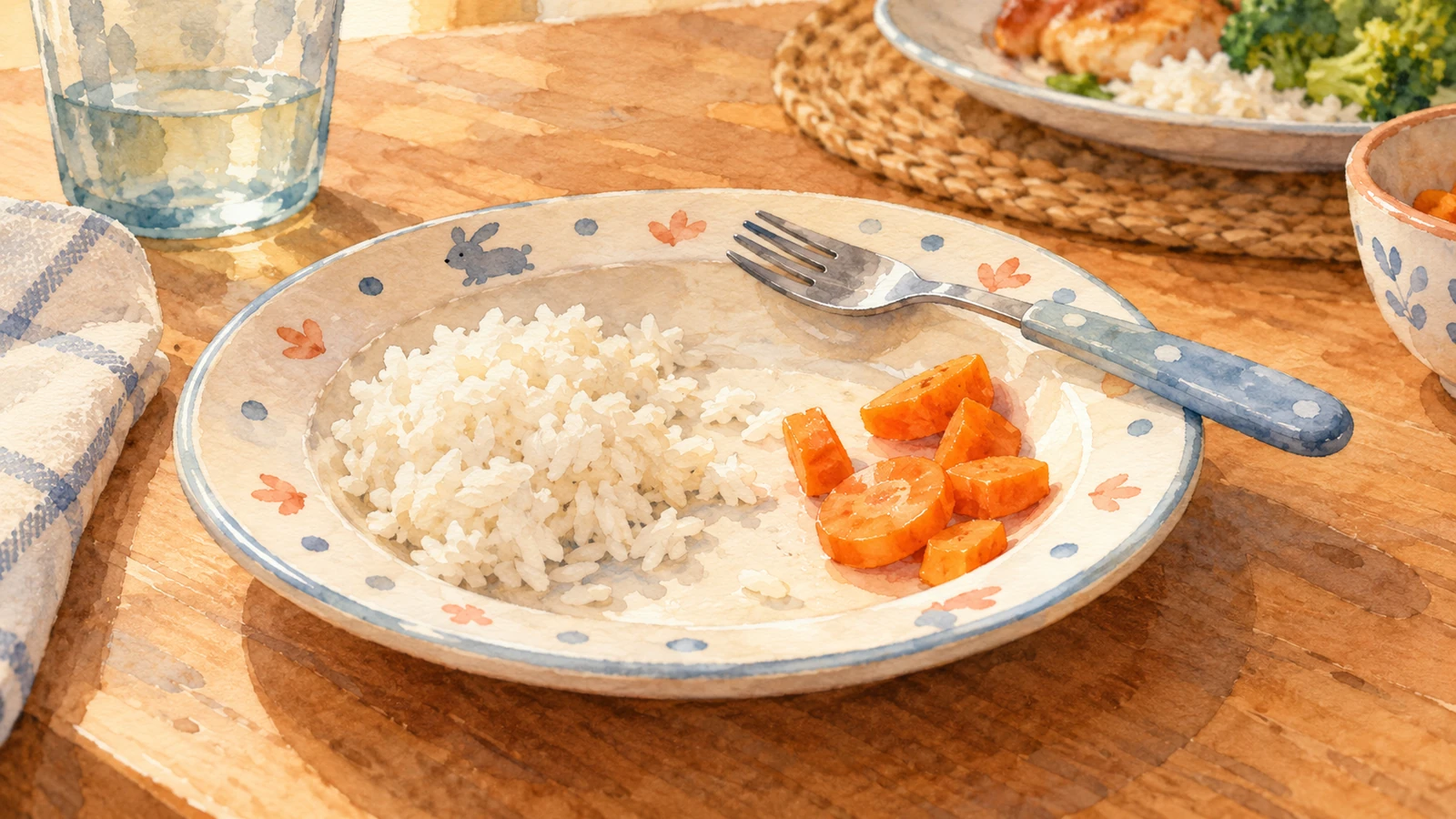
When it was time to go out, I looked at her feet. The socks were still different.
I checked she had her shoes. The choice of colours didn’t need another intervention from me.
Keep this handy
The situation
You correct your child's small choices all day?
Try this
Acknowledge the feeling, set a clear limit on harmful behaviour and return to problem-solving later.
- “I can see this is hard. I'm here, but I won't let you hurt anyone.”
Keep in mind: Making room for feelings does not mean allowing unsafe behaviour.