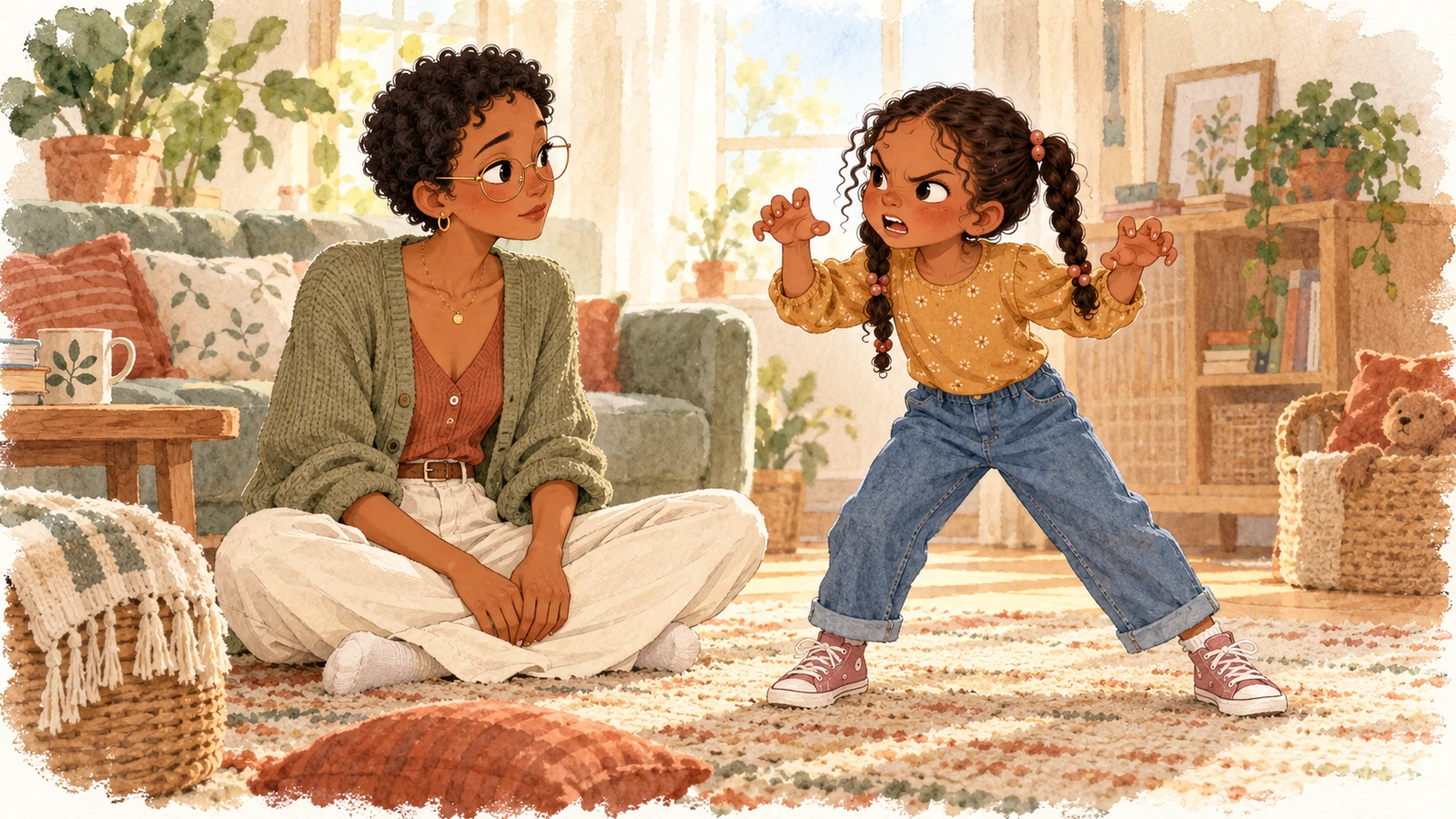
Louise, five, came home from school and threw her coat onto a chair. Élodie, her mum, recognised the kind of silence that made her want to ask lots of questions.
Louise said no to all three words, then started walking around the living room with her shoulders raised high. She bared her teeth and turned her hands into two big claws.
Élodie was looking for the name of the feeling. Louise had perhaps just shown her its shape.
When a child won’t talk about feelings
Naming what we feel can help, but the word isn’t always available at the moment an adult asks for it. A child may also worry about giving the wrong answer, not yet know which feelings are mixed together, or simply prefer to use their body and imagination.
So Élodie let the lion into the room. She didn’t immediately ask who owned the cave or what had happened at school. She asked whether the lion wanted to roar, hide or be followed.
Louise roared into a cushion, then built a cave under the table. A little toy lioness waited outside. After a few minutes, Louise explained that a classmate had closed a playground den before she could get in.
The game hadn’t avoided the conversation. It had given it a way in.
Letting a feeling take another form
Acting out an emotion doesn’t mean every posture contains a secret message. There is no need to interpret the lion, the colour of a drawing or a doll’s voice on the child’s behalf.
We can stay curious, describe what we see and let the child confirm it, correct us or add nothing at all.
“Your lion is clenching its paws really tightly. Would you like to show me what it does next?”
“You can tell me with words, show me through play, or leave it for later.”
Later, Élodie used the word “excluded”. Louise thought about it, then answered: “Mostly furious. And a bit lonely.”
This time, the words came after the cave. They weren’t better than the roar. They were simply ready.
Keep this handy
The situation
Does your child not want to say how they feel?
Try this
We can stay curious, describe what we see and let the child confirm it, correct us or add nothing at all.
- “I can see this is hard. I'm here, but I won't let you hurt anyone.”
Keep in mind: Making room for feelings does not mean allowing unsafe behaviour.