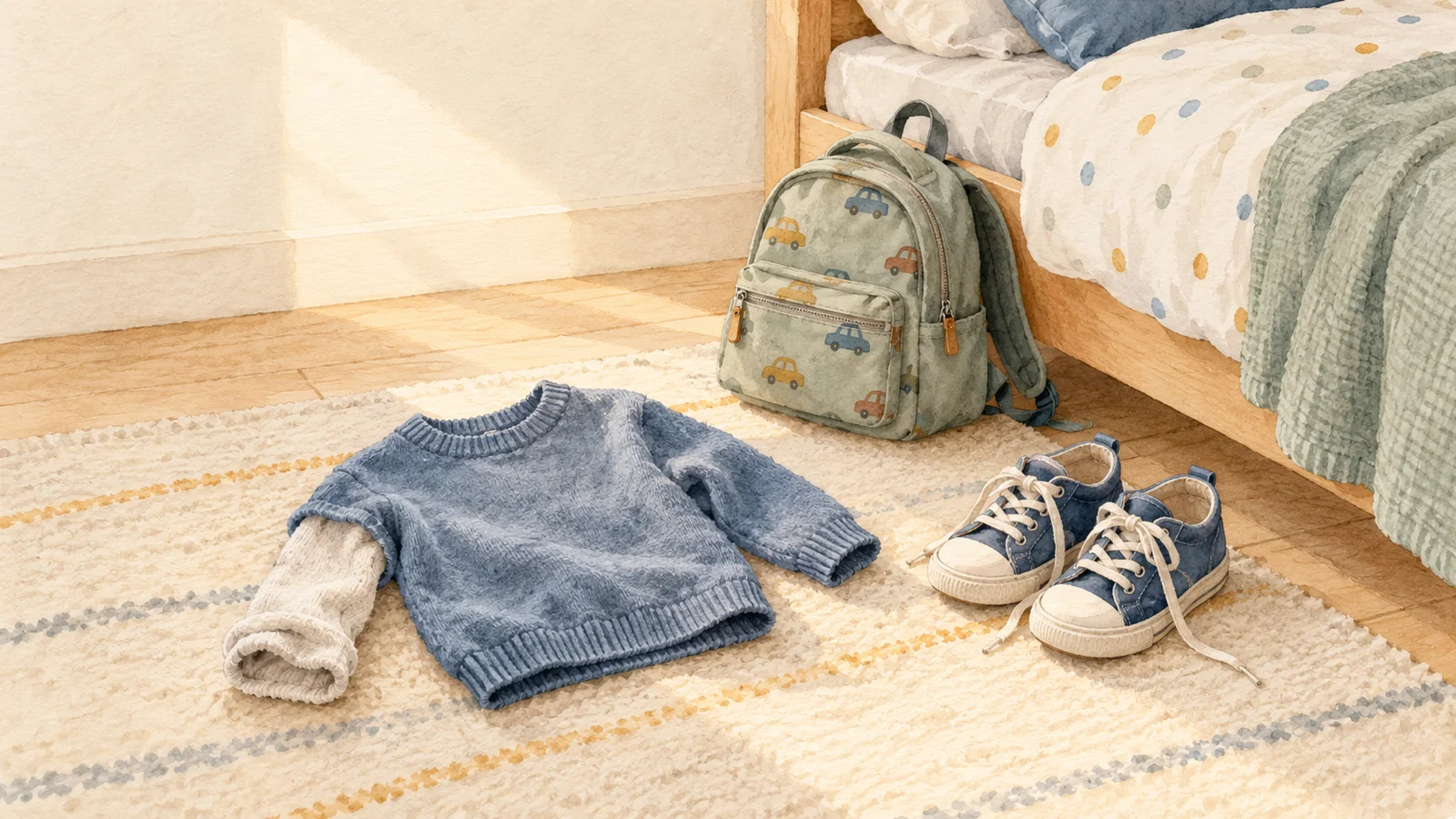
Malo, my almost-three-year-old son, had taken off one shoe and sat down in the hallway. The other stayed on his foot, as though the day wasn’t quite over.
After nursery, everything seemed to annoy him: my question, his sock, the bag too close to him. I put on a song he liked. I hoped music would change my child’s mood, with a little less effort than the shoe.
“No, Mum. Stop.”
I offered another song. He asked for silence.
A favourite song can be one more noise
I’d chosen something cheerful because I wanted my cheerful little boy back. The song had become an attempted shortcut: press a button and get a more relaxed face.
But Malo hadn’t asked to be put in a good mood. At that moment, he was only asking for it to stop.
I didn’t know everything that had filled his day. I could at least see that music wasn’t right for him now. A song he asks for on Saturday morning can annoy him on Tuesday evening. That doesn’t necessarily mean his tastes have changed, or that there’s a complicated message to decode.
I switched off the radio. In the silence, I could hear my bag closing and the little sound of his shoe on the floor. Nothing spectacular. That was rather the point.
Offer music without giving it a job to do
Music still has a place in our home. We sometimes sing while tidying, dance in the kitchen and hear Malo request the same chorus three times. But an offer needs to allow a refusal.
When I use a song to calm him down, I can look at what it actually does instead of defending my idea to the end. If he grows more tense or asks me to stop, I can turn it off without immediately looking for a better playlist.
“Would you like a song, or would you prefer no music?”
“All right, I'll turn it off. I'll stay near you.”
Quiet doesn’t need to become a new programme. It can remain a moment without questions, with a glass of water within reach. If he wants to tell me about his day afterwards, lovely. If he only wants to remove his second shoe, that’s enough too.
Malo didn’t smile the moment I stopped the song. He held out his foot for help, then rested his head against my arm.
I hadn’t changed his mood. I’d stopped adding something he didn’t want.