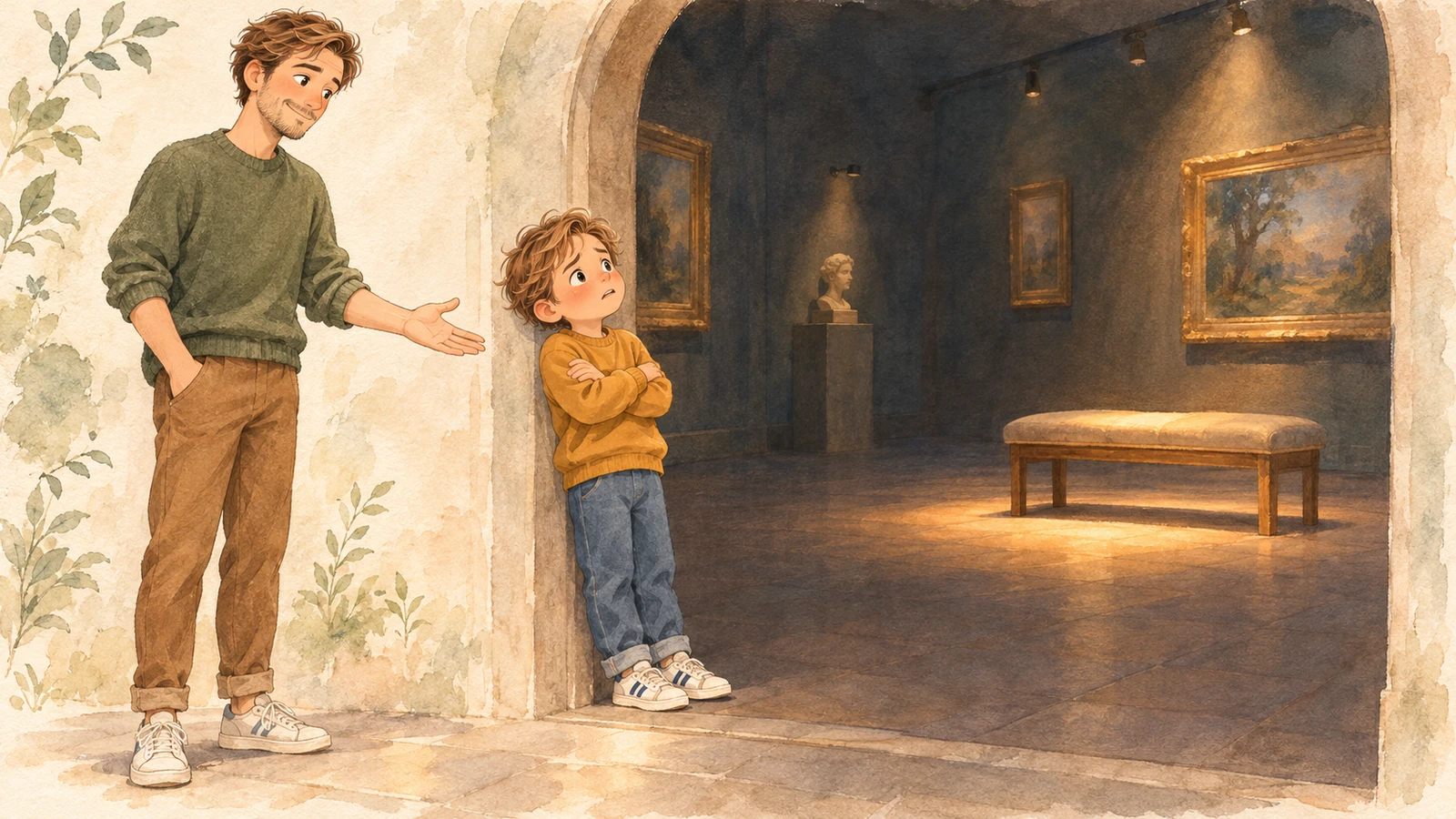
Oscar, my four-and-a-half-year-old son, stopped outside the dark museum room. Inside, a soundtrack made something rumble. He crossed his arms and announced that he wasn’t scared at all.
His feet, meanwhile, hadn’t crossed the threshold. I almost replied that it was obvious he was scared. A fairly effective way to give him a second reason not to move.
Feeling scared and not wanting to look it
Around four, a child may begin to feel embarrassed about showing that something worries them. Fear of noise or darkness can then come with another difficulty: not wanting to seem little, fragile or less brave than others.
But crossed arms aren’t a fear detector. Oscar might also dislike the room, need to watch or prefer to continue elsewhere. I didn’t have to uncover the hidden truth behind his sentence.
By insisting that he acknowledge his worry, I could turn the museum entrance into a test of honesty. He would have to agree with me before receiving help.
I could take account of what I saw without commenting on what he ought to feel: he was staying outside and the noise was loud. That was enough to offer another way of discovering the place.
Leave a way out that doesn’t require a confession
I showed him a bench in the lit area. We could watch from there, go in together or move on. None of those options required an official declaration of fear in front of the visitors.
“The sound is loud here. We can stay at the entrance for a while.”
“You don't have to explain. Would you rather watch with me or carry on with our visit?”
If he wanted to say he wasn’t scared, I could let him. I didn’t need to add a knowing wink that said I knew better. And changing his mind wouldn’t cost him his status as a big boy.
This flexibility doesn’t replace a safety boundary or necessary care. Here, the room was optional. If a fear becomes overwhelming and persistently affects daily life, it deserves more than a reassuring phrase.
Oscar sat on the bench. After two rumbles, he asked whether the sound always started again in the same way. We waited to listen. He didn’t have to take back his “not scared” for us to stay there together.
Keep this handy
The situation
Your child says they aren't afraid but hangs back from a situation.
Try this
Describe what you can observe and offer company or another option without requiring an admission of fear.
- “You can change your mind. I won't make fun of you.”
Keep in mind: Bravado doesn't prove hidden fear. Respect what the child says they feel too.