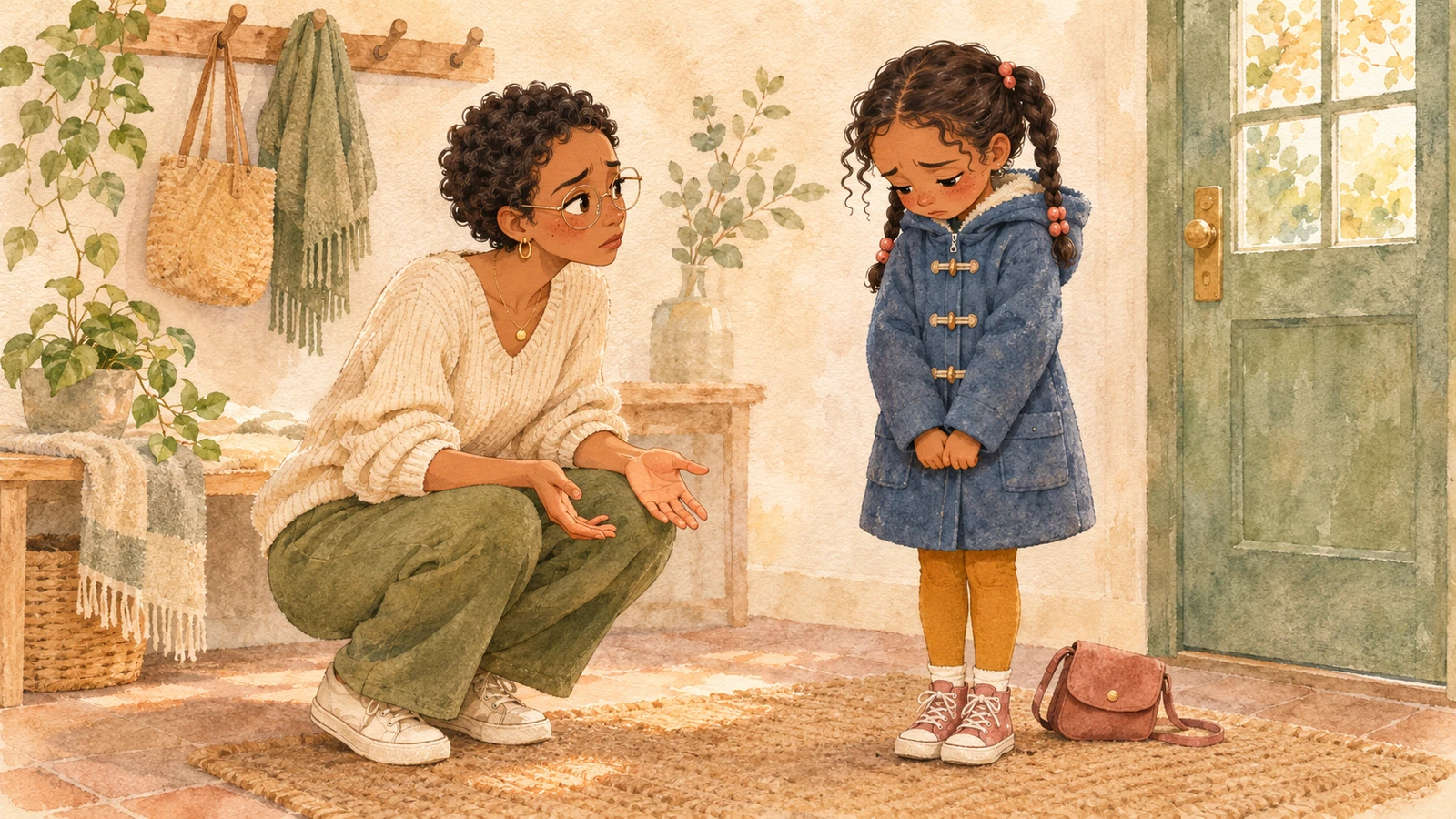
Louise, my five-year-old daughter, put her bag down in the hall and announced that nobody liked her. I already had three names ready, including a classmate who had recently visited our home.
I was about to answer with a list. Louise hadn’t asked for an inventory of her relationships. She kept her coat fastened and looked at the floor.
“Nobody likes me” can describe a moment
When a child says nobody likes them, it is tempting to correct the word nobody. Yet counting friends is rarely enough to understand what they are trying to tell us.
I didn’t yet know whether Louise meant a difficult breaktime, an argument or loneliness that had lasted. The sentence was broad. What lay behind it could be very specific, or need a closer look.
Immediately saying it wasn’t true could make her feel she had to prove her hurt. She would have to defend her conclusion while I prepared testimony from classmates for the defence.
I could acknowledge her feelings without confirming that everyone rejected her. Listening to her sadness didn’t require signing off on her conclusion.
Find the scene without conducting an interrogation
I sat down at her level. One open question could be enough, followed by some silence. Not a series of questions about every child in the class before she had even taken her coat off.
“You seem very sad. Would you like to tell me what happened?”
“Did that happen today, or have you felt like this for several days?”
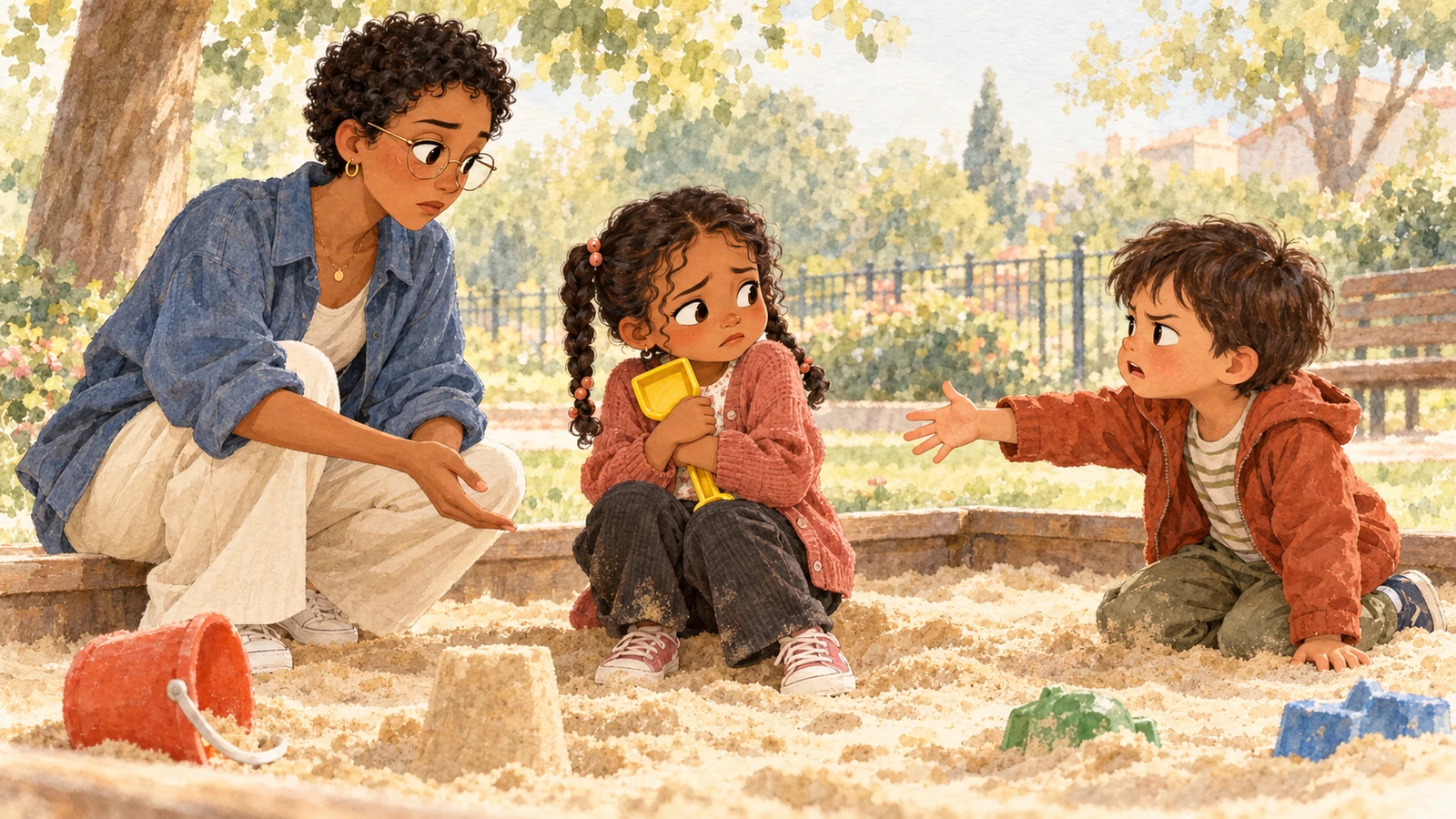
Louise explained that the two children she wanted to play with had started another game. She hadn’t known how to join in. That detail didn’t make her hurt small. It simply gave us somewhere to begin.
Afterwards, we could think of something to say when asking to join, or an adult to approach. If she didn’t want to look for a solution yet, I could stay with her without expecting her to leave immediately with a plan.
And if these words come back often, she avoids school or seems persistently isolated, I talk to the school team and, if needed, a professional. Repeated exclusion isn’t resolved simply by learning to ask better.
Louise finally unfastened her coat. She asked whether we could have a snack together. I didn’t recite my list of classmates. I now knew which moment she wanted to talk about.
Keep this handy
The situation
Your child says nobody likes them and you want to prove otherwise.
Try this
Acknowledge the hurt, ask what happened and distinguish a difficult moment from a repeating situation.
- “I want to understand what made you feel lonely.”
Keep in mind: Repeated exclusion or school refusal calls for discussion with school and sometimes professional support.