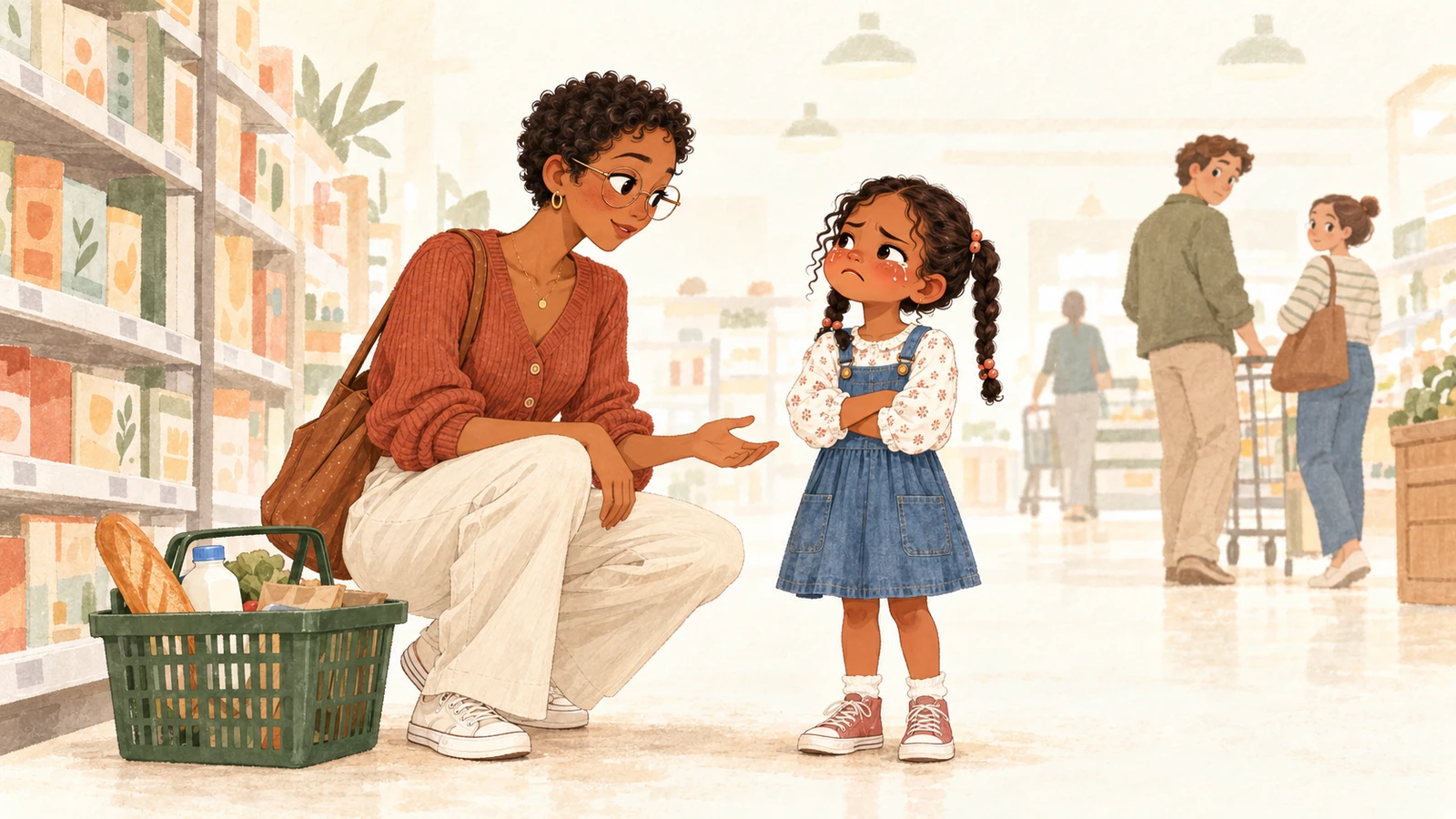
Oscar, four and a half, walked into the kitchen just as Julien, his dad, had hung up the phone. Julien had tears in his eyes after some bad family news, nothing Oscar needed to carry on his shoulders.
Julien answered automatically: “I’m not crying. Everything’s fine.”
Oscar looked at him for a few seconds, then walked away.
The words were meant to reassure him. Yet Julien had an odd feeling: his son had just seen something very clearly and he had just told him that it did not exist.
Protecting does not necessarily mean hiding
A four-year-old does not need to know every adult problem. He does not need the details of an argument, a financial worry or a situation he can neither understand nor solve.
But between telling everything and pretending everything is always fine, there is quite a lot of room.
You can say: “I’m sad today, but it’s not because of you. I’m going to take care of myself.”
Or: “I’m stressed. I need a few minutes to calm down.”
The child does not have to fix the emotion. They can simply see that an adult feels something, names it and keeps going with it.
Julien realised that he often asked Oscar to do the opposite. When his son was angry, he encouraged him to put it into words. When he was scared, he told him that fear could be there without making every decision. Yet he himself sometimes disappeared behind “I’m fine”.
An emotion is not a job for the child
Julien joined Oscar in the living room.
“Earlier, I told you everything was fine. Actually, I was sad. It’s a grown-up matter and you don’t have to do anything to help me. But you were right: I had tears in my eyes.”
Oscar asked whether a hug would help. Julien said yes. Then Oscar went back to his Lego.
It was exactly what Julien had hoped for: not a big conversation, not a child made responsible for comforting him, just an emotion that could exist without becoming worrying or mysterious.
Since then, he has not told him everything. But he tries not to act as though adults were the only members of the family who never feel sad, angry or overwhelmed.
Showing how we move through an emotion might also be a way to support our children through theirs.