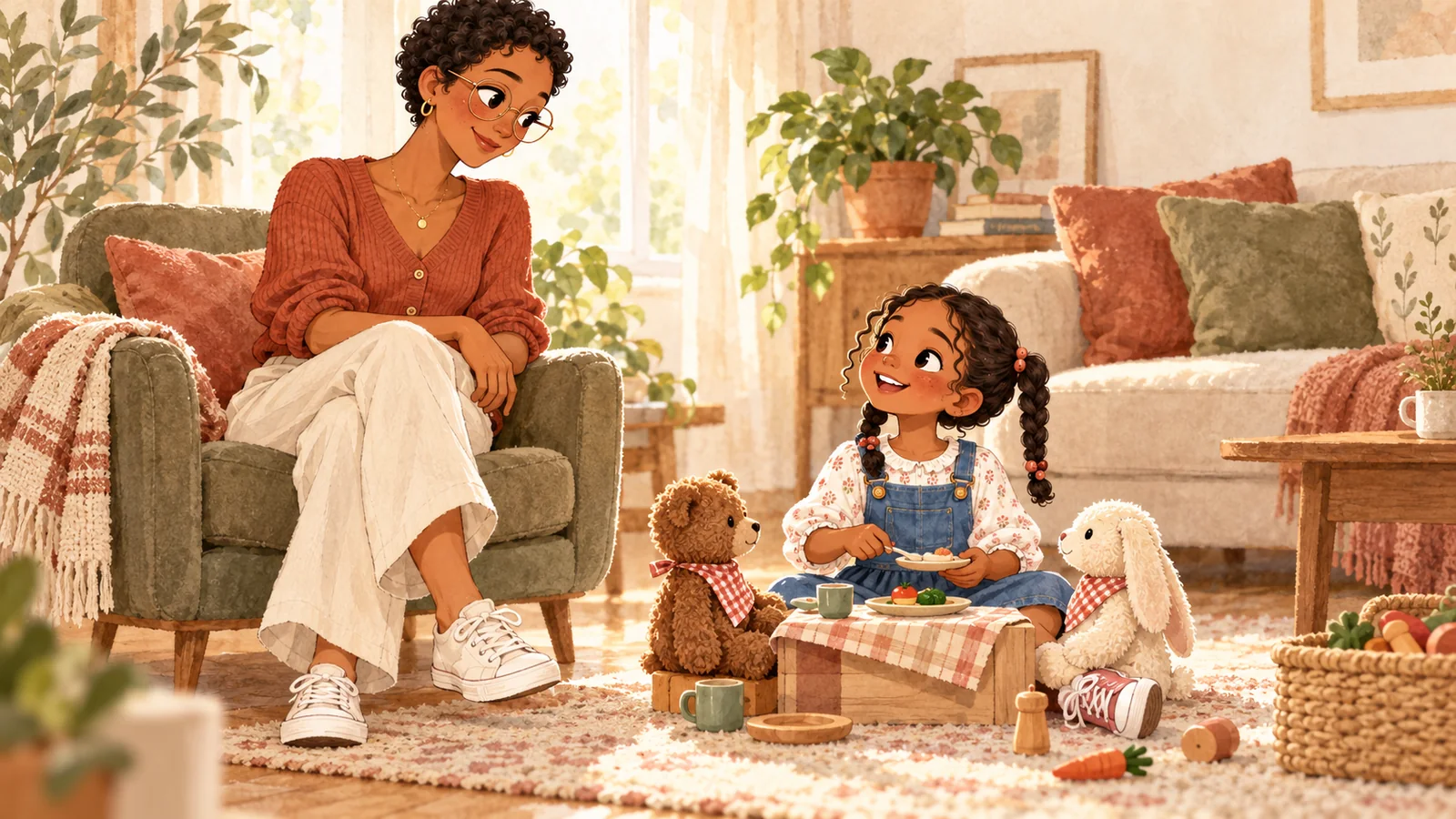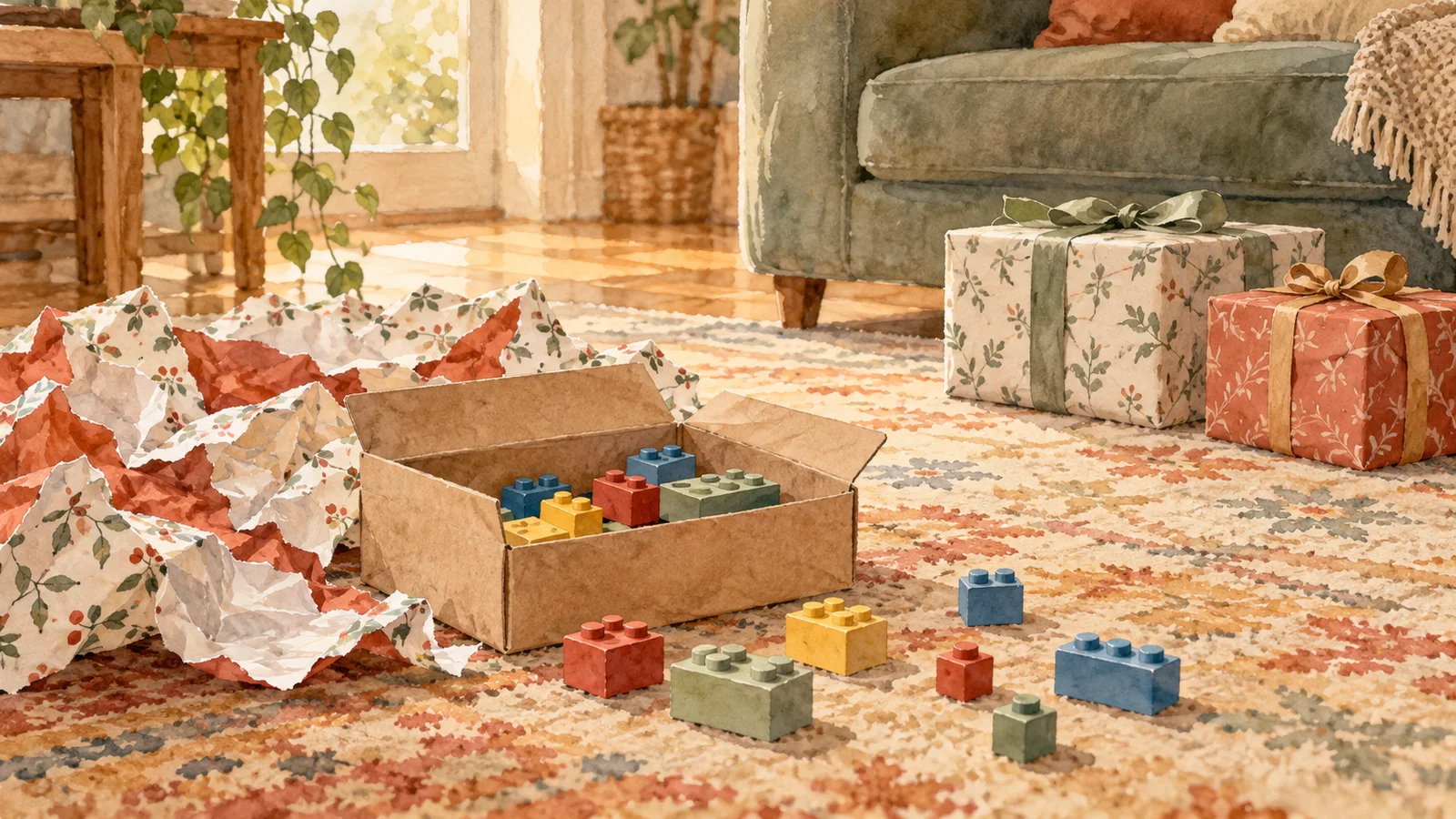
Iris, Nora’s three-and-a-half-year-old daughter, had just opened a box of building blocks. She lifted the lid, took out a red piece, then looked around: were there more presents?
Nora felt a small pang. She had chosen this gift carefully. Grandparents and friends had also looked for something Iris would enjoy. Iris already seemed eager to move on.
Yet a few minutes earlier, the adults themselves had handed her another present before she had finished examining the previous one. She needed to open Granny’s, then the one waiting by the sofa. The unwrapping had its own programme.
Too many presents, or too little time between them?
Nora had interpreted Iris’s question as a lack of interest. But the party was mainly offering a succession of surprises. Tear the paper, discover, show everyone, repeat. Playing would come later, at a moment nobody had planned yet.
That didn’t mean every child reacted this way or that a certain number of gifts solved the problem. That day, Nora simply saw her daughter watching the pile more than what she held in her hands.
She nearly reminded her how many lovely presents she had already received. Then she looked at the small red piece, abandoned on the rug. Iris hadn’t even had time to find what it fitted onto.
Nora put the next parcel by the sofa and sat beside the open box.
Pause without giving a lesson in gratitude
She suggested that Iris look at the pieces before continuing. Her daughter first asked for another present. Nora kept the pause without demanding that she declare herself happy with this one.
“There are more parcels. For now, we’re taking time to explore this one.”
“Would you like to open the box with me, or take a break before playing?”
Iris joined two pieces, then asked for help adding a third. A few minutes later, she had built a house without a door. The remaining presents hadn’t disappeared; they could wait.
For another celebration, Nora could talk to relatives beforehand: combine some ideas, choose together or space out the unwrapping. She didn’t need to confiscate gifts already given or turn the party into an exercise in consuming less.
And if Iris still wanted to open everything despite the pause, that wouldn’t make her ungrateful. Nora could thank the people there and return to exploring the toys later.
When Granny offered the next parcel, Iris showed her the house. Now she was looking for a piece that could serve as a door.