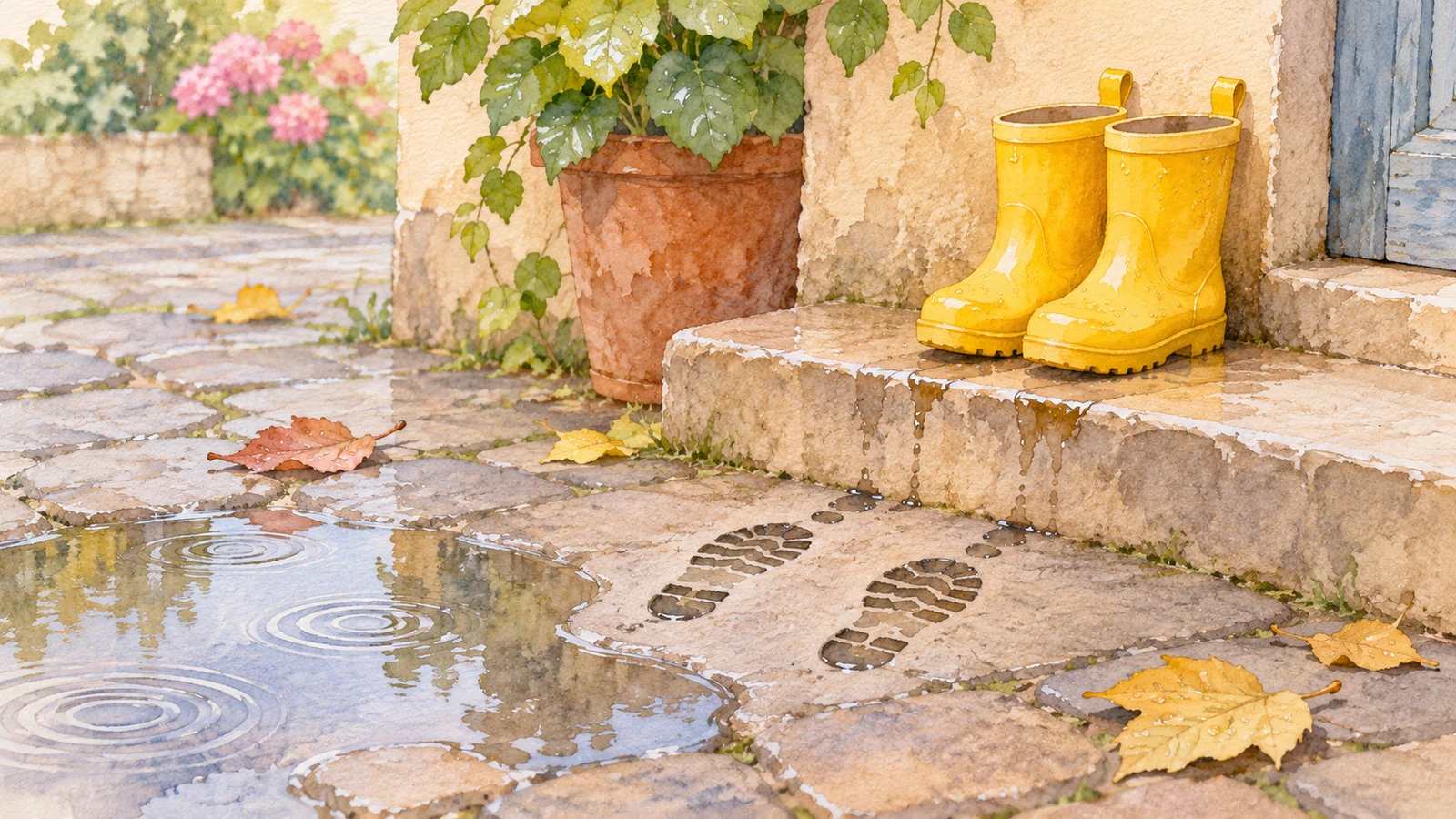
Malo, who’s nearly three, jumps over a small puddle. Camille, his mum, watches while she shuts the gate. She says “well done” and bends to put her keys back in her bag. He goes back to the edge of the puddle and shouts “Watch me!” again.
She looks up just in time. This time one boot lands in the water and the other on the paving. Camille tells him what she saw. Malo looks down at his feet. “The yellow one went splash.” Both boots are yellow, but she knows exactly which one he means.
Describe the detail you actually saw
“Watch me” can be a request for encouragement, a way to share the fun or a check that you saw a tricky attempt. You can answer by saying what you noticed. A short sentence is enough to talk about this particular jump, the one where his boot touched the water.
If you missed the jump, you can say so. Your child can show you again, tell you about it or move on. “I heard the splash, but I didn’t see which foot landed in the water” tells them what you actually caught.
Say when you can watch
“I saw both your feet leave the ground together.”
“I’ll shut the gate, then watch your next jump.”
If Camille says she’ll watch the next jump, she needs to turn to Malo when she’s finished. If she has to leave, she can say so right away. She can also decide to watch one more jump and tell him before they go.
Malo wants one last go. Camille watches until he lands. This time both boots end up in the middle of the puddle. He turns to her. “Both this time,” says Camille.
Keep this handy
The situation
Your child asks you to watch every attempt.
Try this
Describe what you actually saw or say when you can watch.
- I saw both your feet leave the ground together.
Keep in mind: If you promise to watch the next jump, turn to them when you said you would.