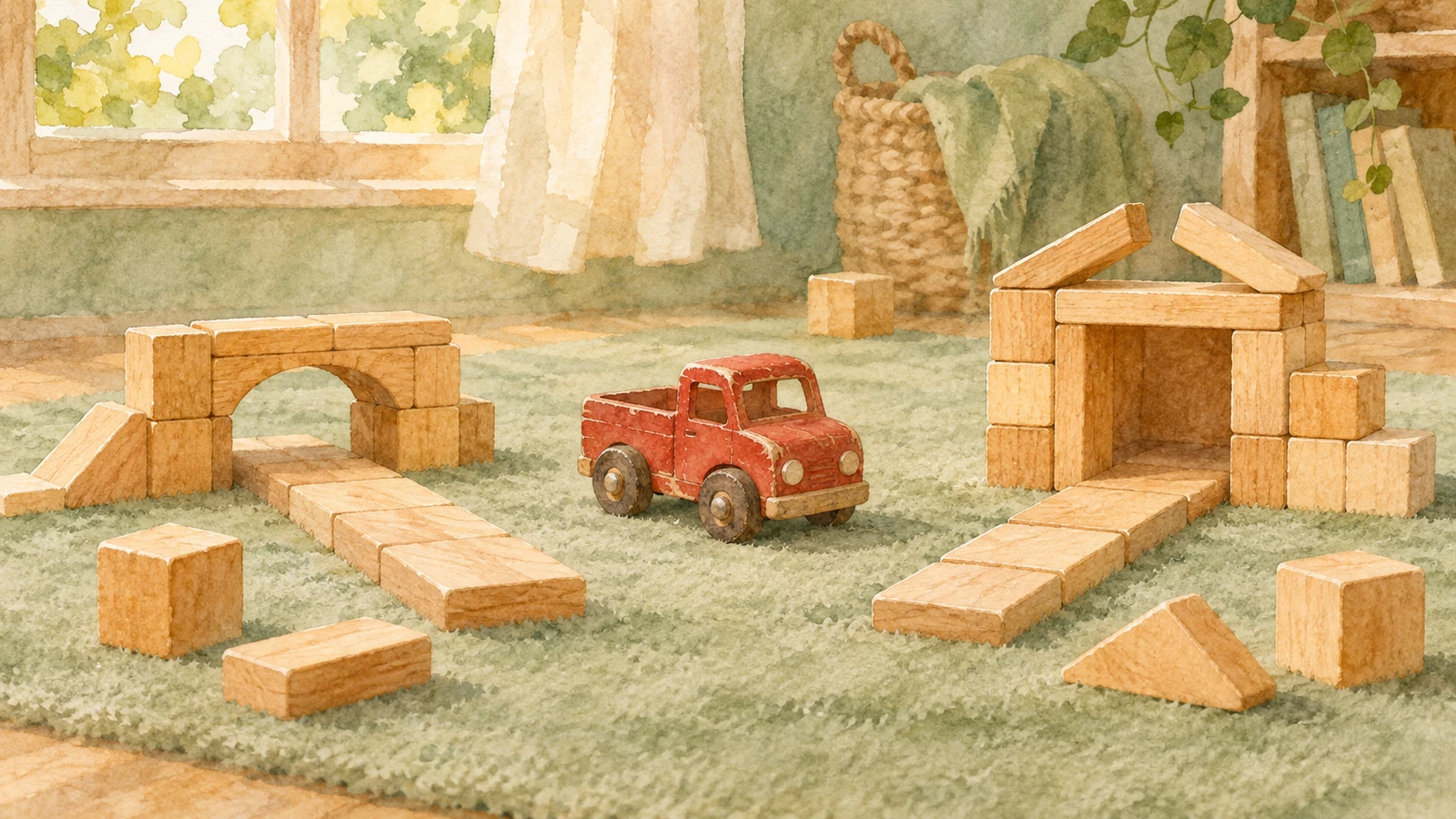
Malo, my nearly three-year-old son, and his four-year-old cousin were playing with a red truck. I was in the kitchen when they shouted. I came in to find two hands on the truck and two very certain accounts of what had just happened.
Malo said his cousin had taken it. His cousin said he was already holding it when Malo pulled. They both looked at me as if I had a replay. All I had heard was the shout.
Stopping what is happening in front of us
They were still tugging at the toy. I set the truck on the floor between us and checked that nobody was hurt. I could respond to what I saw without knowing who had made the first move.
That mattered more than a quick verdict. Giving the truck to whoever spoke loudest would have settled the question of the truck for a moment. It wouldn’t have cleared up what happened.
Then I could hear each child out. At three or four, that might mean a sentence, a gesture or a few words when the child is ready. If one says they got hurt or were hit, I take that seriously and check what they need.
Talking again when they can listen
“I won’t let you pull on the truck. I’ll put it here while we calm down.”
“I didn’t see how it started. I can listen to each of you, then we’ll work out what to do next.”
Both children could be upset without being equally responsible. Aggression, repeated intimidation or a child who can never protect themselves calls for clear intervention. A conversation between the two won’t be enough in every situation.
Here, the cousin explained that he wanted to drive the truck over his bridge. Malo showed him the garage he’d built. Once they let go, each could hear the other’s plan. They could agree to take turns or choose to play separately.
Malo suggested driving the truck over the bridge before parking it. His cousin agreed. I never found out who grabbed it first. I did see how they got it back on the road.
Keep this handy
The situation
Two children want a verdict after an argument whose start the adult missed.
Try this
Stop what’s happening, check for injuries and listen to each child when they’re ready.
- I didn’t see how it started. I can listen to each of you, then we’ll work out what to do next.
Keep in mind: Take any injury or aggression seriously. Repeated intimidation calls for clear intervention.