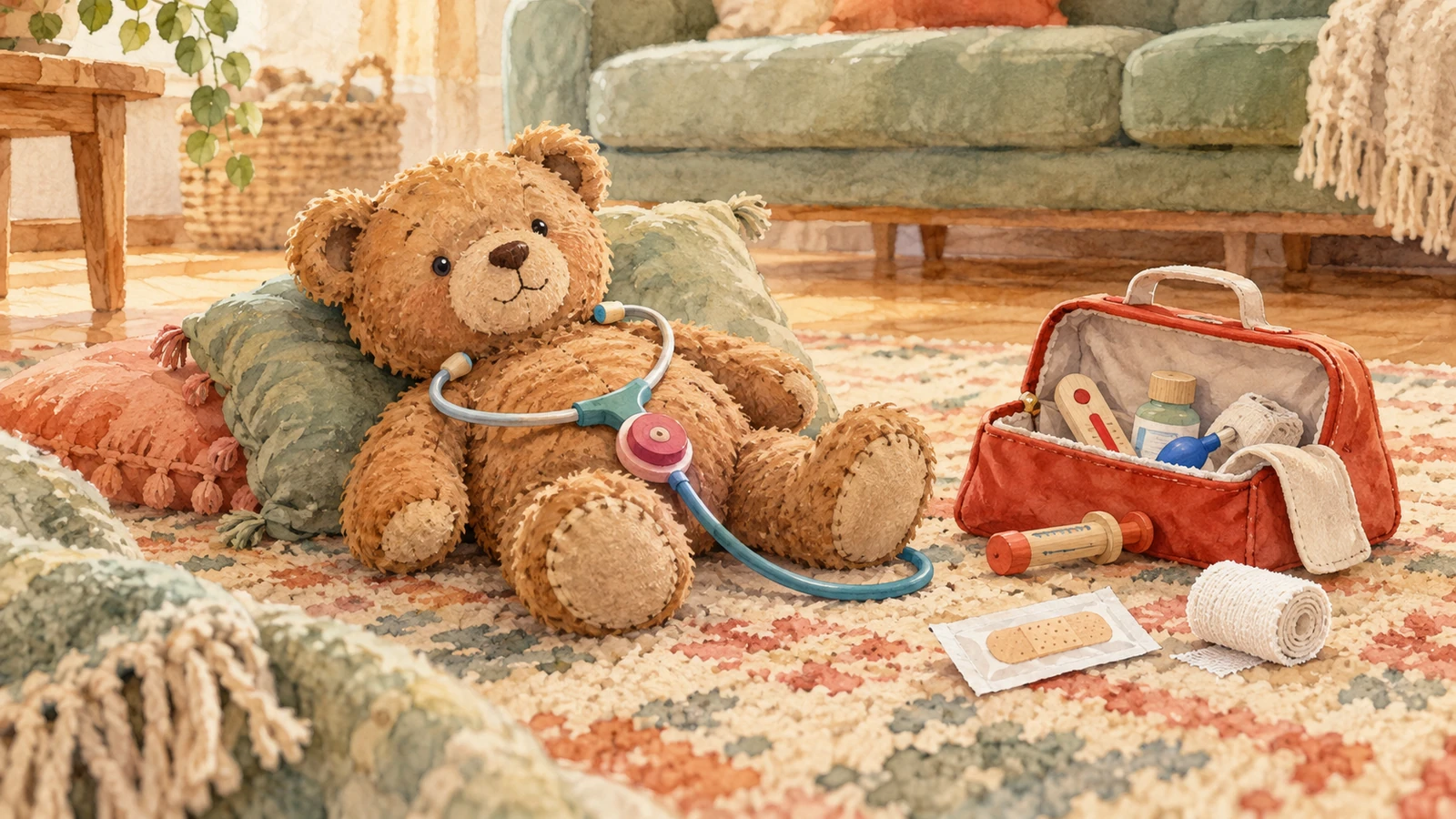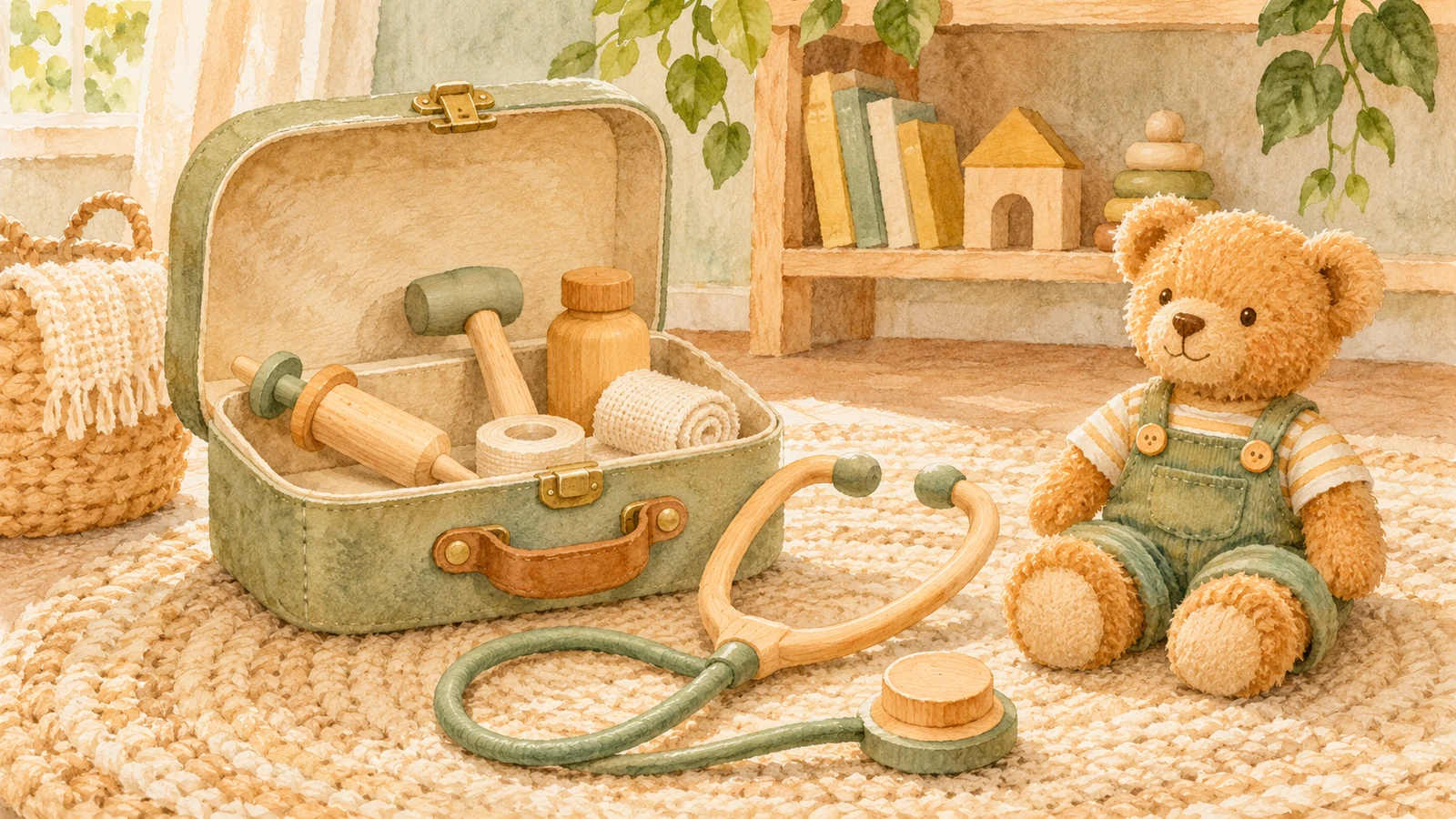
My three-and-a-half-year-old daughter Iris was playing doctor with a friend her own age. As I passed by, her friend was holding the stethoscope and Iris had stepped back. I heard Iris say “stop.”
I paused the game and stayed close. I didn’t know what had come before that word. I already knew it needed to be heard.
The right to stop applies to every game
Young children can be curious about bodies, differences and what grown-ups do at the doctor’s. A question or a pretend game can lead to a simple conversation. We can use ordinary words for the body and explain that private parts stay private.
In a game that involves touching someone else, each child needs to be able to choose whether to join in and to change their mind. A child may say stop, move away or freeze. If I’m unsure, I pause the game and calmly check how they are.
“I heard stop. We’re stopping now.”
“You can examine the teddy. If you want to touch someone’s arm, ask them first.”
When to stop the game and seek help
I step in immediately if a child keeps going after someone says no, forces the game, hurts someone or tries to make them keep it secret. A significant difference in age or development calls for particular attention. Repeated behaviour that continues despite limits also warrants professional advice.
I make sure the child is safe first, then give them a chance to talk without suggesting an answer. I can ask what happened and thank them for telling me. If there is injury, coercion or concern about what the child experienced, I promptly seek advice from a healthcare professional or child protection service.
That day, Iris told me she wanted to play doctor and was tired of being the patient. Her friend put down the stethoscope. I reminded them that they could stop at any time and suggest a different game.
They set the teddy on a cushion. Iris picked up the kit again, and her friend asked if she could listen to the teddy’s heart. This time they had chosen their patient together.
Keep this handy
The situation
Pause pretend play as soon as a child says stop, moves away or freezes.
Try this
Stop the game, calmly check how the child is and remind everyone they can refuse touch.
- I heard stop. We’re stopping now.
Keep in mind: Step in if there is coercion, pain or pressure to keep a secret. A large age or developmental gap deserves attention.