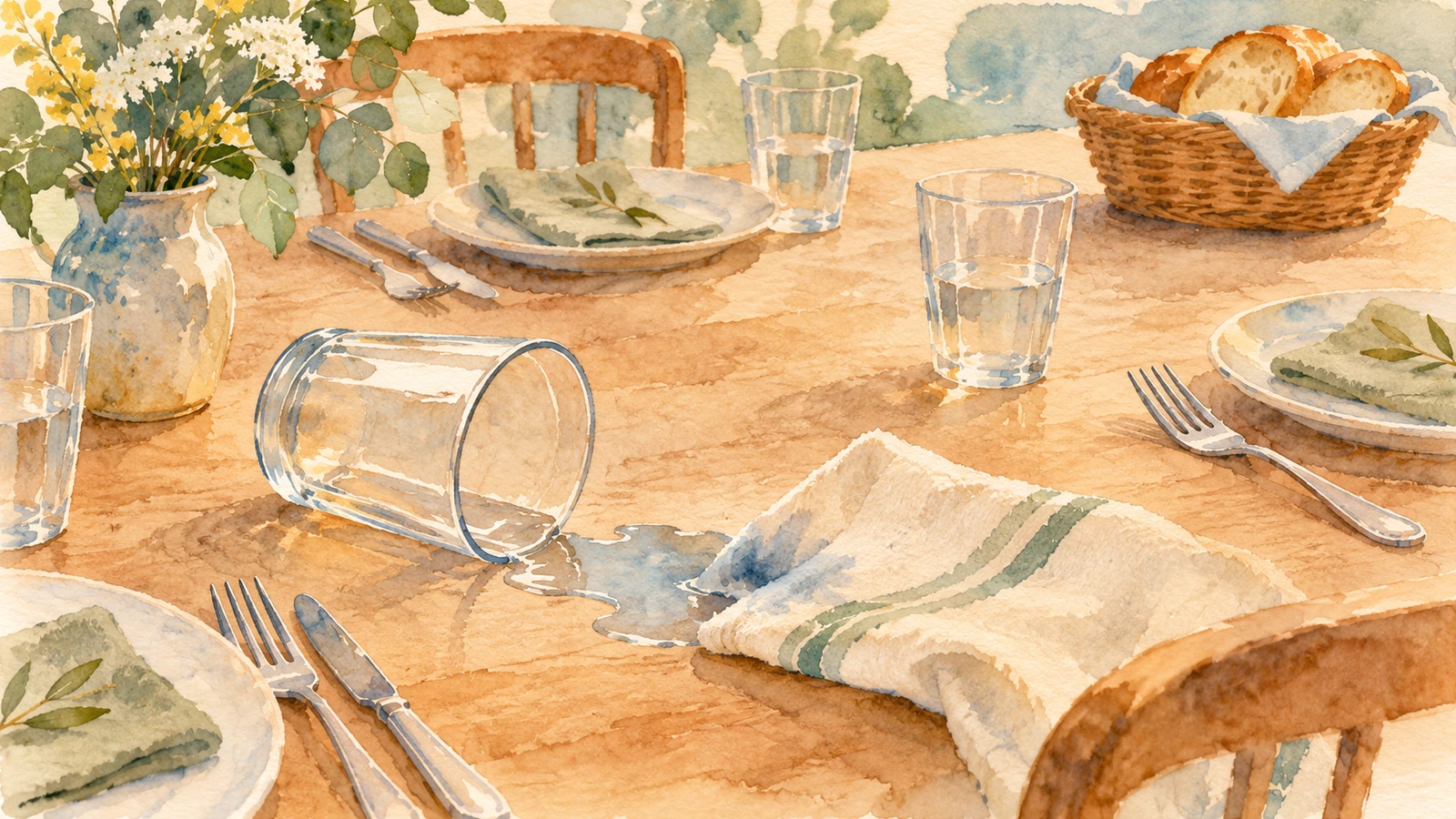
Iris, my three-and-a-half-year-old daughter, had reached over her glass for the bread. Water spread across the table in front of everyone. Several conversations stopped at once.
I grabbed a napkin and began an “I’ve already told you…”. Iris was now watching the adults rather than the glass. I was turning a puddle into a public meeting about her abilities.
Correcting a child in front of others changes the scene
The spilled glass was an accident. We needed to mop up and show her a more practical movement, not find a moral fault in her elbow. I could help her put things right without listing the previous occasions to everyone.
When behaviour really needs to stop, the setting matters too. A remark made before an audience can add embarrassment and distract from what we wanted the child to learn.
I couldn’t know exactly what Iris felt. But her raised shoulders and eyes moving from face to face gave me a good reason to shorten my intervention.
The guests didn’t need to watch a demonstration of my authority. And Iris didn’t have to answer correctly under their gaze for the meal to continue.
Act straight away, explain in the right place
I put the napkin on the water and asked for the basket to be moved closer. With broken glass or a dangerous action, I would have made things safe immediately. Talking privately doesn’t mean waiting before protecting someone.
Here, I could keep it brief, then discreetly show her how to ask for the bread or move her glass before reaching.
“The water spilled. Let's mop it up together.”
“The basket is far away. You can ask me to pass it.”
If we had needed to discuss a rule again, I could have done so to one side, using age-appropriate words and without replaying everything in front of the others. Privately didn’t mean isolating her for a longer telling-off.
I could also repair my own opening: acknowledge that my remark was too forceful, then return to the useful action. Changing course didn’t require Iris to reassure me about my qualities as a mother.
She pressed the napkin down very carefully. Someone resumed the conversation. I passed the bread and moved her glass closer. The incident still had a simple solution once the conference was cancelled.
Keep this handy
The situation
An accident or action attracts attention and you want to correct your child immediately.
Try this
Make things safe and repair straight away, then discreetly give a useful explanation without exposing the child to an audience.
- “We'll sort this out together, without making it a discussion for the whole table.”
Keep in mind: An accident isn't a moral fault. Dangerous actions must be stopped immediately.