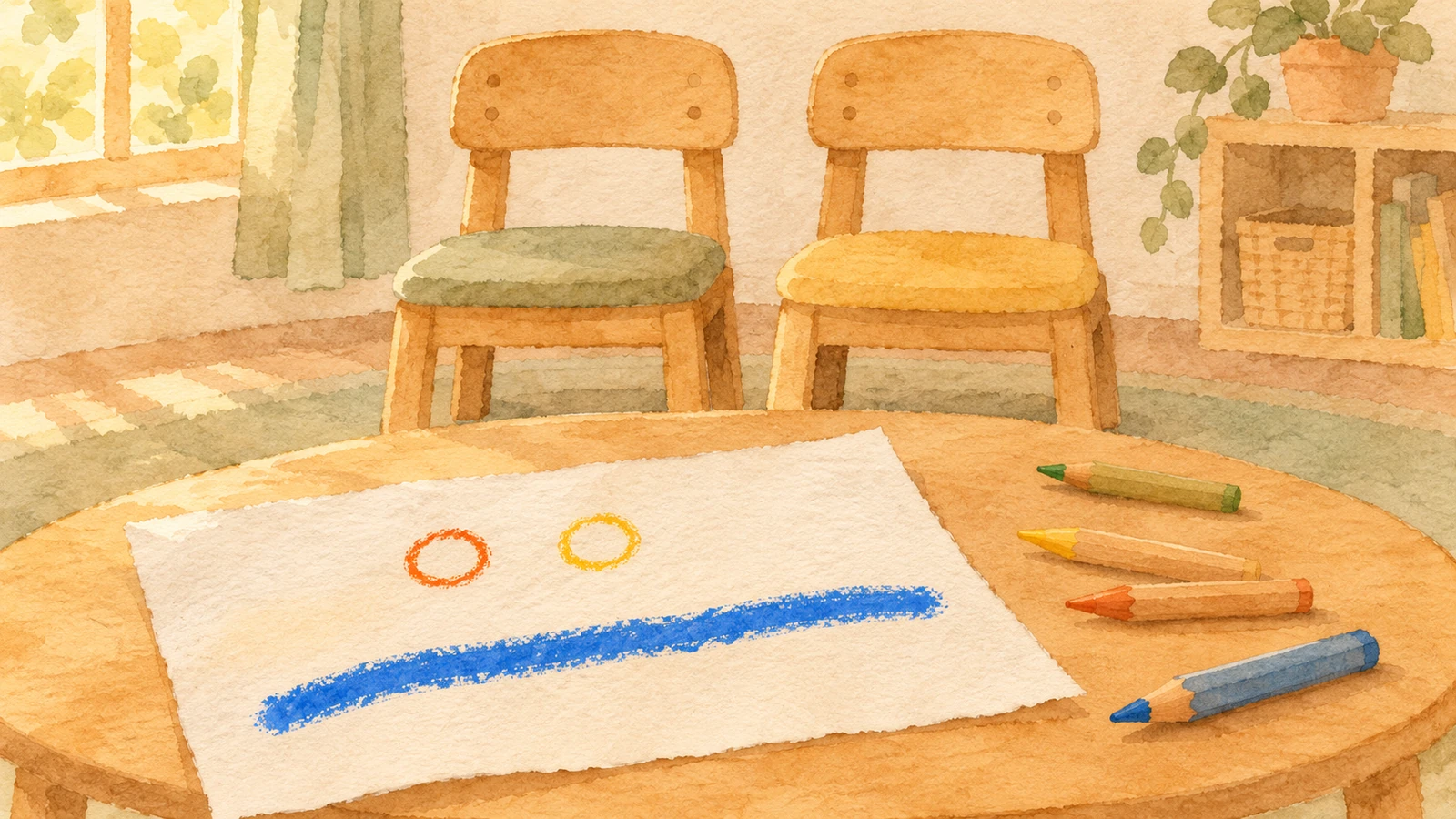
When Nora asks Iris, her three-and-a-half-year-old daughter, what she did at school, the answer is often “I don’t know.” One evening Iris draws two circles and a blue line. She says the line is the bench. Then she adds, “I waited.” Nora had been thinking about asking her about painting. Iris wanted to talk about the bench.
Nora almost asks who made her wait and how long it took. She lays her tea towel over the back of a chair and sits beside Iris. The bench now takes up almost the entire page.
Let your child decide what’s worth telling
In October 2026, UNICEF France shared the first results of a pilot consultation with three- to five-year-olds. Given a suitable setting, the children could talk about what made them happy, what frightened them and whom they trusted. The group was small and did not represent all children. The pilot shows what some young children can express when they have room to do so.
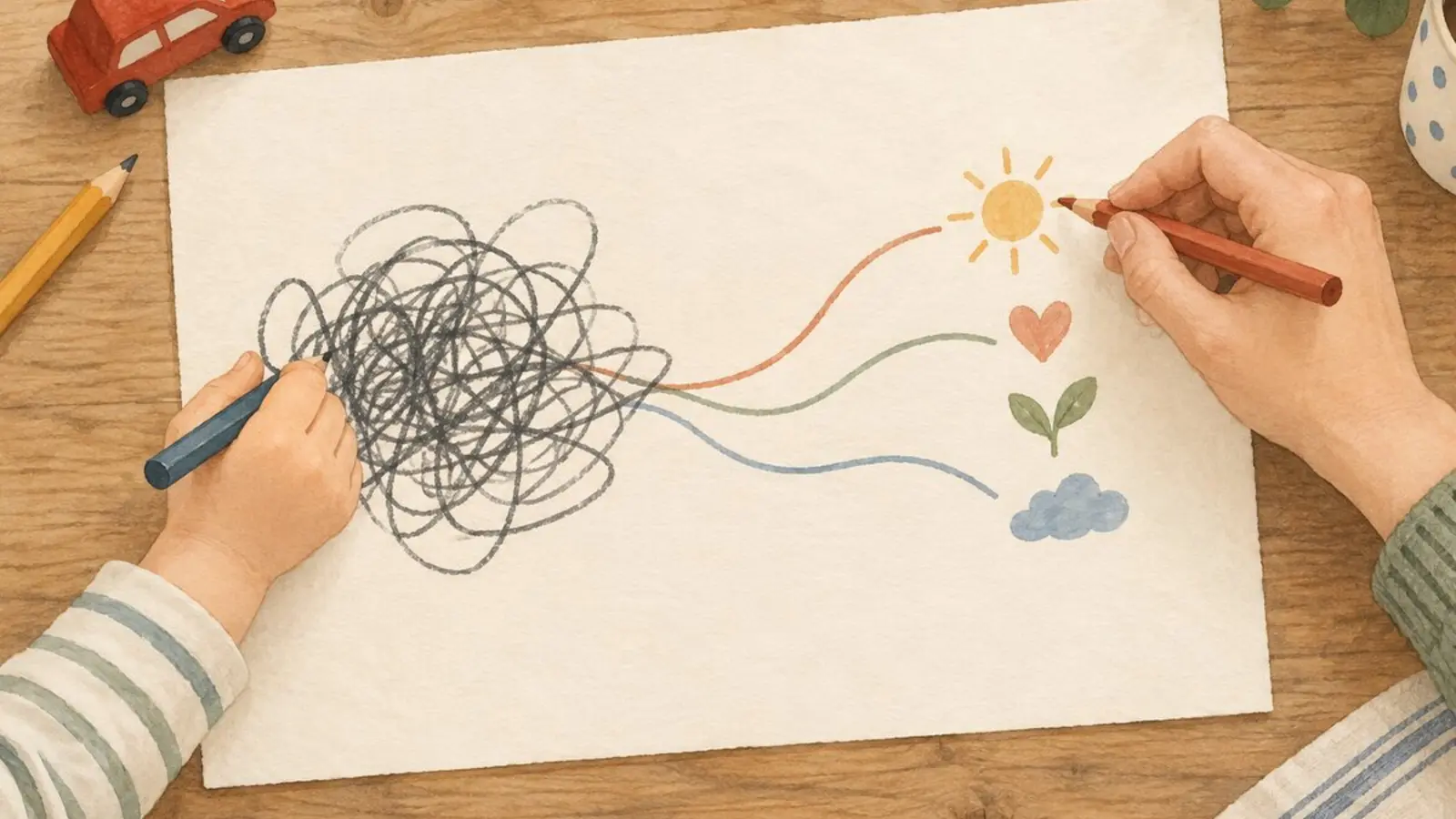
At home, you can start with what your child chooses to show you. A drawing or a gesture can help them pick up the story again. Nora waits for Iris to explain the circles. If Iris stops there, she can return to the drawing another evening.
Use their words and leave a pause
“You said you waited on the bench. Would you like to tell me a bit more?”
“You can show me on your drawing if you like.”
Sometimes one prompt is enough. If your child changes the subject, you can leave room for them to come back to it. If something worries you, take their words seriously without suggesting answers or interpreting the drawing for them.
Iris eventually explains that a friend sat beside her while she was waiting for a turn on the bike. She adds another circle next to the bench. Nora would have asked whether Iris got to ride. Tonight she finds out who kept her company while she waited.
Keep this handy
The situation
Your child tells a story in fragments or through gestures.
Try this
Follow what they show you, use their words and leave a pause.
- Would you like to show me on your drawing?
Keep in mind: A drawing can start a conversation. Let your child tell you what it shows.