Oscar, my four-and-a-half-year-old son, wanted to take a photo of the flower on the table. I thought about the phone, its full storage and the twenty-seven pictures of the same petal I would find later.
He came back with a sheet of paper.
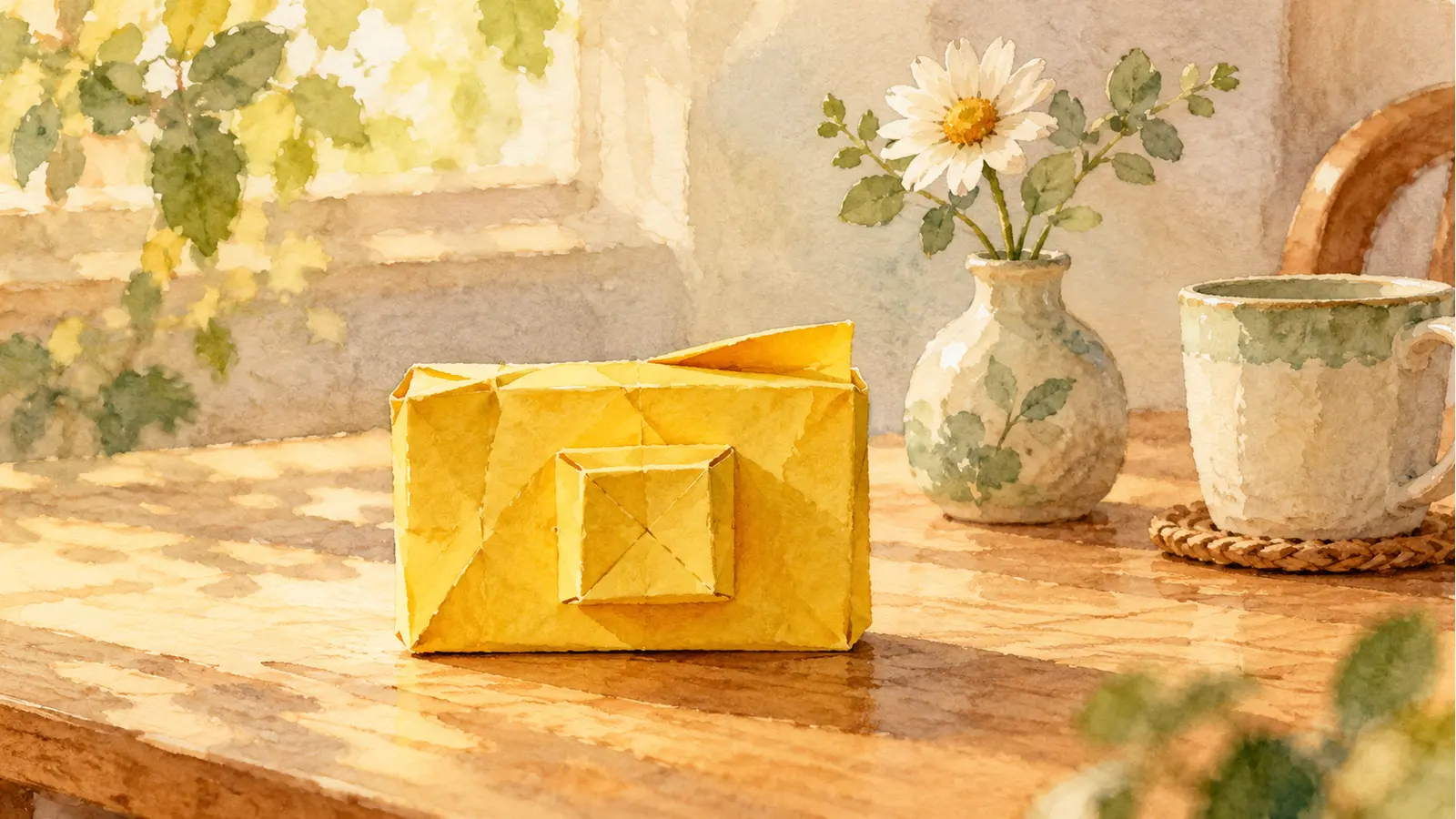
Folding it, then fixing a corner that wouldn’t stay put, he made something he called a camera. There was no screen or battery. The lens was a slightly crooked square.
He pointed it towards the vase and made a shutter noise.
A paper camera can be enough for the game
I almost offered to draw a photo for him to slide behind it. Surely his camera needed to do something.
But Oscar had already turned towards the cup. He was looking for another subject, then stepping back to fit the whole plant into his imaginary frame.
I had been worrying about the missing function. He was using the ones he had invented: aiming, choosing, asking someone to keep still and deciding that the photo was a success.
His camera saved no images. That didn’t stop him taking photographs.
Not improving the toy too quickly
The folds weren’t even, and one side was coming open. I offered help once. Oscar preferred to hold that side with his thumb.
We didn’t need perfect origami to carry on. Another child might have asked for a box, a drawing or the real phone. Paper doesn’t automatically beat a screen; that day, it suited his idea.
I could give him space instead of adding buttons and a result to produce.
“Would you like me to help hold the fold, or would you rather keep it like that?”
“What would you like to photograph now?”
He asked me to pose beside the flower. I complied, then he announced that I was moving too much.
So I had supplied paper and become the least cooperative subject in the session. It was quite a complete setup.
Later, the camera ended up on the table, a little squashed. I didn’t ask to see the photos. There was nothing to retrieve or save.
Oscar had looked at the flower from several angles, moved his cup and directed his dad. The session had really happened, even if we had no images to show for it.
Keep this handy
The situation
Does your child want to take photos?
Try this
I could give him space instead of adding buttons and a result to produce.
- “Would you like me to join in, or would you rather carry on?”
Keep in mind: Play does not need to be directed or turned into a learning activity every time.