On Sunday morning, Marie had opened a folder on her phone called “Gabriel’s activities”. It contained bicarbonate experiments, printable cards, three play-dough recipes and an obstacle course that would have needed half the living room.
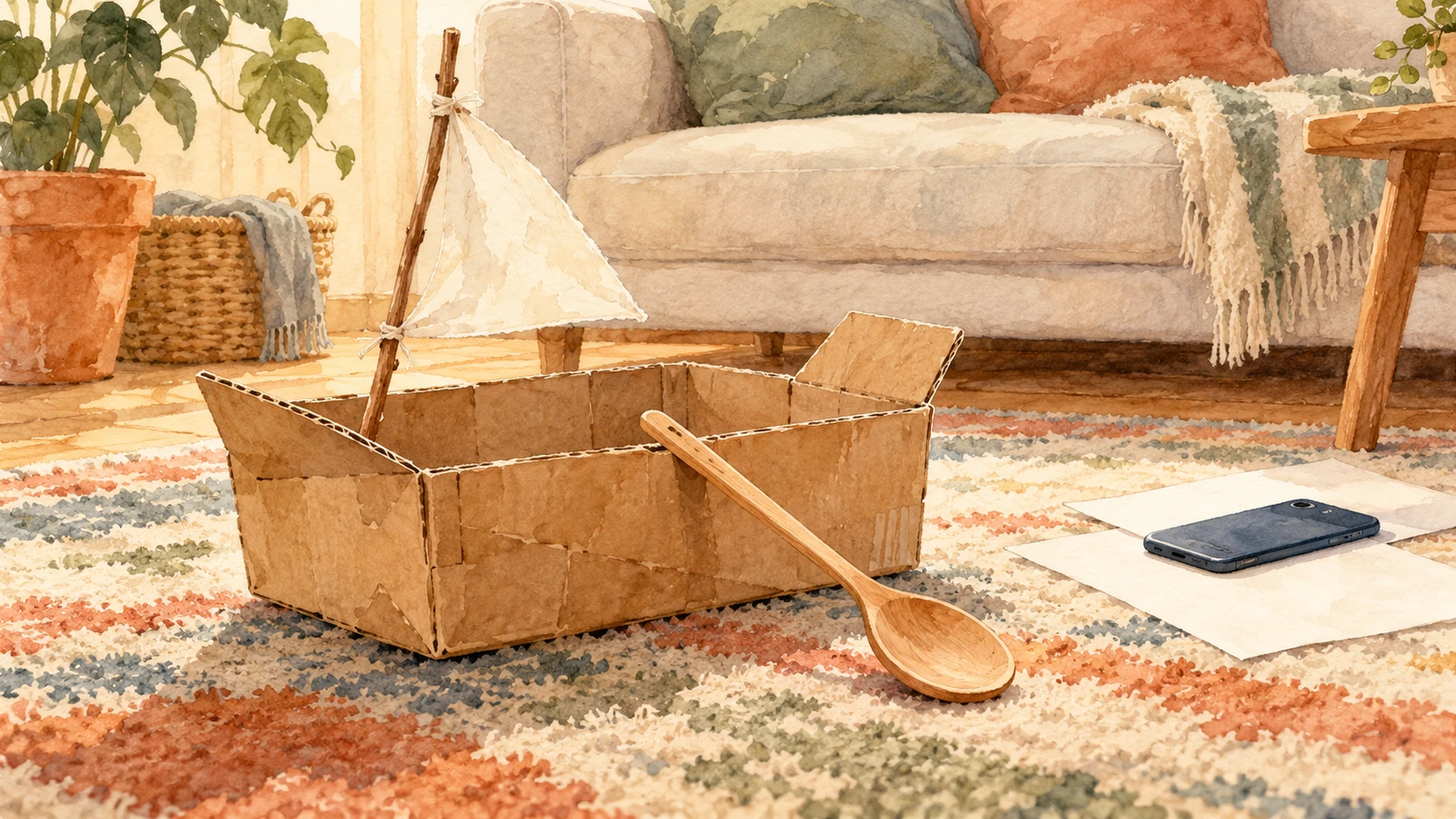
Gabriel, her nearly-four-year-old son, was waiting beside her with a wooden spoon and a cardboard box.
Marie kept scrolling. She wanted to find something really interesting, rather than simply bang on a box for twenty minutes. By searching so hard for how to play properly with her child, she had ended up delaying the moment they played.
When play ideas become another obligation
Content for parents often starts with good intentions. An activity list can rescue a rainy afternoon or provide the spark that was missing. But it can also create a strange impression: to be available, you need to prepare the right materials, offer a suitable experience and stay enthusiastic until everything is tidied away.
In a small qualitative study, parents described how online advice about play didn’t always fit their space, time or energy. Nine accounts cannot describe every family, but the mismatch feels familiar: the idea intended to lighten everyday life becomes another task.
Marie put down her phone.
Gabriel said it was a boat. The spoon was an oar, then a telescope, then a strawberry ice cream. Marie hadn’t prepared anything and didn’t know where the story was going. That was precisely the game.
Playing with what you have, including your energy
A parent doesn’t need to become an entertainer. Some days, they can sit down for ten minutes and follow their child’s idea. Other times, they can get the game started, then go back to preparing food. They can also say they don’t feel like playing while staying nearby.
Marie announced: “I’ll get in the boat until the timer rings. Then I’m going to make lunch.”
Gabriel protested, then handed her the spoon-telescope. For eight minutes, they searched for whales behind the sofa.
The printable obstacle course stayed on the phone. It might be useful another day, if time and inclination met. The problem wasn’t saving too many ideas. It was believing she had to choose one before listening to the idea already in front of her.
When the timer rang, Gabriel carried on with his voyage alone. Marie hadn’t organised a perfect activity. They had still played.
Keep this handy
The situation
You keep collecting activity ideas until playing with your child feels like another task.
Try this
Start with the game your child has already imagined, and be honest about the time and energy you have.
- “Show me what you've invented. I've got ten minutes to play.”
- “I'm going to make lunch now. You can carry on playing.”
Keep in mind: Being available for your child does not require planning activities or playing nonstop.